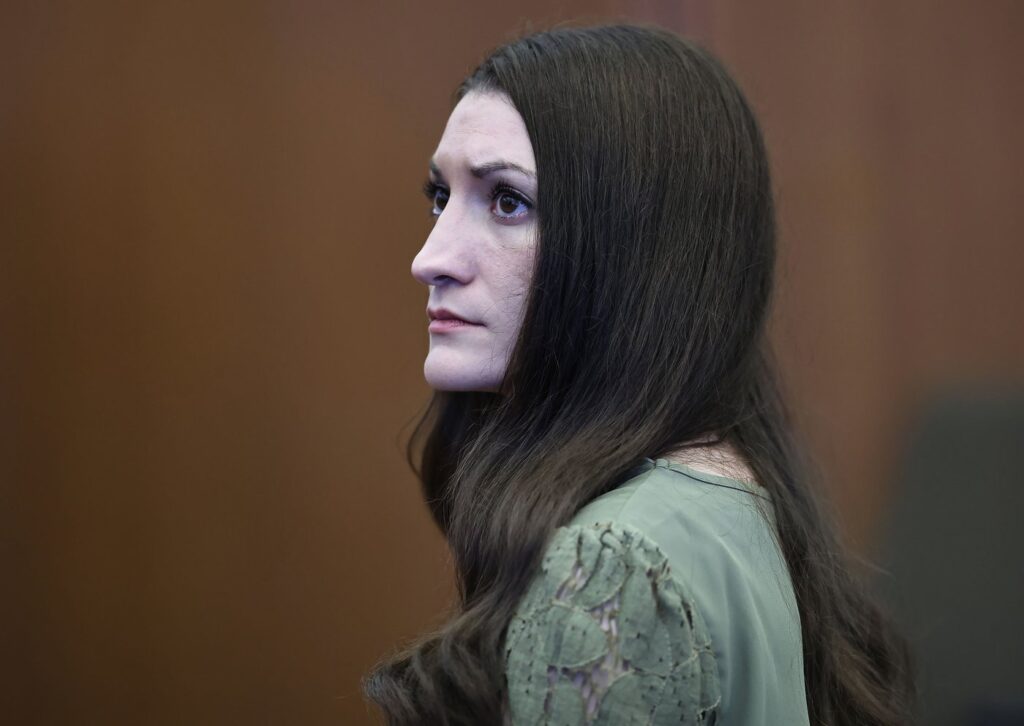
BOSTON (AP) — Lindsay Clancy's defense attorney argued in court on Thursday that she should not face a second trial for the alleged killings of her three young children due to insufficient evidence from prosecutors. Instead, her lawyer is advocating for a verdict of not guilty by reason of insanity, given her mental state at the time of the tragic events.
Last Friday, 11 of the 12 jurors indicated they were inclined to find Clancy not criminally responsible, but their indecision resulted in a mistrial declared by the judge, leaving the case unresolved. Attorney Kevin Reddington filed a motion seeking an acquittal for Clancy, aiming to prevent a retrial. The response from prosecutors regarding whether they will pursue another trial has yet to be made, as Plymouth County District Attorney Timothy Cruz did not comment on the situation.
In January 2023, Lindsay Clancy, 36, tragically killed her children — 5-year-old Cora, 3-year-old Dawson, and 8-month-old Callan — in their Massachusetts home before attempting to take her own life. There is no dispute regarding the act itself; the contention lies in Clancy's mental state. Reddington asserts that Clancy was a loving mother suffering from postpartum psychosis, while the prosecution maintains that she was aware of her actions during the incident.
The case has captured significant media attention, particularly in discussions surrounding maternal mental health issues following childbirth. The trial has highlighted the complexities of mental health in the realm of criminal responsibility. As per Massachusetts law, prosecutors are required to demonstrate that Clancy either did not suffer from a mental disorder or that she was capable of understanding the wrongfulness of her actions despite such a disorder.
In his court filing, Reddington contends that the prosecution failed to prove either point. He noted that psychiatric experts, regardless of whether they were called by the defense or the prosecution, did not dispute that Clancy was grappling with mental illness. His statement emphasized that the testimony revolved around identifying the specific nature of her illness rather than questioning its existence.
The prosecution referenced Clancy's actions leading up to the incident, including routine tasks such as driving and organizing her daughter's birthday party, as evidence that she was not suffering from a severe mental condition. They aimed to demonstrate that her capability to engage in everyday activities indicated her soundness of mind at the time of the murders. However, Reddington countered that performing ordinary tasks during an acute mental health crisis does not equate to criminal responsibility beyond a reasonable doubt.
During jury deliberations, the judge acknowledged the considerable emotional toll the trial had taken on all involved. Both the heartbreaking 911 call made by the children's father upon discovering their bodies and the subsequent testimonies detailing the events of that day proved to be extremely distressing. Throughout the trial, Clancy exhibited visible emotional distress, at one point sobbing uncontrollably during the display of her children's autopsy images. She remains paralyzed from the waist down after a fall from the second story of her home and is expected to remain in a psychiatric hospital until the legal proceedings are resolved.
As the case progresses, the focus on maternal mental health, particularly conditions such as postpartum psychosis, continues to draw significant public interest, underscoring the challenges faced by families grappling with mental illness during and after childbirth.