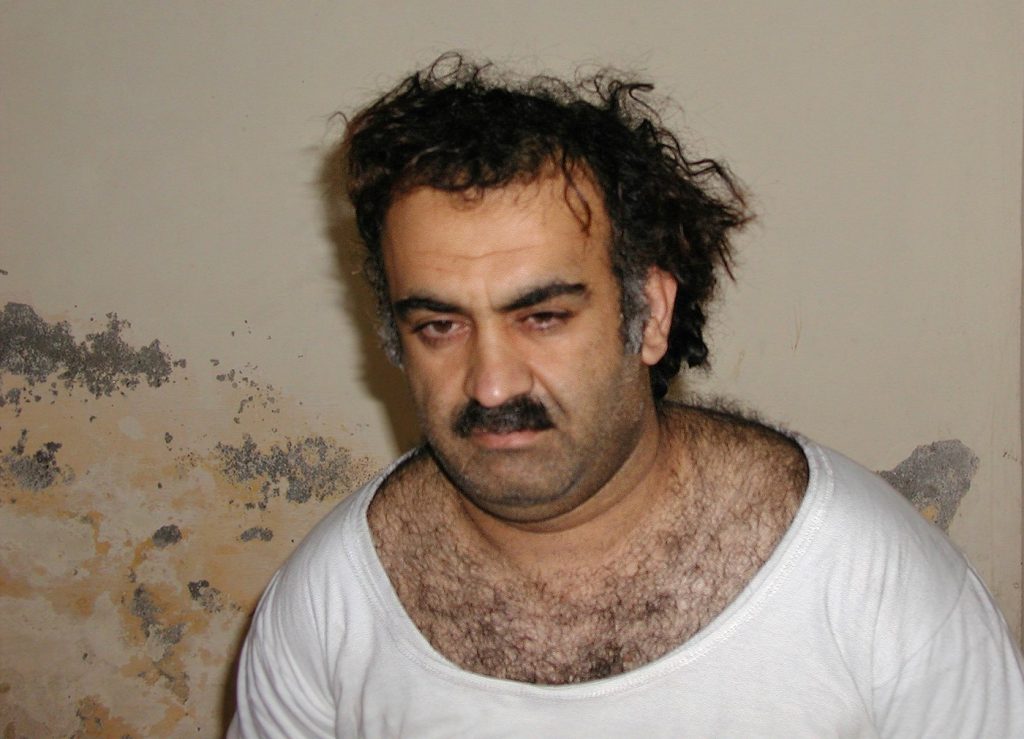
NEW YORK (AP) — Nearly twenty years after U.S. authorities imprisoned Khalid Sheikh Mohammed at a military detention facility in Guantanamo Bay, the alleged mastermind behind the September 11 attacks appears no closer to standing trial than he was upon arrival. In a recent ruling, a judge established a trial date for June 5, 2028, but many legal experts remain skeptical that this trial will ever take place. They argue that the complex legal challenges stemming from Mohammed's torture during his capture in 2003 have rendered the prospect of a trial nearly impossible.
Efforts to prosecute Mohammed in a civilian court in New York City were quashed years ago due to heightened security concerns. Additionally, a plea deal that would have ensured his life imprisonment while avoiding the death penalty began to unravel shortly after its announcement in 2024, ultimately collapsing entirely by the previous year. Joshua Dratel, an attorney involved in assuring Mohammed's legal representation, expressed that the situation is "contaminated by politics and the lack of accountability on torture."
In late August, the military judge overseeing the case ruled that prosecutors could not introduce an alleged confession Mohammed made to the FBI in 2007. This decision was based on the premise that these statements were tainted due to the "enhanced interrogation techniques," including waterboarding, he faced while in custody overseas. Although this ruling was detrimental to the prosecution's case, the U.S. government opted not to appeal, realizing that doing so could cause further delays in the trial process.
Meanwhile, Mohammed remains detained at Guantanamo Bay, where he has been held since September 5, 2006, following his more than three-year stay in secret prisons. Despite the prolonged legal disputes, families of the 9/11 victims continue to hold out hope for a trial. Terry Strada, chair of the organization 9/11 Families United and widow of a victim, emphasized the importance of seeking justice: "We very much want to see this come to an end ... it’s just as important as 25 years ago." However, she also maintained that she would prefer Mohammed to remain in Guantanamo indefinitely over a scenario that could lead to the death penalty being off the table.
Strada voiced her concerns about the implications of Mohammed potentially escaping execution, stating that if he were not put to death, future U.S. administrations might consider negotiating his release in exchange for American hostages. She strongly believes that the death penalty is appropriate for his crimes to prevent future exchanges.
Mohammed is notorious for his role in developing and directing the September 11 attacks as a key leader of al-Qaida. Delays in his legal proceedings have largely been attributed to his treatment under U.S. control. A U.S. Senate report highlighted the severe torture he underwent in CIA custody, including being subjected to 183 instances of waterboarding.
Initial plans, which intended to have Mohammed tried in a civilian court, were scrapped after significant opposition emerged. In 2009, then-Attorney General Eric Holder announced intentions to move the trial to Manhattan, near the World Trade Center site. However, this proposal was met with fierce criticism, as detractors voiced concerns that such a trial would transform into a platform for Mohammed to disseminate extremist ideology, and raised alarms over the possible threat to public safety. Following intense pushback, plans for a civilian trial were abandoned.
Dratel criticized the military tribunal system, suggesting that it has proven ineffective and inefficient, lacking the structure of federal courts. David Raskin, a Washington lawyer who would have led the government’s prosecution in New York, argued that the civilian trial would have concluded with a conviction, whereas the military commissions have devolved into a "defense lawyer's dream," plagued by endless legal challenges regarding their legitimacy and procedural lapses. Raskin expressed doubt that a completed military commission trial for Mohammed or the other September 11 defendants is ever likely to occur.