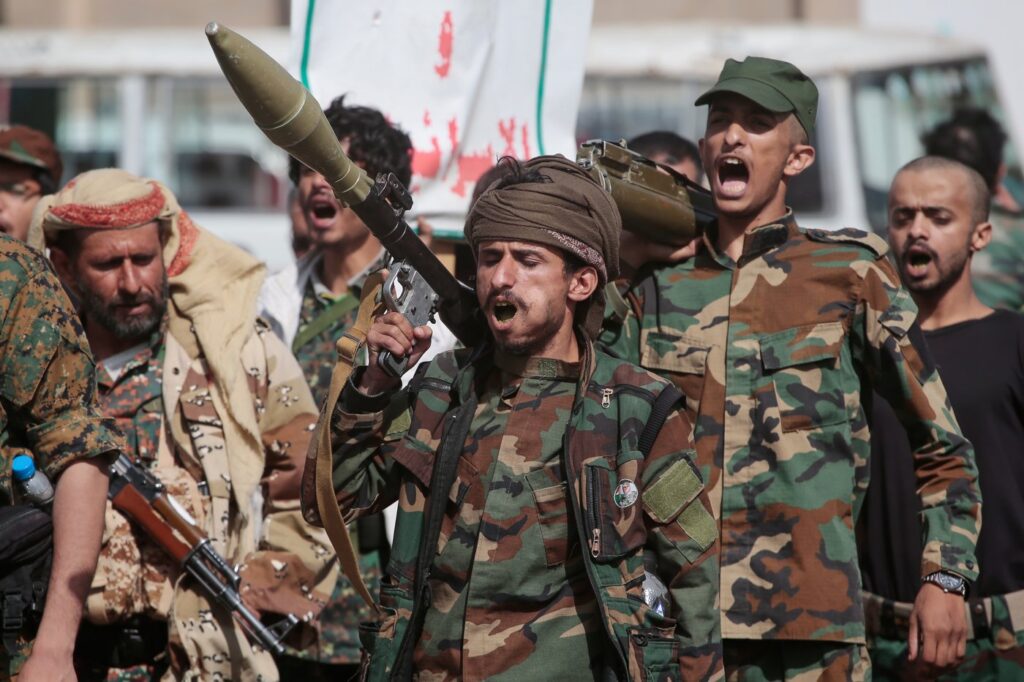
The situation in Yemen has escalated dramatically as Houthi rebels, backed by Iran, have advanced steadily south along the Red Sea coast, prompting a mass exodus of residents. Many families received little warning and were forced to flee amidst chaos and fear. Alaa Ali Salem described his ordeal as he escaped on a motorcycle with his family. The sudden congestion on the roads resulted in an accident, injuring all of them. They are among thousands now displaced in what continues to be the Arab world’s poorest country, facing the looming threat of a civil war resurgence.
During a visit by reporters to Aden, a city under the control of Yemen's internationally recognized government, newly displaced individuals were observed taking refuge in homes. The conditions were dire as families crowded into rooms with thin mattresses scattered across floors, surrounded by the few possessions they had hurriedly brought. Children were seen with smartphones, crutches were leaned against walls, and elderly individuals rested in the heat, with temperatures soaring into the 90s Fahrenheit (approximately 30 degrees Celsius).
The situation underscores a potential humanitarian catastrophe, with the United Nations raising alarms over the Houthis’ military movements towards the Bab el-Mandeb Strait at the southern end of the Red Sea. Its strategic significance as an alternative shipping route to the Strait of Hormuz poses a threat, especially since Iran has previously targeted vessels in that region amidst ongoing conflict.
The recent offensive by the Houthis brings back memories of the upheaval that claimed approximately 150,000 lives and led to near-famine conditions prior to the 2022 ceasefire. U.N. special envoy for Yemen, Hans Grundberg, expressed serious concerns over the renewed conflict as violence escalates.
Aden's residents have shown solidarity, as evidenced by the plight of Durrah Ali Hassan, who, amidst the chaos, sought refuge for her family after witnessing soldiers issuing retreat orders under fire. She expressed great concern for her pregnant daughter, who had already been experiencing complications and was later found in a coma at a local hospital. The International Organization for Migration has reported that at least 76,000 people have fled since July as fighting intensified, marking a significant increase in displaced persons.
In related events, Iraq's government confirmed that attacks on a critical Saudi oil pipeline originated from its territory, which has been linked to an umbrella group of Iran-backed militias. While these militias denied involvement, they commended the Houthis for their military successes. There are indications that the Houthis and Iraqi militias have coordinated attacks on Saudi oil infrastructures, further impacting global oil prices.
U.S. President Donald Trump suggested Iran was likely behind the pipeline attack but indicated a willingness to de-escalate tensions by mentioning that the Houthis expressed a desire not to engage in conflict with the U.S. Although discussions have been noted between the Houthis and the U.S. administration, no specific timeline was provided for these talks.
Meanwhile, Iran's President Masoud Pezeshkian stated that the Houthis have their issues and are not directly in conflict with Saudi Arabia; however, the Houthis continue to exert pressure on Saudi Arabia, which supports the Yemeni government against the rebels. Iranian authorities reported a projectile attack from Yemen that resulted in injuries and damage to property in Saudi Arabia, with officials blaming the Houthis.
Looking ahead, Iran announced a regional meeting set for Monday between the Gulf countries to discuss shipping routes and facilitate discussions with Oman, which is strategically positioned across the Strait of Hormuz. Despite these discussions, commercial ship traffic remains perilously low. Iran has signaled an intent to impose transit fees, and any agreement reached with Oman on the Strait may not lead to an opening for normal shipping activities unless the U.S. military lifts its blockade.
In summary, the escalating conflict in Yemen not only threatens the lives of those within the country but also the stability of global oil markets and regional security dynamics in the Middle East. As families grapple with the immediate impacts of violence, the broader implications of the conflict are becoming increasingly pronounced in global discussions.