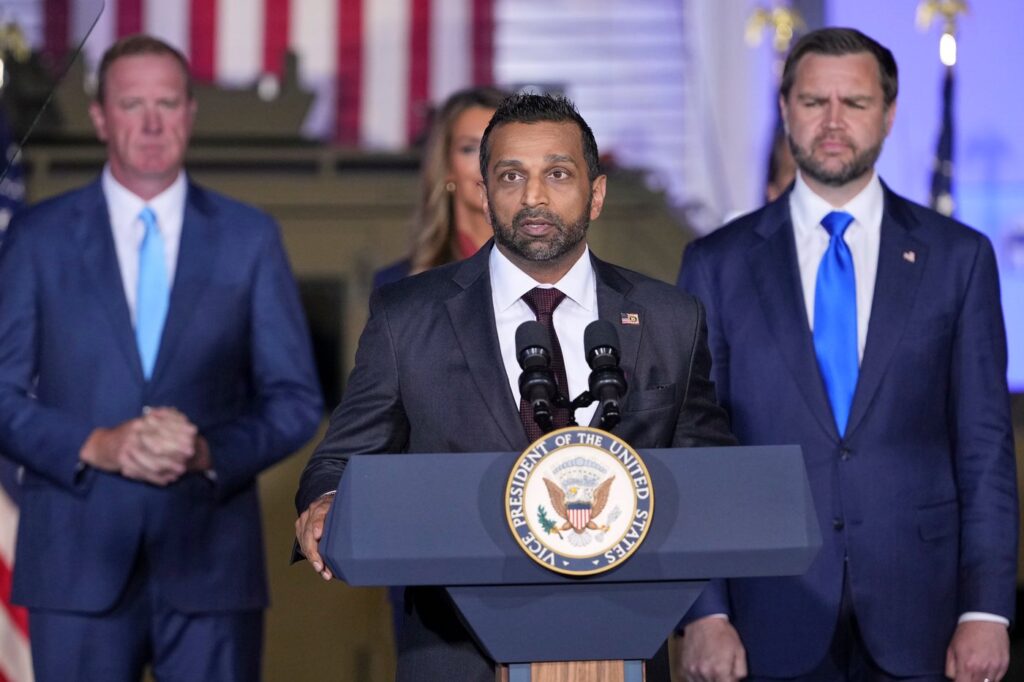
During a Senate Judiciary Committee hearing, FBI Director Kash Patel defended his agency's recent policy change that allows applicants who have previously engaged in prostitution and bestiality to be considered for employment. Patel emphasized that the change aims to ensure that victims of these acts are not automatically disqualified when applying for a job, thus broadening the agency's hiring criteria.
The contentious hearing featured intense exchanges between Patel and Democratic senators, with significant focus on his controversial decisions regarding FBI firings and the potential deployment of agents to polling places on Election Day. The hearing highlighted the rising tensions in the political landscape, particularly surrounding the FBI's investigations into President Donald Trump's actions.
Senator Cory Booker of New Jersey exemplified the stark criticism directed at Patel, calling him an "incompetent lackey" and likening his behavior to that of an amateur attempting to fit in with a fraternity. In response, Patel retaliated by labeling Booker a “mockery” in the Senate alongside his colleague, Senator Adam Schiff, known for his adversarial stance towards the FBI Director. This personal clash underscored the partisan nature of the hearing.
Patel addressed questions regarding the FBI’s hiring standards, stating that the policy change regarding prostitution and bestiality does not lower standards. Instead, he argued, it is meant to prevent victims who were coerced into such acts from being excluded by default. He highlighted the importance of considering the contexts under which applicants may have engaged in these activities and expressed a commitment to preventing victimization within the hiring processes.
The guidance permitting these changes was issued earlier in the spring, but Patel clarified that certain restrictions still apply, particularly for applicants who admitted to participating in prostitution within the last ten years. The dual shifts in policy reflect an evolving approach to hiring, one aimed at inclusivity while also maintaining necessary standards for employment.
As the midterm elections approached, Patel was scrutinized not only for the FBI's internal policies but also for the agency's role in overseeing election integrity. He maintained that the Department of Homeland Security had the primary responsibility for election monitoring while the FBI would assist at their field offices. However, he did not dismiss the possibility of sending agents to polling places should any issues arise, raising further concerns among Democrats about potential interference in the electoral process.
Despite repeated assertions of commitment to non-partisanship, Patel faced skepticism about the FBI’s involvement in ongoing investigations sparked by Trump’s unfounded claims of election fraud. These assertions have been thoroughly debunked, and various audits have concluded that no widespread fraud exists within American elections. Nevertheless, intensified scrutiny of the FBI’s actions has ignited fears that Patel’s leadership could politicize the bureau.
Further compounding tensions, Patel discussed the broader context of recent firings within the FBI, attributing high turnover rates to a need to eliminate what he termed "weaponized" personnel. Critics, including Senator Richard Blumenthal, confronted Patel over the dismissals of agents involved in investigations related to national security and classified documents, questioning the implications for the agency’s operational integrity.
Throughout the hearing, Patel asserted his belief in the necessity of maintaining a non-partisan FBI, yet his comments regarding the firings and staffing decisions drew scrutiny. He defended his travel expenditures and experiences, suggesting they aligned with practices set by previous directors, aiming to dismiss allegations of impropriety surrounding his tenure.
The exchange illustrated the growing rift within the FBI and the complex intersection of law enforcement, politics, and public perception as the agency navigates both internal scrutiny and external pressures during an election season marked by heightened tensions and historical controversies.