WASHINGTON (AP) - The Trump administration has denied visas for a high-level Palestinian delegation to attend the annual meeting of world leaders at the United Nations for the second consecutive year. This decision underscores the administration's stance towards the Palestinian Authority and its actions in the context of U.S.-Israel relations.
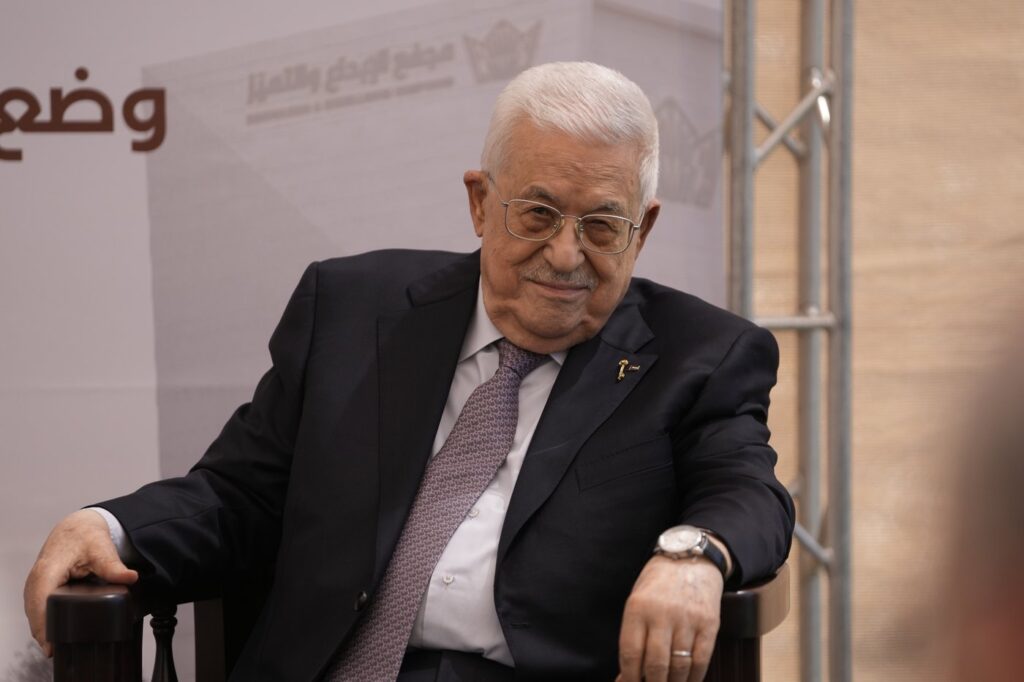
The State Department announced on Wednesday that Palestinian officials, including Palestinian Authority President Mahmoud Abbas, failed to honor their commitments under prior agreements aimed at achieving peace with Israel. In a detailed statement, the department highlighted that the Palestinian Authority continued to pursue legal action against Israel in international courts, namely the International Court of Justice and the International Criminal Court. It also pointed out that stipends continued to be paid to the families of prisoners convicted of attacks against Israelis. Additionally, the statement mentioned officials linked to the Palestine Liberation Organization (PLO).
The State Department declared, “As a consequence of their failure to reform, contrary to their commitments to the United States, and their ongoing activities that undermine the prospects for peace, the United States will extend sanctions that deny visas to PLO members and PA officials in accordance with standing U.S. law.” This move further signals the close alliance between the U.S. and Israel, especially amid international scrutiny regarding Israel's actions in Gaza following the deadly October 7, 2023, attacks by Hamas.
Despite these visa denials, the Palestinians will still be represented at the upcoming high-level meeting of the U.N. General Assembly by their diplomats who are already accredited to the United Nations. Last year, Abbas addressed the assembly via video link, indicating a continued presence despite the restrictions imposed by the Trump administration.
The decision to deny visas is part of a broader trend by the Trump administration to restrict visa access, reinforcing diplomatic ties with Israel during a period of unprecedented military action in Gaza. Following the deadly attacks by Hamas, Israel has faced significant international isolation, yet maintains strong support from the U.S. This support is further complicated by a fragile ceasefire brokered by the United States in October, which has not prevented continued Israeli strikes in Palestinian territories.
Moreover, the Trump administration has initiated a campaign aimed at dismantling the International Criminal Court (ICC), accusing it of attempting to unfairly prosecute U.S. and Israeli personnel for alleged crimes in various conflict zones, including Afghanistan, Iraq, and Gaza. It's important to note that neither Israel nor the United States are members of the ICC, which has led to further tensions in this international arena.
In conclusion, the ongoing diplomatic actions reflect the complicated dynamics of U.S., Israeli, and Palestinian relations, particularly in the wake of recent escalations. As global leaders prepare for discussions at the United Nations, the implications of these visa denials and the broader geopolitical landscape remain crucial factors in the pursuit of peace in the region.