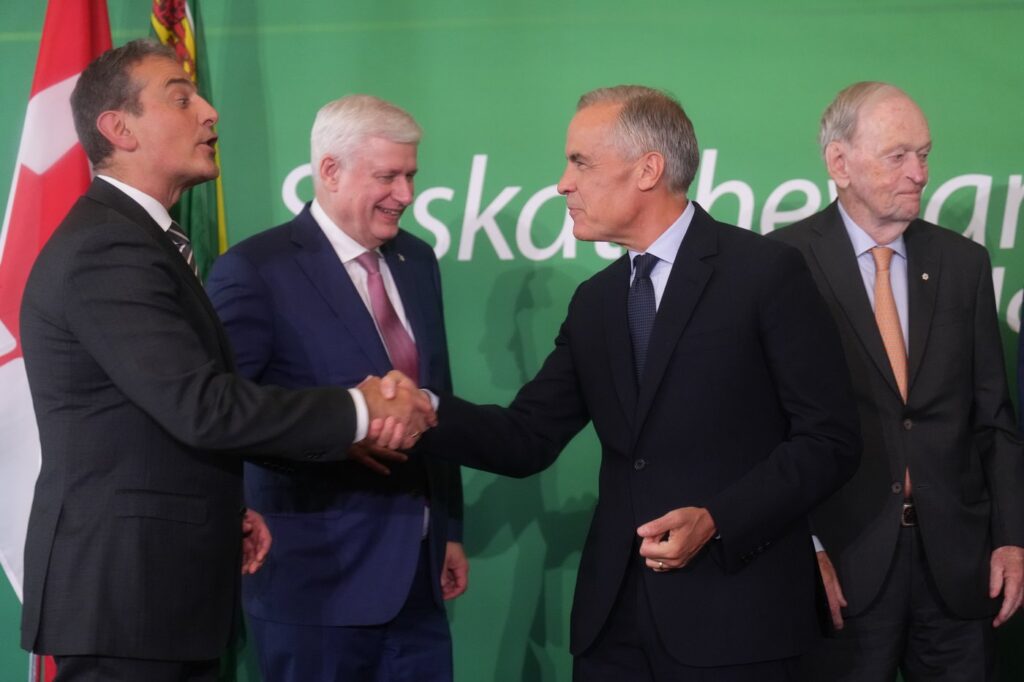
TORONTO — Former Prime Minister Stephen Harper addressed the importance of Canada reducing its reliance on the United States during his closing remarks at Canada’s first-ever national investment summit on September 15, 2026. Harper asserted that the federal government had “no choice” but to discontinue trade talks with the U.S., emphasizing the necessity of maintaining Canadian sovereignty amidst growing tensions.
Harper highlighted that the current U.S. administration views Canada’s economic integration as a threat to its own sovereignty. He remarked, “Thus, to maintain that sovereignty, we must pursue diminished reliance upon the United States.” While acknowledging that this transition would incur significant costs, Harper expressed confidence that Canadians are prepared to accept these challenges.
The former Prime Minister described the recent breakdown in trade negotiations as “sad” but ultimately necessary, believing that this decision could lead to new opportunities for Canada. Harper spoke about the closure of a last-ditch effort to finalize a new trade deal in August, following Prime Minister Mark Carney’s decision to suspend talks. This move came after American negotiators imposed unacceptable last-minute demands, resulting in new 50 percent U.S. tariffs on Canadian exports and retaliatory measures from Ottawa.
At the investment summit, which drew hundreds of executives and global asset managers, Harper urged Canada to enhance its internal competitiveness and external connections to prevent being overly dependent on U.S. markets. He stated, “Canada has come ‘nowhere close’ to realizing its true potential,” further asserting that Canada’s natural resources represent a significant comparative advantage. Harper emphasized the need for the country to take responsibility for its economic challenges rather than blaming external factors.
Additionally, Harper commended the federal government for implementing measures to expedite major project approvals, particularly in the energy sector, while urging for further action. He noted, “The burdens and restrictions that do not exist elsewhere simply must be removed in Canada,” warning that without such changes, the U.S. would remain Canada’s sole market with little urgency for improvement.
Meanwhile, Conservative Leader Pierre Poilievre criticized the government’s progress at the investment summit, questioning the tangible results of recent initiatives. He expressed frustration over a lack of meaningful outcomes after months of speeches and summits, highlighting the rising costs of food, gas, and housing for Canadians. Poilievre's remarks underscored a growing concern about the effectiveness of the government's economic strategy.
In response, the Prime Minister's Office stated that the investment summit “laid the foundation for enormous new investment and strategic partnerships,” claiming nearly $500 billion in new investment commitments to Canada. Major Canadian pension funds, insurers, and institutional investors reportedly committed around $100 billion in new capital to Canadian projects. Additionally, Canada’s top banks pledged nearly $325 billion in new financing for businesses and infrastructure.
The summit facilitated various announcements, including an expansion of Bell Canada’s AI data centre project in Saskatchewan, as well as Manitoba’s decision to waive provincial sales tax on significant capital spending for the Port of Churchill, aimed at attracting international investment. When asked about Harper’s involvement, Poilievre reiterated that “Conservatives are always willing to put Canada first,” reflecting a unified stance among party members on prioritizing national interests.