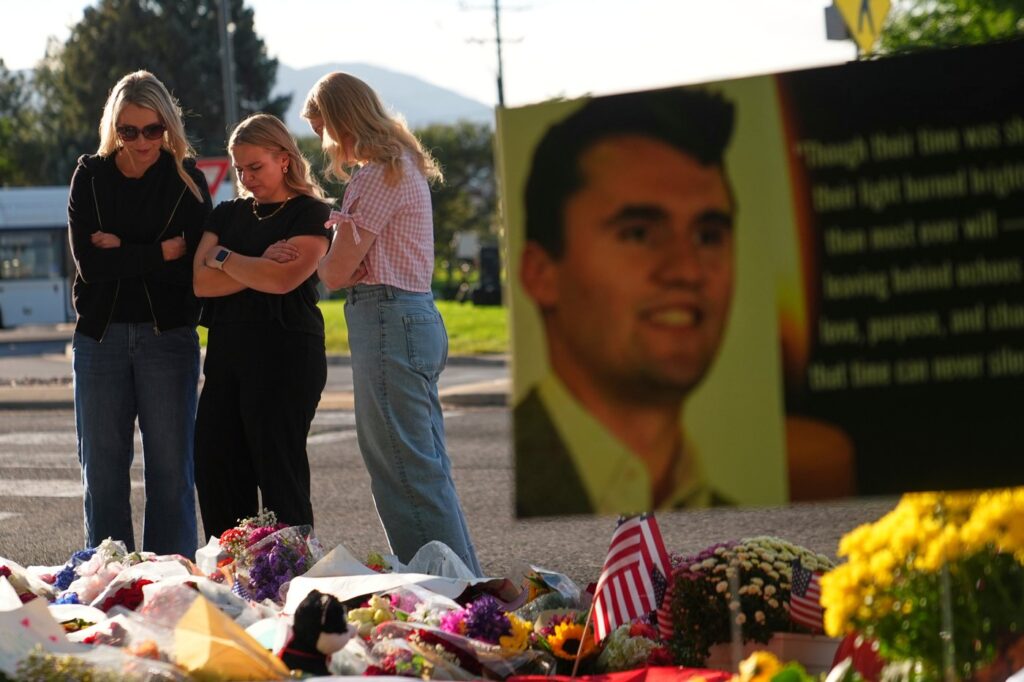
SALT LAKE CITY (AP) — The family of Charlie Kirk is holding Utah officials accountable for failing to ensure his safety, following the conservative activist's tragic assassination at Utah Valley University on September 10, 2025. In a wrongful death notice announced on Wednesday, the family's attorneys are preparing for a potential lawsuit, claiming that a series of "reckless decisions" by university officials allowed a sniper to attack Kirk from over 400 feet away. The university is facing significant backlash for its major shortcomings in event security on the day of the incident.
At the time of the shooting, 31-year-old Kirk was engaging in a debate with students in an outdoor courtyard, with thousands of attendees present. An analysis by the Associated Press following the incident highlighted that the university failed to implement essential public safety practices, which have become standard in events throughout the nation. Key safety protocols typically include adequate campus police presence, aerial drone surveillance of rooftops, thorough coordination with local law enforcement, and the use of bag checks or metal detectors.
On the day of the shooting, campus police staffing levels were noticeably below what is recommended for a university of Utah Valley's size. Additionally, no efforts were made to use drone surveillance, nor were local law enforcement officers involved in securing the event, which drew approximately 3,000 attendees. Kirk was ultimately taken to a hospital in a private vehicle instead of through an ambulance, a move that could have dire implications for his chances of survival.
Kirk's family legal counsel, D. Loren Washburn, emphasized in the notice that a rooftop shooter should have been a critical concern, especially considering an attempted assassination of former President Trump by a sniper from a rooftop just a year prior. The legal document, dated September 9, serves as a prerequisite under state law before the family can pursue a formal lawsuit. The notice names several parties, including Utah Valley University, its then-president Astrid Tuminez, the campus police department, its chief Jeffrey Long, and the state of Utah.
A spokesperson for Utah Valley University, Sharon Turner, acknowledged receipt of the wrongful death notice and stated that the university would address the matter according to established processes, emphasizing a commitment to supporting the campus community. In turn, the Utah Attorney General's Office noted that they do not comment on matters potentially headed for litigation.
The family's attorneys point out further negligence by officials that contributed to the situation, including the absence of a sufficient risk assessment before the event was approved, inadequate perimeter security, and the lack of immediate first responders at the scene. These oversights, according to Washburn, rendered Kirk vulnerable to his assassin's attack.
Following the shooting, Chief Jeffrey Long stated that six officers were on duty at the event and coordinating with Kirk's eight-person private security team. The university announced plans to expand its police force in response to the tragic incident.
Tyler Robinson, a Utah resident, turned himself in a day after the shooting, reportedly telling his romantic partner that he had "had enough of [Kirk's] hatred." Robinson faces charges of aggravated murder, which carries the possibility of the death penalty if convicted. A judge has ordered the case to proceed to trial, although a date has not been scheduled yet.
In a preliminary hearing conducted in July, prosecutors presented what they described as compelling evidence against Robinson, including surveillance footage of him on campus, DNA linked to a rifle found near the shooting site, and a handwritten note allegedly left for his partner revealing that he had taken the opportunity to kill Kirk. Kirk's family, including his parents Robert and Kathryn Kirk, and his widow Erika Kirk, were present during the hearings.
Under state law, relatives of individuals who die due to wrongful acts or negligence can file lawsuits for damages. While the notice from Kirk's family did not specify the damages they seek, it sets the groundwork for potential legal action against those they believe are responsible for his death.