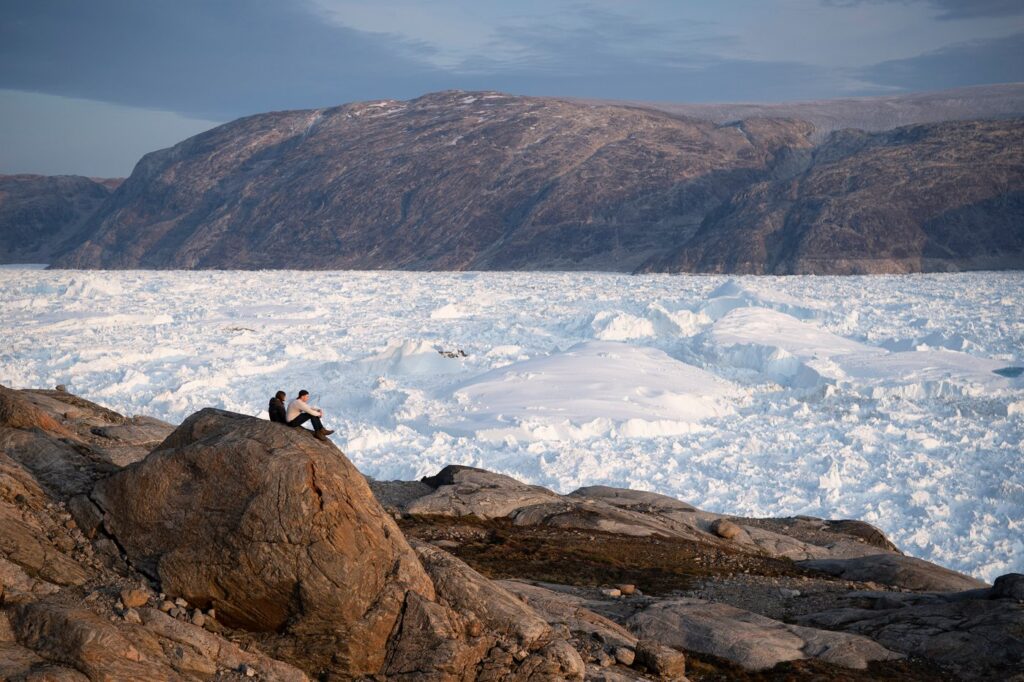
Since 1979, approximately 12.5 trillion tons (11.3 trillion metric tons) of ice from the glaciers in Greenland and Antarctica have melted, which is equivalent to enough ice to form a layer five feet deep across the continental United States. This alarming statistic is highlighted in a recent scientific report, which points to the profound impacts of climate change on the planet's ice sheets.
The warming of the Earth is accelerating the melting of these two significant ice sheets, with a notable finding that five-sixths of the melting is attributed not to rising air temperatures but to warmer ocean waters eroding the ice from below and the sides. As glaciers continue to flow into the oceans, this phenomenon contributes to the rising sea levels, a trend that researchers are increasingly concerned about.
Eric Rignot, a co-author of the study and an ice scientist at the University of California, Irvine, emphasized that "the ice sheets are melting away fast." He warned that the continued melting of polar regions is contributing to rising sea levels that will increasingly endanger coastal areas worldwide.
The report indicates that all the melted ice has transformed into nearly 3 quadrillion gallons of water (11.3 quadrillion liters), raising global sea levels by about one inch (3.1 centimeters) since 1979. Although this may seem insignificant, it has crucial implications. For each third of an inch (or centimeter) of sea level rise, an estimated 2 to 3 million people face flooding at least once a year, as stated by Ines Otosaka, the lead study author and a researcher at Northumbria University in England.
In a stark illustration of the rapid changes occurring, the Jakobshavn glacier in Greenland is currently retreating at a rate of up to 164 feet (50 meters) a day. An international collaboration of polar scientists, led by the European Space Agency, expanded previous assessments by integrating data from NASA satellites, allowing them to track ice sheet volumes in Antarctica back to 1979 and in Greenland to 1972.
The study revealed a clear trend: the ice sheets are losing mass at an increasing rate, especially in terms of ice discharged into the ocean. Otosaka noted that while the ice sheets appeared stable in the 1970s, 1980s, and 1990s, significant melting began in the 2010s. This acceleration in melting highlights a concerning correlation with climate change, suggesting that the impacts will persist for decades, even if efforts to curb global warming prove successful.
Although the rate of melting seemed to stabilize from 2020 to 2023, the authors clarified that this pause was a reflection of short-term weather fluctuations rather than a long-term trend. Otosaka has observed an uptick in the melt rate since 2023, indicating that the upward trend has reasserted itself. The temporary stability observed in East Antarctica, attributed to record snowfall that offset rapid melting in the West Antarctic Ice Sheet, has drawn concern from researchers about the potential for future collapses.
According to David Holland, an ice scientist at New York University, the predominance of dynamic processes, which are more abrupt compared to gradual air-driven melting, increases the risk of triggering runaway "tipping points" within the ice sheets. This dynamic instability is particularly troubling in the context of potential ice sheet collapse scenarios. The study utilized 45 independent surveys and 27 different satellites, enhancing confidence in the findings.
Ted Scambos, an ice scientist at the University of Colorado who was not part of the study, remarked on the ongoing challenges posed by Antarctic mass loss, describing it as "a clear and present danger" despite its long-term implications. He expressed concern about society's awareness of these issues, noting that while we understand the future challenges posed by climate change, the actions necessary to mitigate them have yet to be taken.