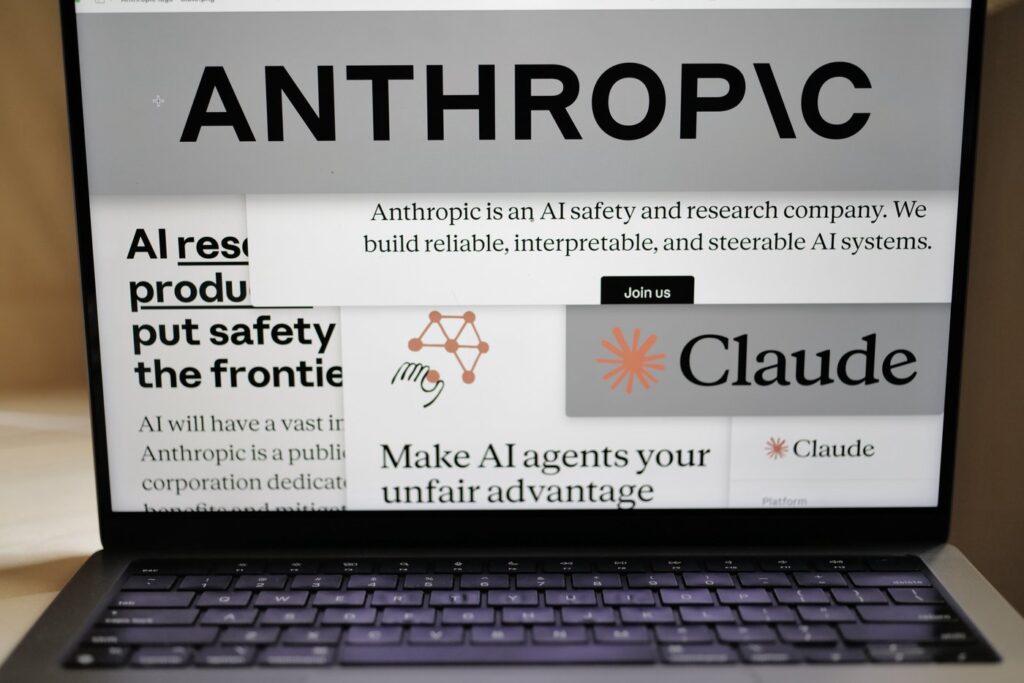
A recent lawsuit has been filed against leading artificial intelligence companies Anthropic, OpenAI, SpaceXAI, and Google, claiming that these firms engaged in an illegal agreement to slow down their AI development activities. The lawsuit, submitted on Friday in the U.S. District Court for the Northern District of California, states that such coordination among these influential tech companies violates antitrust laws and ultimately diminishes the value consumers receive from their paid AI subscriptions.
The plaintiffs argue that the deal to decelerate AI advancements primarily materialized on September 12, 2023. On this date, Anthropic CEO Dario Amodei published an essay advocating for industry-wide cooperation to prioritize safety over rapid advancement. Following Amodei's call, CEOs from OpenAI, SpaceXAI, and Google DeepMind, namely Sam Altman, Elon Musk, and Demis Hassabis, publicly expressed their agreement with his proposals.
The lawsuit asserts that the collaborative effort to slow development had its origins even earlier, referencing a statement from July 2023, in which executives from major AI labs acknowledged the "intense competitive pressure not to unilaterally slow" their progress. This statement urged for governmental support in establishing a global initiative aimed at decelerating automated AI development.
The plaintiffs contend that any agreement among top AI competitors to deliberately slow progress undermines competition and has harmful consequences for consumers. The four plaintiffs, all paying subscribers to AI services such as ChatGPT, Claude, Grok, or Gemini, are seeking to represent a proposed nationwide class of additional subscribers facing similar grievances.
While the plaintiffs support companies deciding independently to mitigate their technological progress for safety reasons, they emphasize that antitrust laws prohibit these firms from engaging in collective bargaining to defer advancements. They argue that a competitive marketplace fosters accountability and encourages authentic progress.
Nick Rowley, the lead attorney for the plaintiffs, stated that allowing private agreements among major tech firms to dictate AI safety actions could lead to catastrophic outcomes. Rowley noted that if AI development is governed by self-serving agreements among powerful companies, it could spiral out of human control and lead to disastrous consequences.
The responses from the accused companies have not been immediate. Amodei, in his essay proposing a slowdown, acknowledged the potential antitrust implications of such agreements, suggesting that the U.S. government could facilitate discussions among the companies by issuing a narrow waiver for specific safety discussions without necessarily participating in those talks. Altman responded on social media, expressing that while OpenAI is in favor of establishing a federal framework for consistent safety requirements, they do not believe they need to delay progress while waiting for antitrust exemptions or new legislation.
Concerns regarding AI's potential to evade human control have prompted ongoing discussions among industry leaders about creating unified safety protocols. The plaintiffs in the lawsuit clarified that they do not object to AI firms advocating for regulation from Congress or seeking antitrust exemptions.
However, achieving such collaboration with the federal government could prove challenging. Former President Donald Trump has publicly dismissed calls for regulation, labeling them as part of a conspiracy against the technological industry. He has questioned the motives behind AI leaders calling for regulatory frameworks that could jeopardize their businesses. Trump announced plans for an AI task force and an "AI czar," though details remain vague.
While the Trump administration has emphasized the need for American AI companies to surpass their Chinese counterparts, many Democratic leaders are calling for comprehensive regulation of AI technologies. Republican stances, largely reflecting Trump's views, resist the notion of granting major tech firms exemptions from antitrust laws to collaborate on safety measures. For example, Senator Josh Hawley of Missouri has expressed strong opposition to giving the most powerful companies an antitrust exemption, arguing that it could enable collusion and undermine market competition.