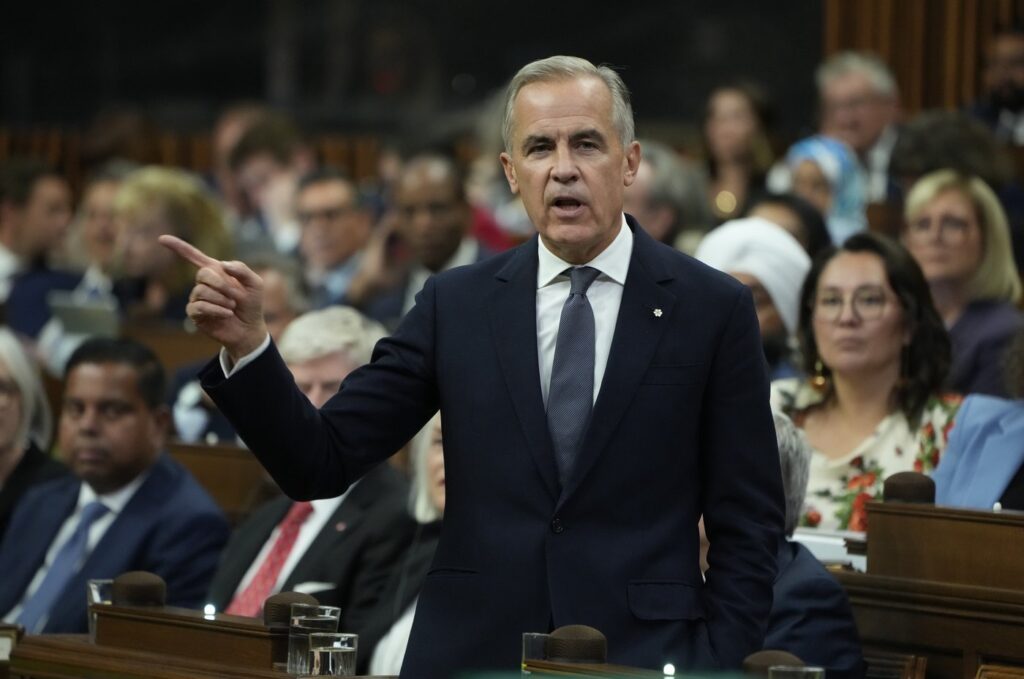
OTTAWA – Prime Minister Mark Carney has firmly stated that he will not reconsider his recent decisions to eliminate the digital services tax and contributions for Canadian content from streaming services. This remark came during a session in the House of Commons, where Bloc Québécois Leader Yves-François Blanchet questioned Carney's commitment to these decisions, especially in light of their failure to yield progress in ongoing trade discussions with the United States.
In response to Blanchet's inquiry, which was posed in French, Carney was succinct, stating simply, “No.” The issue at hand is significant, as Blanchet emphasized that large tech companies, which are now generating revenues surpassing those of entire nations, should take on a responsibility to support arts and culture in Canada. This point of contention highlights the ongoing debate about the role of major digital platforms in contributing to local content creation and cultural preservation.
Carney defended his government's approach by shifting the focus to the demands from the United States, noting that it was the American side that faltered by not implementing necessary restrictions aimed at protecting Canadian cultural elements, particularly the French language. The Prime Minister stated that U.S. pressures influenced Canada’s previous stance on the rules governing content discoverability online. He described these U.S. expectations as detrimental to Canada's capability to safeguard its cultural integrity, which ultimately played a role in Canada halting negotiations last August.
The discoverability rules mentioned are linked to the Online Streaming Act, legislation that the Canadian Radio-television and Telecommunications Commission (CRTC) introduced with the intent of requiring significant streaming platforms such as Netflix to allocate 15 percent of their Canadian revenues to support Canadian content initiatives. However, the federal government announced in June that it would be scrapping the mandate for this financial contribution, although the official process of doing so has yet to be initiated.
In addition to the shift on Canadian content contributions, the digital services tax, which aimed to impose a three percent levy on revenue generated from Canadian users by major tech firms like Amazon, Google, Meta, Uber, and Airbnb, is also being eradicated. Just before the first payment for this tax became due last year, Carney indicated that he would eliminate it in a bid to revitalize trade discussions with the U.S.
This series of decisions by Prime Minister Carney reflects an ongoing navigation through the complexities of international trade relations, especially amidst increasing scrutiny from both local political leaders and global tech influences. As these developments unfold, the implications for Canadian culture and its funding remain a significant concern for many stakeholders in the Canadian arts landscape.
The report highlights the tension between pursuing trade interests and maintaining cultural integrity, raising important questions about the future of Canadian content and the role of international tech giants in fostering or hindering local arts and culture.