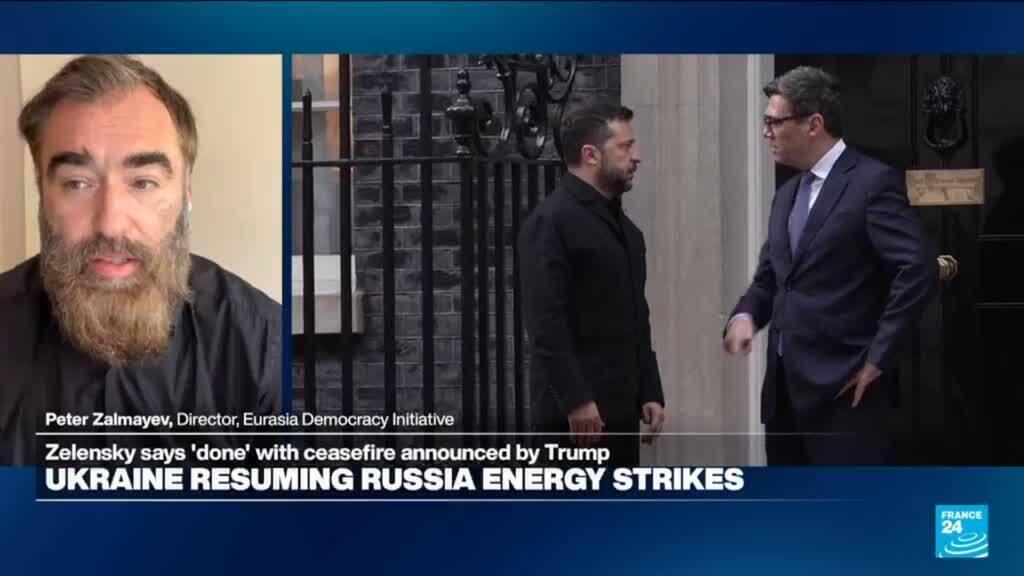
Delano D'Souza has invited Peter Zalmayev, the Founder and Director of the Eurasia Democracy Initiative, for a live discussion from Kyiv. The conversation centers around the current situation in Ukraine as President Volodymyr Zelensky declares Ukraine "done" with former President Donald Trump's self-proclaimed energy ceasefire. Zalmayev emphasizes the complexities of this declaration, particularly in light of Ukraine's renewed strikes on Russian oil refineries.
Zalmayev critiques Trump's unilateral announcement of an energy ceasefire, arguing that it lacks legitimacy due to the absence of a mutual agreement between Moscow and Kyiv. He notes that such diplomatic efforts require cooperation from both sides, stating, "When you talk about the energy ceasefire, it presupposes two to be able to tango and to dance this dance." This assertion underscores the challenges of negotiating peace or ceasefire agreements in a conflict characterized by ongoing aggression.
Amidst the backdrop of attacks on Ukraine's energy infrastructure, Zalmayev warns that Kyiv, led by Zelensky, may need to exercise tactical restraint. This restraint is crucial for preserving invaluable support from the United States and other Western allies. The conversation navigates the delicate balance Ukraine must maintain in responding to Russian aggression while ensuring continued military and economic assistance from Western nations.
The discussion also delves into the broader implications of Western sanctions imposed on Russia as part of the response to its invasion of Ukraine. Zalmayev outlines the significance of frozen Russian assets, describing them as a strategic tool for exerting pressure on the Kremlin. He reflects on how the West has approached these sanctions and whether they have been effective in curtailing Russia's capabilities or influencing its strategic decisions.
Another vital topic Zalmayev addresses is Washington's pursuit of economic normalization with Russia. He critiques this initiative, particularly when it occurs without meaningful concessions from the Kremlin. Zalmayev argues that any push for normalization should not come at the cost of undermining Ukraine's sovereignty or dismissing the realities on the ground, where Russian forces continue to commit acts of aggression.
As the conversation unfolds, Zalmayev's insights bring attention to the precarious geopolitical landscape in Eastern Europe. The ongoing conflict in Ukraine and the responses from global powers are shaped by a myriad of factors, including energy dynamics, military actions, and diplomatic negotiations. His arguments highlight the necessity for cohesive and strategic international actions that align with the aspirations of Ukrainian sovereignty and democracy.
Overall, the discussion led by D'Souza with Zalmayev illuminates critical issues in the evolving situation in Ukraine and its implications for global politics. The interplay of military engagements, diplomatic negotiations, and economic sanctions presents a complex narrative that continues to unfold in the region.