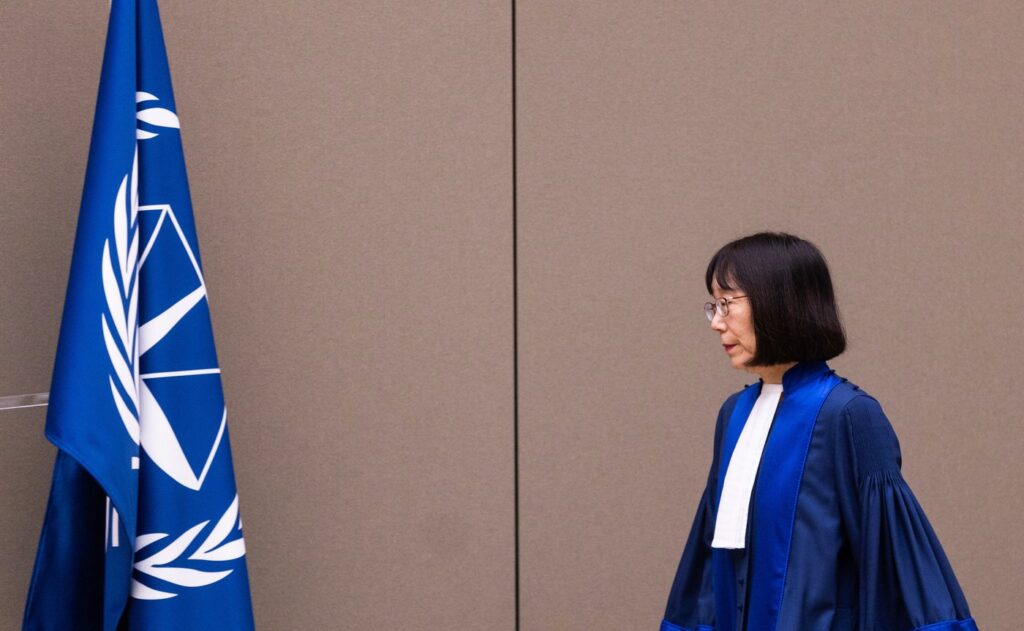
The president of the International Criminal Court (ICC), Judge Tomoko Akane, recently addressed the United Nations, accusing the Trump administration of taking steps to obstruct international justice through sanctions against the tribunal. She asserted that these actions would not prevail, as the ICC is committed to its mission.
In her remote briefing to the United Nations General Assembly, Akane emphasized the need for all 193 U.N. member states—beyond the 125 countries that are part of the ICC—to take substantial actions, both individually and collectively, in support of the court. She expressed concern over the unprecedented U.S. measures threatening the judges and prosecutors of the ICC, as well as the institution itself.
The accusations against the Trump administration are centered on a series of sanctions imposed on ICC officials, which escalated into a broader campaign targeting the entire court. This was largely a response to ongoing investigations involving the United States and its allies, including Israel. Akane pointed out that the announcement of sweeping new sanctions by the Trump administration occurred on October 9, the same day that South African jurist Navi Pillay, a former ICC judge, was awarded the Nobel Peace Prize for her contributions to promoting peace and international law. Akane drew a stark contrast between the global recognition of international justice and the attempts to undermine the institution that is fundamental to it.
The ICC, established in 2002, was designed to prosecute war crimes, crimes against humanity, and genocide, particularly in situations where countries are unable or unwilling to address such offenses themselves. Notably, the United States has never ratified the treaty that established the ICC and is not a party to it. Following the sanctions announcement, Secretary of State Marco Rubio remarked that the U.S. would impose an embargo on transactions with the court, describing the ICC as a "rogue court" and asserting that these measures would cripple its functionality in prosecuting actions against the U.S.
Despite these challenges, President Akane affirmed the ICC's resolve, stating, "Let me be clear: The court will continue to fully discharge its mandate with independence and impartiality, acting only on the basis of the law and the evidence, for the sake of the countless victims of grave crimes." The ICC's supporters, including representatives from the European Union, rallied at the U.N. General Assembly to show their solidarity with the court and endorse its vital work in seeking justice for the most severe crimes against humanity.
The developments signal ongoing tensions between the ICC and the U.S. administration, particularly regarding issues of international accountability and justice. As Akane's remarks suggest, the ICC remains focused on its fundamental mission, despite external pressures, and calls for broader global support to uphold the principles of international law and justice for victims worldwide.