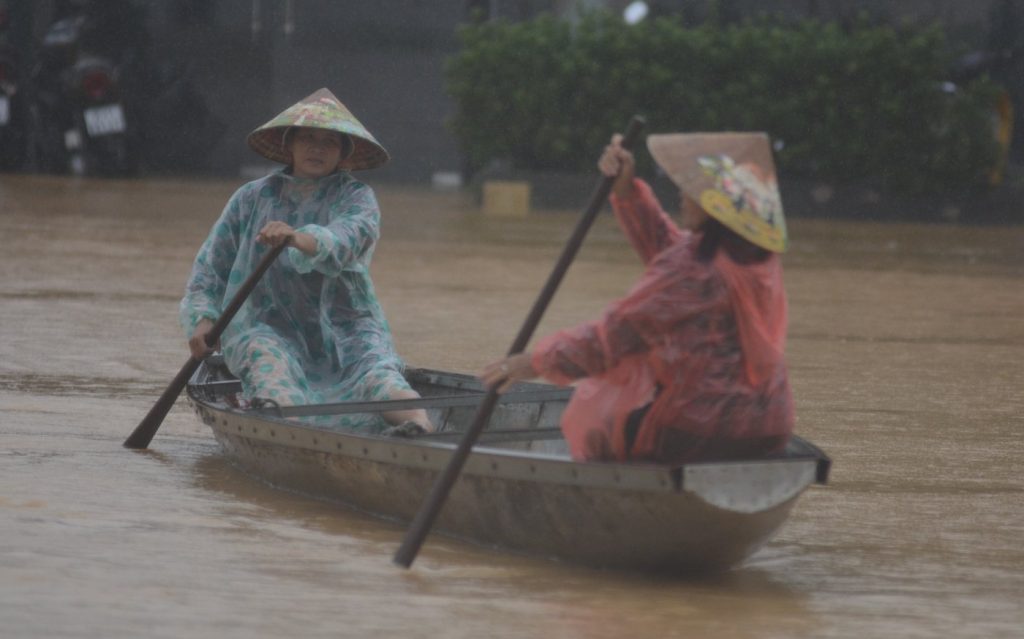
HANOI, Vietnam (AP) – Central Vietnam is facing severe flooding as a result of heavy rains, with rivers overflowing and submerging homes, farmland, and popular tourist destinations, including the historic cities of Hue and Hoi An. The rainfall in Hue reached an unprecedented 1,085 millimeters (42 inches) in a single 24-hour period, marking the highest total ever recorded in Vietnam, as reported by the country’s meteorological department.
By Tuesday morning, water levels in the iconic Perfume River in Hue had surged to 4.62 meters (15 feet), causing waist-deep flooding in both the UNESCO-listed former imperial capital of Hue and the ancient town of Hoi An. The situation became critical as tourists were evacuated by boat from Hoi An due to the continuous rainfall and the release of water from hydroelectric dams, which led to the Hoai River rising nearly 2 meters (6.5 feet). State media indicated that approximately 40,000 tourists had to be relocated to safer hotels.
Nguyen Ngoc Anh, a hotelier located near the Thu Bon River in Hoi An, stated, "The flood was rising so fast, and we had to quickly relocate our guests to other hotels outside the flooding area for their safety." He added that the hotel staff could only secure the doors of their establishments while evacuating the waterlogged premises.
The flooding in Hue has submerged numerous homes and obstructed major streets, forcing residents to rely on boats for transportation. Additionally, the train route connecting Hanoi in the north to the southern financial hub of Ho Chi Minh City was suspended, affecting thousands of passengers. To counteract the rising floodwaters, Vietnam’s railways deployed 19 carriages loaded with heavy stones—totaling 980 tons (1,080 U.S. tons)—on a bridge to prevent it from being washed away.
According to the Australian nonprofit Blue Dragon Children’s Foundation, around 1,000 individuals in rural areas of Thua Thien Hue province have become isolated due to flooding and landslides, including 200 children under their care. This exacerbates the already challenging situation for vulnerable populations affected by the flooding.
Experts have noted that global warming is intensifying tropical storms, making them stronger and wetter. Warmer ocean temperatures are providing these storms with increased fuel, resulting in more severe winds, heavier rainfall, and shifting precipitation patterns across East Asia. Vietnam, being one of the most flood-prone countries globally, has nearly half of its population living in high-risk areas.
The current disasters underscore the increasing urgency for climate adaptation and mitigation measures in the region, as the frequency and intensity of such extreme weather events appear to be on the rise. The impact on local communities, tourist economies, and infrastructure is profound, highlighting the need for robust preparedness plans and long-term strategies to cope with the effects of climate change.