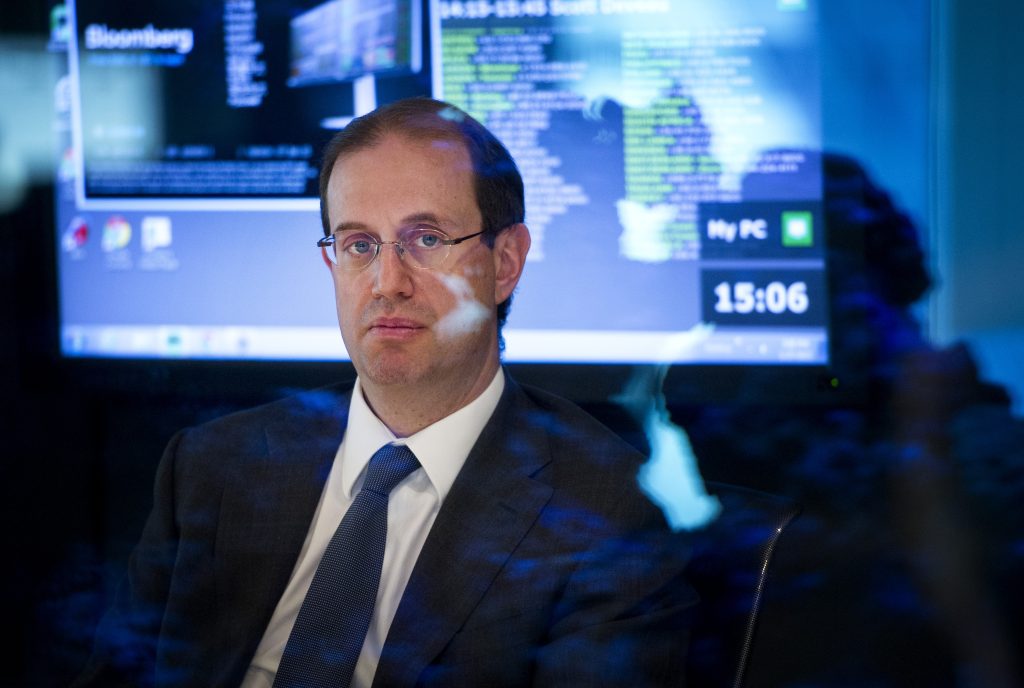
Prime Minister Mark Carney has announced the appointment of Mark Wiseman, a global investment banker and pension fund manager, as Canada's next ambassador to Washington. Wiseman is set to assume his new role on February 15 and will play a crucial part in the negotiations concerning the review of the continental free trade deal.
Wiseman, a longstanding friend of Carney, was one of the first individuals to support Carney's Liberal leadership campaign, contributing the maximum allowable donation of $1,750, as well as an additional $1,750 to the Liberal party during the spring election campaign. He will take over from Kirsten Hillman, who recently announced her departure from the ambassadorial role in order to allow a new team to focus on the anticipated review of the Canada-U.S.-Mexico trade agreement next year.
Mark Wiseman is also a member of the Prime Minister’s Council on Canada-U.S. Relations—an initiative that was initiated by former Prime Minister Justin Trudeau during Donald Trump’s second presidential inauguration. Although Wiseman was not originally included in the council, Prime Minister Carney appointed him just days after taking office in March. This significant appointment comes at a time when negotiators are preparing to address key trade issues between the two countries.
Born in Niagara Falls, Ontario, Wiseman spent most of his childhood in Burlington. He is the son of a plumber and pipefitter and a physiotherapist. Wiseman holds a joint Master of Business Administration and Law degree from the University of Toronto and has legal experience as a clerk for Beverley McLachlin when she served as a Supreme Court judge in Canada. His professional background includes work as a mergers and acquisitions lawyer for the multinational law firm Sullivan Cromwell in New York City and Paris. He also oversaw equity funds at the Ontario Teachers’ Pension Plan and managed the investment fund for the Canada Pension Plan.
In 2016, Wiseman became the senior managing director and global head of active equities at BlackRock, the world’s largest asset manager. However, his tenure at BlackRock was cut short in 2019 after he failed to disclose a consensual relationship with a colleague. Following his departure, he chaired the Alberta Investment Management Corp and actively advocated for sustainable investments and the economic advantages of transitioning to a zero-carbon economy.
Wiseman enters his new position with notably less political and diplomatic experience than previous Canadian ambassadors to the United States. His predecessors include former premiers Gary Doer and Frank McKenna, as well as veteran federal cabinet minister Michael Wilson. Notably, political strategists and campaign managers like David MacNaughton and career diplomats such as Kirsten Hillman and Michael Kergin have also held the ambassadorial role. Unlike his predecessors, Wiseman lacks substantial experience in negotiating comprehensive trade agreements; for example, Hillman was the lead negotiator for the Comprehensive and Progressive Agreement for Trans-Pacific Partnership, while Wilson contributed to the original Canada-U.S. free trade agreement and the inaugural version of the North American free trade pact.
Opposition voices, including those from the Bloc Québécois and Conservative Party, have already raised concerns about Wiseman’s background. They have specifically criticized his role as a co-founder of the Century Initiative, which aims to increase Canada’s population to 100 million by the year 2100. Conservative Leader Pierre Poilievre has referred to this goal as a “radical” idea. Additionally, the Bloc Québécois has expressed fears regarding the potential impact on Quebec, pointing to a deleted social media post from Wiseman two years ago that suggested Canada should pursue a population of 100 million “even if it makes Quebec howl.”
This report highlights the unique challenges and criticisms that Wiseman may face as he embarks on this pivotal role in U.S.-Canada relations.