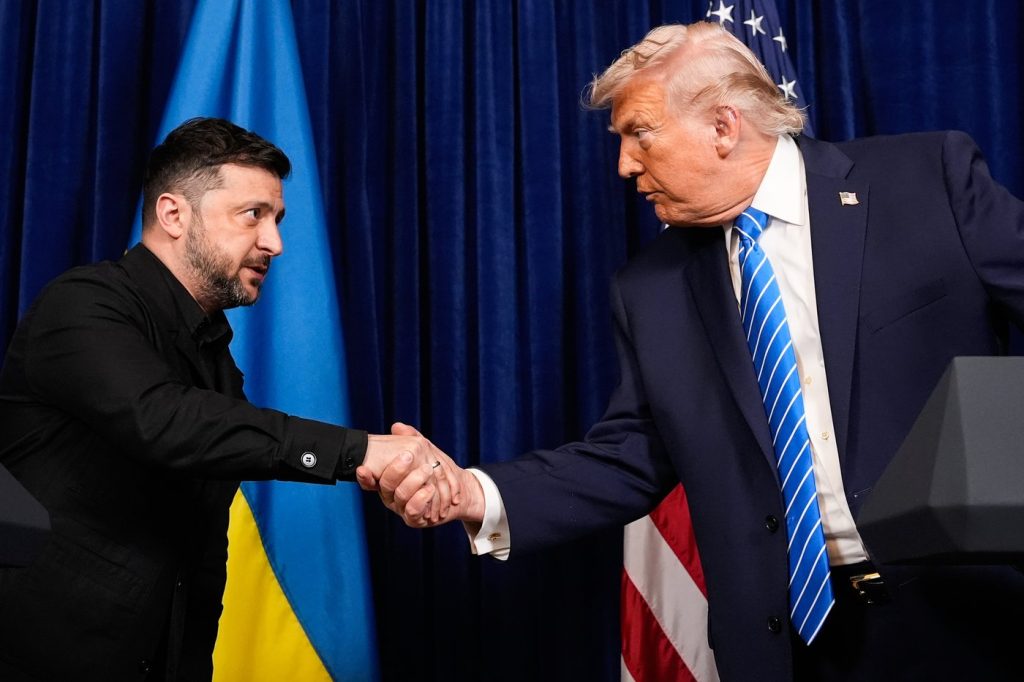
PALM BEACH, Fla. — President Donald Trump stated on Sunday that Ukraine and Russia are "closer than ever before" to reaching a peace deal. This assertion was made during a meeting with Ukrainian President Volodymyr Zelenskyy at Trump's Mar-a-Lago resort. Trump acknowledged, however, that the negotiations are complex and could still falter, leaving the conflict unresolved for years. The meeting followed a conversation between Trump and Russian President Vladimir Putin, described by Trump as "excellent," lasting two and a half hours, despite ongoing Russian attacks on Ukraine.
During a news conference with Zelenskyy, Trump emphasized his belief that Putin still desires peace. Trump characterized Zelenskyy as "brave" and both leaders agreed that several significant issues remain unresolved in the negotiation process. These issues mainly involve the status of Russian-controlled territories in Ukraine and the security guarantees needed for Ukraine to prevent future invasions. After their discussions, Trump and Zelenskyy called various European leaders to include them in the ongoing dialogue.
Zelenskyy mentioned that Trump had agreed to host European leaders again in January, possibly in Washington D.C. The Ukrainian president expressed gratitude towards Trump, asserting that Ukraine is ready for peace. Following the meeting, Trump planned to have another call with Putin. A Russian official, Yuri Ushakov, reported that the Trump-Putin conversation was initiated by the U.S. and described it as "friendly, benevolent, and businesslike." Ushakov also highlighted that a significant political decision from Kyiv regarding the Donbas region and other disputes is critical for achieving a "complete cessation" of hostilities.
Both Trump and Zelenskyy recognized the Donbas region as a crucial sticking point in the negotiations. Trump indicated that the parties involved are inching closer to an agreement but acknowledged the difficulty of the issue. Zelenskyy reiterated that their positions regarding the Donbas region differ fundamentally. While acknowledging these differences, Trump maintained that he believes Putin is "very serious" about concluding the conflict.
Despite the optimism about negotiations, Trump cautioned that they could still collapse unexpectedly. "In a few weeks, we will know one way or the other," he speculated, indicating that a previously overlooked item could potentially derail the negotiations, which he described as very detailed and complicated. Trump and Zelenskyy's meeting underscored the progress made by Trump's negotiators, with drafts of peace proposals being exchanged between the sides in recent weeks.
Zelenskyy claimed that the discussed 20-point draft proposal is "about 90% ready." Talks have centered on the U.S.'s offer of security guarantees for Ukraine, similar to those provided to NATO members. Zelenskyy expressed willingness to abandon Ukraine's application to join NATO if it could receive protection akin to NATO assurances to safeguard against future Russian attacks. Furthermore, Zelenskyy commented on ongoing discussions with U.S. figures such as Steve Witkoff and Jared Kushner, adding that while substantive details are under discussion, challenging issues remain to be resolved in the upcoming weeks.
Throughout his first year back in office, Trump has been active in attempting to broker peace in Ukraine, revealing a level of frustration with both Zelenskyy and Putin. This is a contrast to his earlier claims while campaigning for the 2024 election, where he suggested he could end the war in a single day. Instead, he has acknowledged the intricacies involved in the negotiations and alluded to specific demands from both sides that complicate the peace process.
Putin has historically insisted on retaining captured territories, including the Crimean Peninsula, and has demanded that Ukraine cease its NATO ambitions. His demands also include limitations on Ukraine's military capacity and recognition for the Russian language. Although Trump has entertained some of Putin's requests, proposing that certain concessions could persuade him to consider ending the war, the process remains fraught with complications. Russia's position is further complicated by their demands to maintain a military presence in parts of Donetsk, even in the event of a demilitarized zone as part of a peace agreement. Both parties recognize that a compromise will require time and careful negotiations, illustrating the ongoing difficulties surrounding the conflict and its potential resolution.