President Donald Trump has invited Japanese Prime Minister Sanae Takaichi to visit the United States this year, marking her potential first trip since taking office in October 2025. The invitation was disclosed by the Japanese foreign ministry following a phone call between the two leaders on Friday. While the White House has yet to confirm the details of the call, the announcement arrives amidst heightened tensions between Japan and China, emphasizing the strategic importance of U.S.-Japan relations.
The relationship between Japan and China has become increasingly strained, prompting the U.S., as a close ally of Japan, to seek stronger ties with Tokyo while also attempting to stabilize its own relationship with Beijing. This comes as Trump is anticipated to make a trip to China in April 2026. China's recent military exercises near Taiwan, which included military maneuvers that angered Japan, highlight the increasingly volatile security landscape in the region.
During the phone call, Takaichi and Trump agreed to coordinate for her visit to occur in the spring, with suggestions that it could coincide with the annual cherry blossom festival in Washington. The Japanese foreign ministry stated that both leaders are committed to "carving out a new chapter" in the history of the Japan-U.S. alliance, in a year when the United States celebrates its 250th anniversary. They also expressed intentions to deepen economic and security cooperation between the two nations.
Moreover, Takaichi and Trump affirmed their commitment to promote cooperation among like-minded partners, including their trilateral partnership with South Korea, aimed at ensuring a free and open Indo-Pacific region. While the foreign ministry noted that discussions encompassed various issues within the Indo-Pacific, it did not provide specifics regarding their discussions on China’s recent military actions.
The military drills by China, particularly near Taiwan, coincide with the Trump administration's announcement of a significant arms sales package to Taiwan, worth over $11 billion. If approved by Congress, this would mark the largest military aid provided to Taiwan, which has elicited sharp criticisms from Beijing, who claims sovereignty over the self-governing island. The United States is legally bound to supply Taiwan with defense resources in order to deter potential aggression from the mainland.
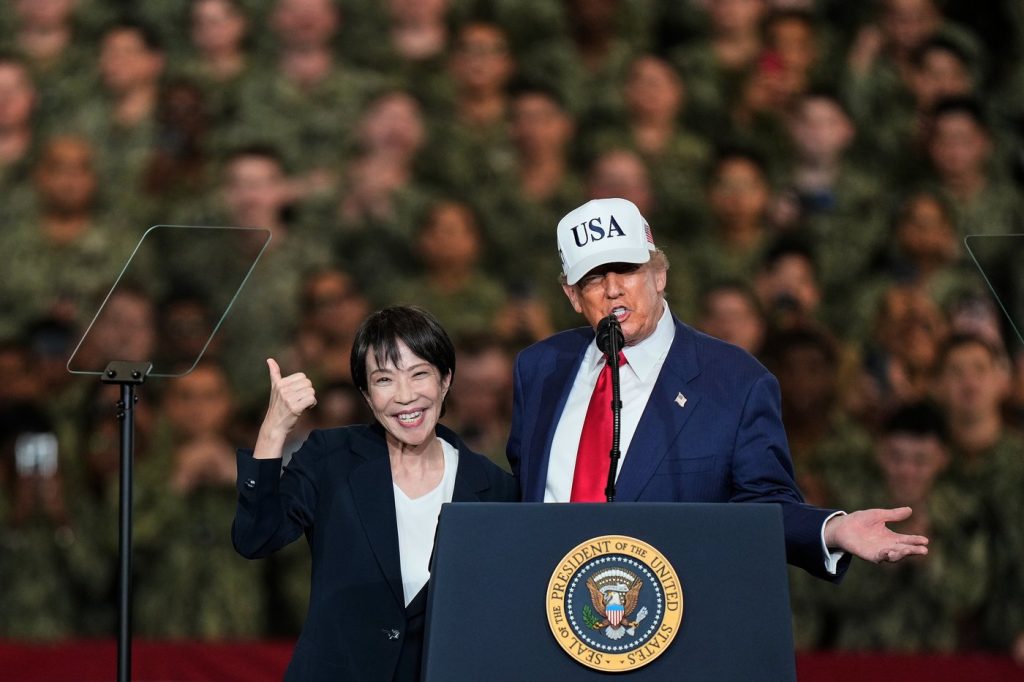
Notably, Trump mentioned he was unaware of China’s military exercises prior to their commencement, but he has consistently emphasized his favorable relationship with Chinese President Xi Jinping. Previously, he met Takaichi in Tokyo shortly after her inauguration, where they engaged in cordial discussions, including a joint visit to U.S. troops on an aircraft carrier. After Takaichi's controversial comments regarding military support for Taiwan prompted a response from Beijing, Trump reassured her of their strong friendship, although it remains unclear whether they discussed the implications of her remarks.
The potential meeting between Trump and Takaichi not only symbolizes a strengthening of Japan-U.S. relations but also underscores the geopolitical complexities in East Asia as nations navigate the challenges posed by China. Both leaders appear focused on reinforcing their alliance, particularly as tensions in the region continue to rise.