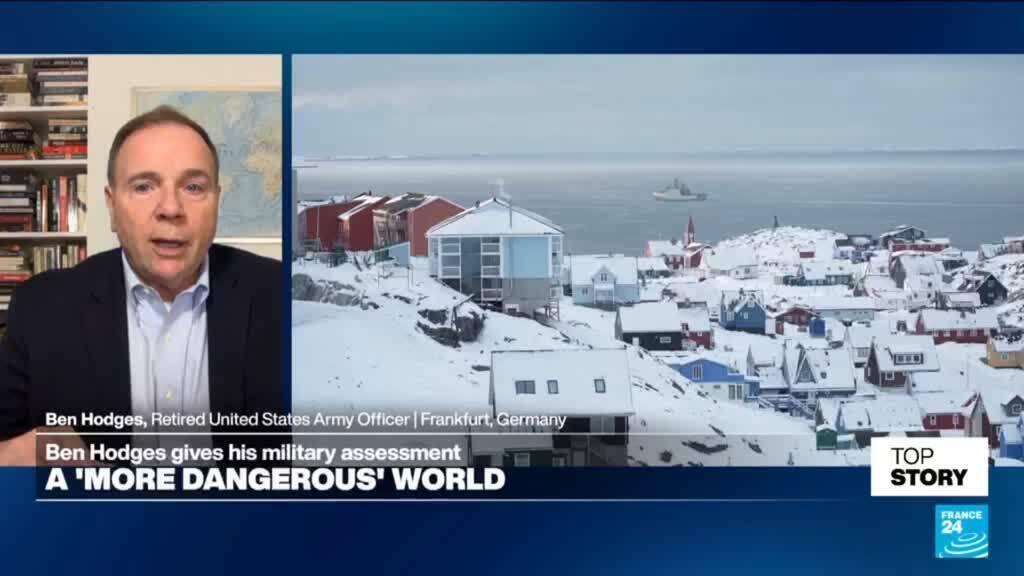
In a recent interview with Gavin Lee, Lt. General (ret.) Ben Hodges, who previously served as the commander of U.S. Army Europe and NATO Allied Land Command, provided an in-depth evaluation of the current geopolitical climate. His insights encompass key areas such as Ukraine, NATO, U.S. foreign policy, and former President Donald Trump’s ambitions regarding dominance in the Western Hemisphere. Hodges's analysis reflects his decades of military experience and offers a nuanced understanding of the complex interconnections among contemporary international issues.
Regarding the situation in Ukraine, Hodges emphasized the critical nature of continued Western support for the Ukrainian military. He argues that this support is not solely about aiding a nation under siege but is fundamentally about upholding international norms and defending the rules-based order that has governed global interactions since the end of World War II. The events in Ukraine are not isolated; they signify a broader contest between autocratic forces led by Russia and democratic nations, necessitating a unified NATO response.
Hodges also pointed out significant structural risks to Western alliances, calling for a reevaluation of NATO's strategies and commitments. He underscored the importance of a robust unified front among NATO member countries to deter aggressive actions from adversarial states. However, he expressed concern that infighting and differing agendas within NATO could dilute its effectiveness. He warned that any indication of division among member states could embolden adversaries, particularly in Eastern Europe, where the security landscape remains fragile.
On the front of U.S. foreign policy, Hodges expressed skepticism about Trump's approach, particularly towards regions such as Greenland and Venezuela. He stated, "Greenland is not about security, just like Venezuela was not about drugs." This remark reflects his belief that the administration's rationale for engagements in these areas often lacks genuine strategic grounding. He contended that such narratives may serve domestic political ends rather than addressing real geopolitical challenges, ultimately undermining the credibility of U.S. foreign policy.
Hodges articulated that the interconnectedness of contemporary geopolitical flashpoints necessitates a comprehensive strategy. Issues such as climate change, migration, economic instability, and security threats from state and non-state actors converge and influence each other in myriad ways. The general warns that failing to recognize these connections may lead to ineffective or piecemeal responses. He advocates for an integrative approach that encompasses multiple layers of diplomacy, military readiness, and cooperative security initiatives among Western allies.
In summary, Hodges calls for a renewed focus on the foundational principles of collective defense and international cooperation. His perspective sheds light on the necessity for a cohesive strategy that can adapt to an evolving global landscape dominated by both traditional and non-traditional threats. The stakes are high, and Hodges urges that Western nations must work together more effectively than ever to safeguard their shared values and interests amidst rising global tensions.
```