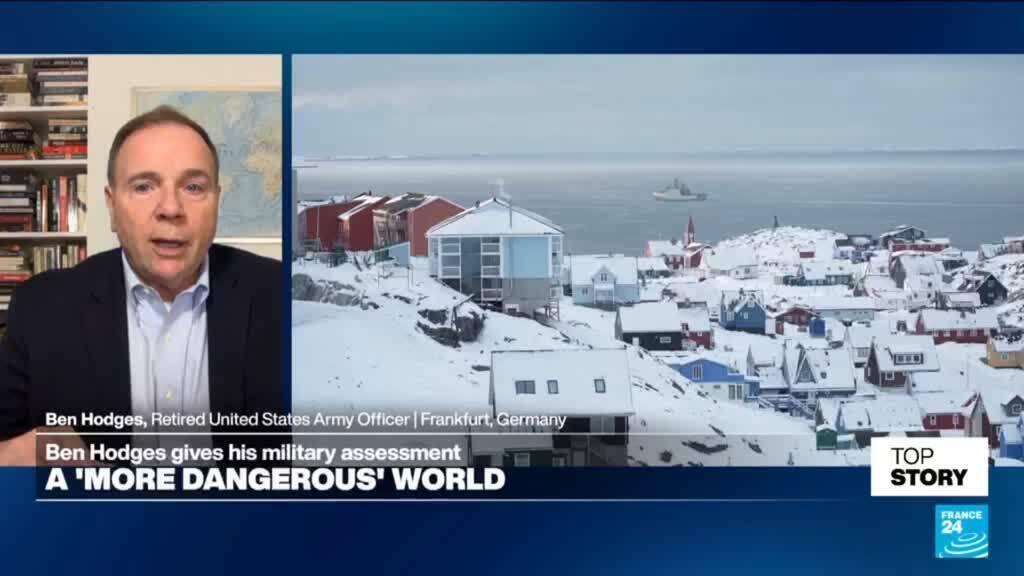
Large crowds gathered in Copenhagen to protest against US President Donald Trump's ambitions regarding Greenland, an autonomous territory under Danish jurisdiction. This surge of public dissent reflects not only the local sentiment but also the geopolitical implications of such aspirations. Trump's push to take control of Greenland has raised alarm bells, both within Denmark and among its NATO allies, as the ramifications of US actions against an allied nation could have lasting impacts on the future of the NATO alliance.
The protests signal a clear message from the Danish populace who view the potential US takeover of Greenland as an affront to their sovereignty. Thousands participated in marches across Copenhagen, carrying banners and chanting slogans against perceived imperialistic behaviors. The discontent was palpable, highlighting a robust national identity and resistance to external pressures from a powerful ally. Greenland’s status as a vital geostrategic territory—particularly with its vast natural resources and strategic location—makes the situation even more delicate.
Denmark's position within NATO is crucial, as both the United States and Denmark are longstanding members of this military alliance. Any aggressive move by the US to invade or assert dominance over Greenland raises serious questions regarding the integrity and future of NATO. Guntram Wolff, a senior fellow at the economic think tank Bruegel, stated, “If the United States were to invade Greenland, this would essentially mean the end of NATO as we know it.” Such a scenario would challenge the foundational principles of mutual defense, which have historically governed the relationships between NATO allies.
The context of Trump’s interest in Greenland stems from a mix of strategic, economic, and geopolitical factors. The region's natural resources, including lithium, rare earth minerals, and potential shipping routes through melting Arctic ice, have increasingly drawn global attention. The US has long been interested in Greenland, historically offering to buy the territory in 1946, but recent statements by Trump have reignited discussions with a more aggressive undertone.
The implications of an aggressive stance toward Greenland are far-reaching, not just for Denmark but for NATO and international relations at large. An invasion or takeover would fundamentally alter the dynamics of power in the North Atlantic and potentially instigate new tensions amongst other member nations, particularly those in Europe who rely on the stability of NATO for their security. Additionally, it could set a precedent for other nations considering territorial ambitions elsewhere, thereby escalating global geopolitical tensions.
The protests in Copenhagen bring to light essential discussions about sovereignty, national identity, and the role of powerful states in dictating the future of less powerful entities. The Danish people’s resistance underscores a desire to maintain control over Greenland and to ensure that its self-determination is respected. As global attention focuses on this issue, the call for diplomatic dialogue and respect for national sovereignty is becoming increasingly vital.
As the situation continues to evolve, both the United States and Denmark face a complex interplay of domestic politics and international relations, which will undoubtedly influence the future trajectory of both Greenland and the NATO alliance. The protests serve as a reminder of the importance of public sentiment in shaping international policy and the critical need for states to navigate these waters with diplomatic sensitivity and tact.