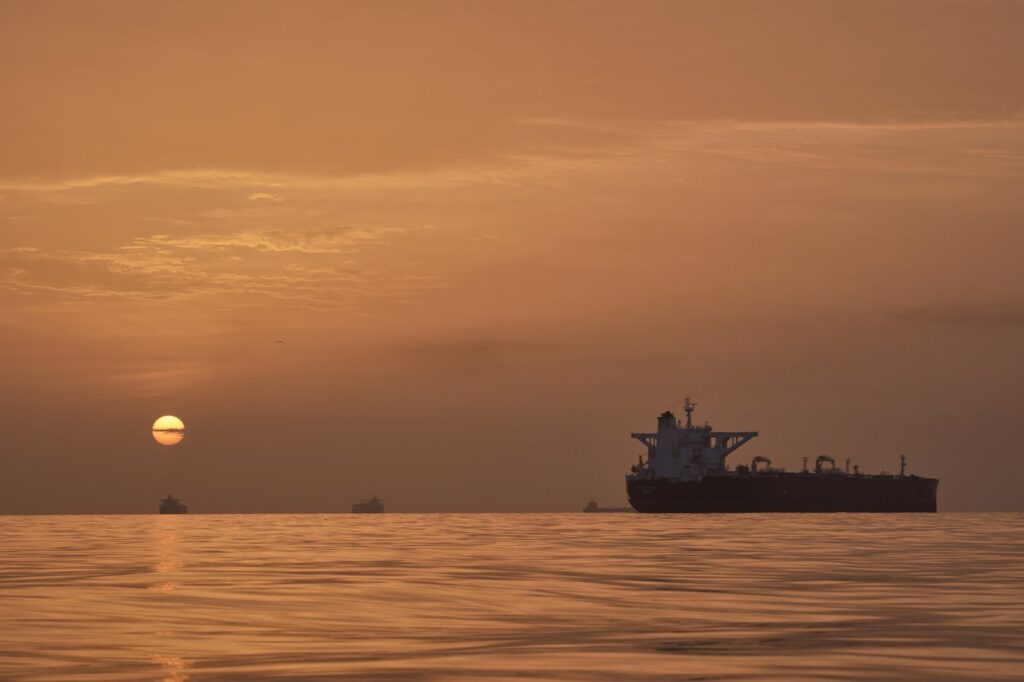
WASHINGTON (AP) – President Donald Trump announced that the U.S. Navy is currently engaged in clearing Iranian mines from the Strait of Hormuz, a crucial maritime route for oil shipments that significantly impacts the global economy. The clearing of underwater explosives could take several months, even amid a tenuous ceasefire between the United States and Iran amidst an ongoing conflict, industry experts have noted. There is skepticism regarding the effectiveness of U.S. efforts to convince commercial freighters and their insurers that the strait is, in fact, safe for navigation.
Emma Salisbury, a scholar at the Foreign Policy Research Institute, emphasized the psychological aspect of mine threats, stating that the perception of mines could alone deter shipping activities regardless of U.S. claims about safety. “Even if the U.S. sweeps the strait and says everything’s clear, all the Iranians have to do is say, ‘Well, actually, you haven’t found them all yet,’” said Salisbury. This highlights the limits of U.S. military efforts in restoring confidence among commercial shippers.
The U.S. Navy's mine-clearing operations come as part of the Trump administration's broader strategy to mitigate rising energy prices and their economic consequences, which could pose political risks for the administration. Alongside mine-sweeping efforts, the U.S. has blockaded Iranian ports and seized vessels linked to Tehran. Recently, President Trump instructed U.S. envoys to refrain from traveling to Pakistan for ceasefire discussions following the departure of Iran’s foreign minister from Islamabad.
Pentagon officials indicated in a classified briefing that clearing mines laid by Iran in the Strait of Hormuz may take up to six months. While Defense Secretary Pete Hegseth did not confirm the timeline, he expressed confidence in the military’s readiness to address the situation adequately. “Allegedly that was something that was said,” Hegseth remarked during a Pentagon news conference, reiterating the military's commitment to mine clearance.
In a recent statement, Trump ordered intensified U.S. Navy operations to target any vessels laying mines in the strait. “I am hereby ordering that activity to continue, but at a tripled up level!” the president stated on social media. Admiral Brad Cooper, the top U.S. commander in the Middle East, confirmed ongoing military efforts to clear underwater mines, although specific details were not provided. Currently, there are no indications that U.S. warships, typically the most noticeable mine-clearing assets, are involved in operations in the strait.
The article discusses the various methods the U.S. Navy can employ to clear mines, noting that U.S. forces in the region include divers and explosive ordnance disposal teams capable of conducting such operations. Experts maintain that mine-laying is considerably easier than mine-sweeping; mines can be readily deployed from small vessels, potentially making them difficult to detect. Estimates suggest that Iran possesses thousands of underwater explosives, largely based on older Soviet designs.
According to Salisbury, if mines are deployed in the strait, they are likely submerged or moored to the seabed and capable of being triggered by changes in water pressure or sound from passing ships. The U.S. Navy has two littoral combat ships currently in the Middle East, equipped to conduct mine-sweeping operations, with additional Avenger-class minesweepers dispatched from Japan to assist.
Experts assert that while the process may take a considerable amount of time due to resource constraints, the U.S. Navy can utilize advanced technology such as remotely operated vehicles and uncrewed systems for mine detection and neutralization. Shipping companies are now assessing the risks of passing through the Strait of Hormuz, with insurers implementing new protocols that require shipowners to confirm safe passage with Iranian authorities.
Ultimately, the psychological impact of potential mine threats may continue to influence shipping decisions in the region, as the perception of danger could inhibit the restoration of confidence even after military operations conclude.