Assessment of Russia's War Against Ukraine by Peter Zalmayev
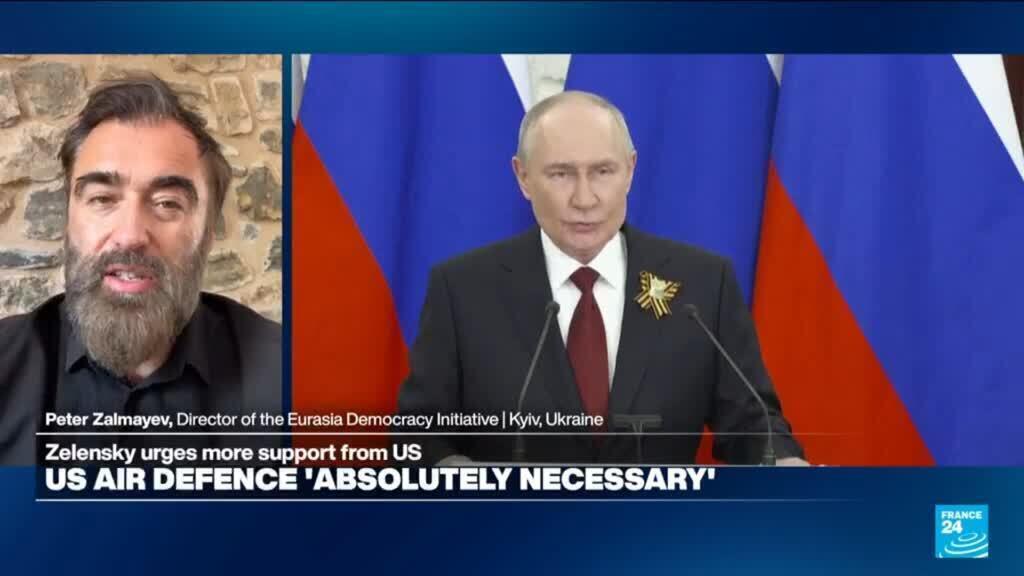
Angela Diffley has invited Peter Zalmayev, the director of the Eurasia Democracy Initiative, to provide an in-depth analysis of the current dynamics in Russia's ongoing war against Ukraine. Zalmayev offers a compelling argument against the prevailing narratives that suggest Russian forces are gaining momentum in their military operations. He asserts that the recent surge in Russia's bombardment of Kyiv is indicative of rising pressures on President Vladimir Putin, whose military campaign is increasingly characterized as "bogged down" and fraught with political repercussions.
Zalmayev emphasizes that while the brutality of the conflict inflicts severe suffering on Ukrainian civilians, the reality on the battlefield indicates that Russia is grappling with heightened difficulties. He points out that the Russian military has encountered significant challenges, resulting in increased casualties and minimal territorial gains. These setbacks have created an urgent need for the Kremlin to showcase its strength, leading to more dramatic strikes on urban centers such as Kyiv.
Furthermore, Zalmayev highlights the fact that as Russia confronts the realities of AI-enhanced drone warfare—capable of precise targeting—Ukraine has effectively carried out systematic strikes on vital Russian oil infrastructure and key military logistics. Such developments have compounded pressure on Putin to reassure his domestic audience, particularly his "jingoistic militaristic base," that Russia continues to be a formidable force capable of retaliatory actions.
According to Zalmayev, the nature of warfare has evolved, and Moscow's response reflects an urgent necessity to maintain a façade of power amidst an increasingly complex and challenging military environment. The frequency of strikes on civilian locations can be seen as a desperate attempt to project strength. This shift in tactics underscores the Kremlin's precarious position and desperation to maintain morale both on the home front and within its military ranks.
In conclusion, Peter Zalmayev's assessment provides a critical lens through which to view the unfolding situation in Ukraine. His analysis suggests that despite Russia's aggressive posture, underlying vulnerabilities reveal a military campaign that is struggling to achieve its intended objectives. Moreover, as the war drags on, the necessity for the Kremlin to display military prowess intensifies, potentially leading to more devastating consequences for civilians caught in the crossfire.