DUBAI, United Arab Emirates (AP) — Year-on-year inflation in Iran has surged to levels not seen since World War II, reflecting the severe economic challenges faced by average Iranians. The Islamic Republic is increasingly concerned about the potential renewal of warfare with Israel and the United States, which exacerbates the situation.
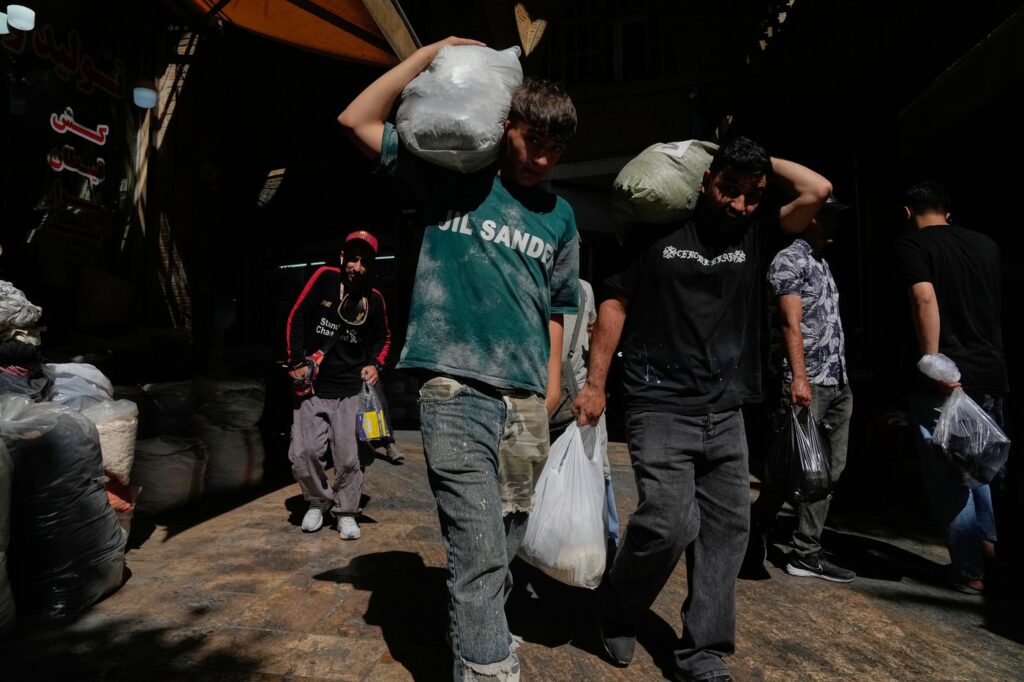
A report released by Iran's Central Bank has officially confirmed what many Iranians already experience in their daily lives—rising prices severely impacting shopping, transportation, and healthcare. The Iranian rial has suffered significant depreciation amid ongoing conflicts and the uncertainty surrounding their resumption.
Long-standing issues such as economic mismanagement and rampant government corruption continue to hinder Iran’s oil-dependent economy, which is further strained by a U.S. naval blockade. The sanctions have particularly affected Iran's crude oil exports, a vital source of hard currency necessary for sustaining the economy.
Economic pressures have historically triggered widespread protests across the nation. Following a harsh crackdown on demonstrators in January, which resulted in the deaths of over 7,000 according to activist estimates, the Iranian government is keen to prevent a repeat scenario. However, analysts suggest that new protests could erupt if Iranians struggle to afford basic necessities for their families.
Mohsen Jalilvand, an analyst, expressed concerns in a video with Iran's Fararu news website, stating that if the political landscape remains unchanged, "we will see something like January by the end of summer" due to the rising economic and social tensions.
According to the Central Bank, the consumer price index reached 77.2% in May, marking an 8.5% increase compared to April. Prices for essential goods and services such as medicine, transportation, and communication surged by 113.8% from the previous year. Such inflation levels have not been seen since the wartime years of 1942, when the British and Soviets invaded Iran, causing disruptions in food supplies and leading to hyperinflation and famine.
The Bamdad Institute of Economic Studies labeled the current inflation rate as "unprecedented since World War II," though the Central Bank has not acknowledged the severity of these figures. Compounding these issues, this year’s airstrikes have inflicted considerable damage on Iranian businesses and the oil sector. Consequently, tax revenues have plummeted as businesses continue to struggle even with the cessation of hostilities.
In terms of currency value, the rial has depreciated dramatically, trading at over 1.7 million to $1, a stark contrast to its value of 32,000 to $1 in 2015. Iranian President Masoud Pezeshkian warned in May that the nation would face "definitely higher prices," as the country undergoes serious economic hardships.
Past spikes in costs for food and gasoline have led to significant protests resulting in fatalities and numerous arrests. The unrest that began in late 2017 surrounding rising food prices claimed over 20 lives, while the government’s decision to cut fuel subsidies sparked demonstrations that reportedly left over 300 people dead. The protests earlier in 2023 over the rial were marked by intensity not seen since the Iranian Revolution of 1979.
Saeed Leilaz, a Tehran-based economist, analyzed the economic outlook, predicting that annual inflation in Iran could escalate to 80%. He noted that "Iran's society cannot tolerate above 25% annual inflation." The worsening economic conditions and rising discontent among citizens suggest that Iran faces a critical juncture in its socio-economic landscape.