U.S. President Donald Trump has issued threats to escalate tariffs on Canada, citing what he calls "willful negligence" regarding the management of forests, which he claims has resulted in severe wildfires. These wildfires have caused smoke to blanket much of Ontario and various northern U.S. states, leading to health concerns due to poor air quality. In a social media post, Trump expressed frustration, stating, "We are holding Canada responsible for the fact that they are not properly maintaining their forests, and brush therein," emphasizing the detrimental air quality effect on Americans.
Trump indicated that he plans to reach out to Canadian Prime Minister Mark Carney to determine what actions Canada will take to address the situation. He argued that the financial repercussions of the air pollution caused by the fires need to be reflected in the tariffs that Canada is currently paying, suggesting that Canada's lack of forest management is a significant factor contributing to the problem. He characterized the situation as "willful negligence," claiming it leads to recurring economic costs for the United States, amounting to billions of dollars.
During a news conference in London, Ontario, Prime Minister Carney dismissed Trump's criticisms, asserting that Canada is making investments in clean energy while accusing the U.S. of moving in the opposite direction. He stated, "Fighting climate change is the responsibility of all countries, including the United States," signaling a broader international responsibility to address environmental issues.
It's unclear how Trump plans to implement new tariffs given recent legal constraints. The U.S. Supreme Court previously limited his ability to impose tariffs under the International Emergency Economic Powers Act (IEEPA). Currently, Trump has levied a 10 percent tariff on Canada utilizing Section 122 of the 1974 Trade Act, which is set to expire after a 150-day period unless extended by Congress. The existing tariffs do not apply to goods covered under the Canada-U.S.-Mexico Agreement (CUSMA).
The Trump administration is also exploring the use of Section 301 of the Trade Act of 1974 to potentially re-establish his tariff policies through investigations related to forced labor in supply chains. This has come on the heels of escalated calls from some U.S. Republicans, who have urged sanctions against Canada for the perceived mishandling of its wildfire situation.
One such Republican voice, Congressman John James, who represents a district north of Detroit, issued a "final warning" to Canada via social media, stressing the economic impact on American health due to Canadian inaction on forest management. He remarked, "Sovereignty comes with responsibility, and the responsibility to prevent a foreseeable disaster from crossing into another country’s airspace has not been met."
In line with this sentiment, Senator Bernie Moreno from Ohio announced plans to introduce legislation that would impose sanctions on Canada in response to air quality issues caused by the wildfires. His proposed bill outlines a process for determining whether Canadian wildfires have adversely affected U.S. air quality, with punitive measures including visa revocations and asset freezes for Canadian officials deemed responsible. Furthermore, it suggests that the Canadian ambassador be considered "persona non grata" until the smoke clears.
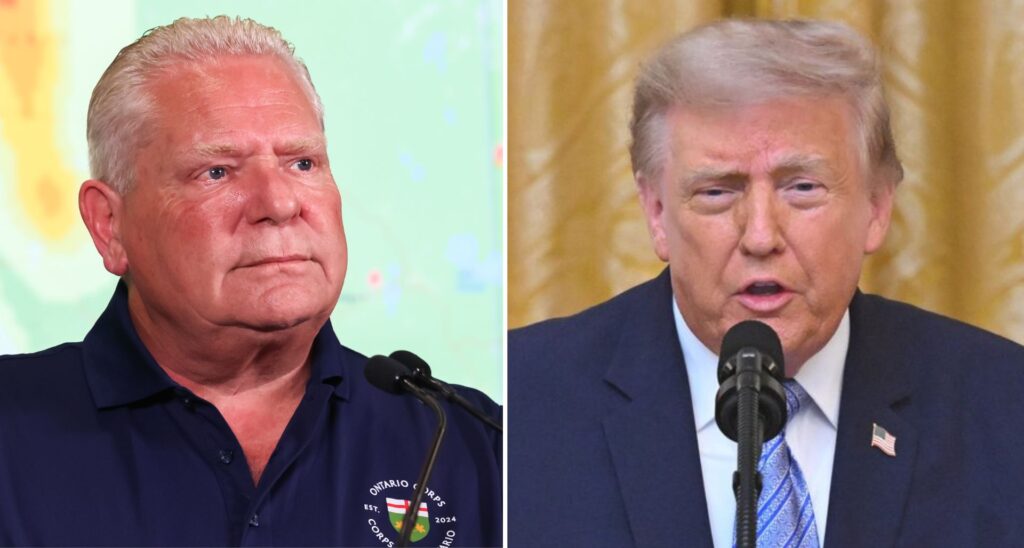
In response to the accusations of negligence, Ontario Premier Doug Ford criticized U.S. politicians for complaining rather than offering assistance. He highlighted that Ontario is dealing with nearly 200 active fires, half of which are categorized as "out of control." Ford called for a collaborative approach, stating, "There’s some politicians out there chirping away, well maybe what you should do rather than complain, is send support, send help." He underscored past instances where Canada has offered support to the U.S. during similar crises.
Files from The Canadian Press were used in this report.