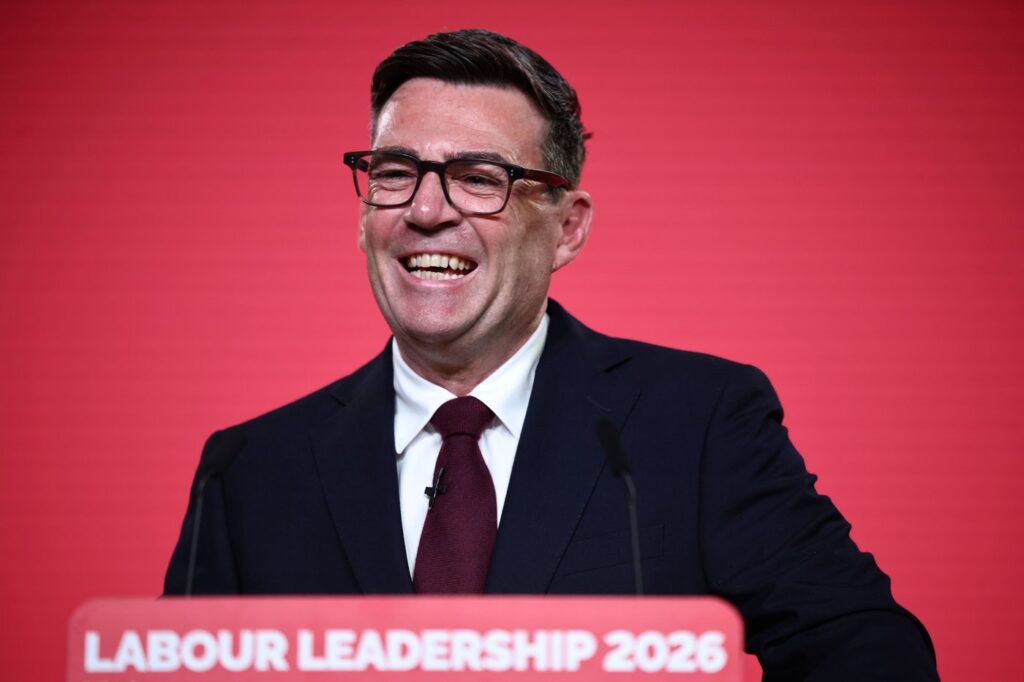
LONDON (AP) – Andy Burnham has been officially declared as the new leader of Britain’s governing Labour Party, positioning himself to become the country’s prime minister next week. This announcement comes after Burnham, the former mayor of Greater Manchester, became the sole candidate in the leadership contest following the ousting of Prime Minister Keir Starmer, who faced internal rebellion within his party. With nominations from 379 of the 403 Labour lawmakers in the House of Commons, Burnham’s path to leadership was widely anticipated.
In his inaugural speech as leader, Burnham expressed a commitment to restoring hope among the British people, stating, “We are going to give them hope back.” He emphasized his readiness to lead, reassuring party activists, lawmakers, and trade union leaders that he possesses a plan to revitalize Labour’s standing, which has faced significant challenges in recent years. Burnham indicated a clear intention to address factional disputes within the party, cautioning that internal conflicts would hinder Labour’s ability to confront the growing political right.
Burnham's ascent to leadership comes after he has been viewed as the prime minister-in-waiting, especially following his victory in a recent special election for a parliamentary seat. However, he enters the role largely unknown to voters beyond Manchester, having revealed limited details about his policy priorities thus far. During his first address, he outlined aspirations to enable local leaders to have greater decision-making power, stating, “We will take power back from Westminster and Whitehall and give it to the place you live.”
The announcement of Burnham’s new role follows Starmer’s resignation, which was precipitated by his party's disappointing performance in local elections and dwindling popularity due to perceived missteps. Despite Labour’s prior electoral success, the party has struggled against anti-immigration sentiments represented by the Reform UK party, compounded by public dissatisfaction with the current political landscape. This transition marks a significant moment for Labour as it seeks to recover lost ground.
Burnham is recognized for his superior communication skills compared to his predecessor, Starmer. Nonetheless, he is expected to contend with similar issues, such as a sluggish economy and the ongoing cost-of-living crisis exacerbated by geopolitical conflicts. His pledges for a new, less divisive political culture echo Starmer’s earlier commitments, yet Burnham aims to galvanize support by focusing on issues that resonate with the electorate.
In addressing long-standing political challenges, Burnham mentioned the need to tackle social care accessibility and promised to rectify past policy failures that have hindered progress. He underlined a focus on economic renewal and enhancing public control over essential sectors, identifying systemic issues that have persisted for decades due to decisions made in the 1980s under Margaret Thatcher’s government, which favored privatization and centralized political power.
As the U.K.'s leadership transitions once more, Burnham's commitment to executing significant reforms will be scrutinized. He acknowledged the urgency of responding to societal needs while highlighting the importance of constructive political discourse, stating, “Our country is crying out for it.” Starmer will officially resign on Monday, at which point King Charles III is expected to ask Burnham to form a government. This change in leadership exemplifies the ongoing evolution within the Labour Party and the broader political landscape in the U.K., with Burnham being the seventh leader since 2016.
Various stakeholders have mixed expectations of Burnham's leadership. Unions have welcomed his focus on improving living standards but underline that his effectiveness will be measured by real outcomes. The Confederation of British Industry has acknowledged the importance of economic growth but cautioned on the need for effective execution of Burnham's plans. With pressures mounting from multiple fronts, Burnham’s leadership will be pivotal in shaping the future trajectory of the Labour Party and the U.K. as a whole.