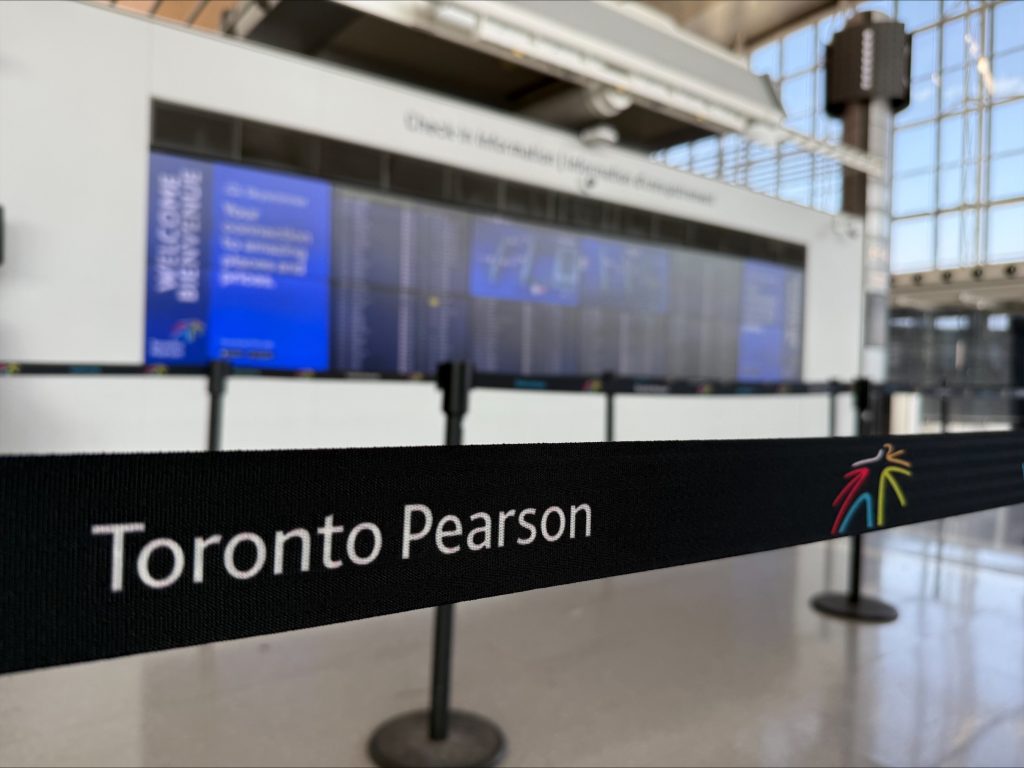
Toronto Pearson International Airport officials have announced a significant $1.5-billion revitalization plan for Terminals 1 and 3, aimed at modernizing the airport and enhancing passenger navigation.
Dubbed as the largest infrastructure program in Canadian airport history, the terminal renewal initiative is part of the 10-year Pearson LIFT strategy, which focuses on long-term investments in facilities and terminals. Deborah Flint, the president and CEO of Toronto Pearson International Airport, emphasized the urgent need to expand capacity due to growing demand during a recent event. Flint stated, "We know experiences are new forms of customer expectations through their airport journeys, and we’ll provide new ones for all travellers."
By 2025, airport representatives project approximately 47 million passengers will use the terminals, serving over 200 destinations worldwide. This figure is expected to increase to 65 million by the mid-2030s. The area surrounding Toronto Pearson airport is one of Canada's busiest employment hubs, with around 68,000 workers anticipated by the same timeframe.
To meet this impending growth, the renovation program for Terminals 1 and 3 will focus on improving the airport experience for passengers. Planned enhancements include updated gates, check-in areas, passenger processing zones, advanced security screenings, customs and immigration facilities, enhanced signage, and new dining options. Additionally, thousands of new interior lights will be installed. However, detailed information regarding specific changes has not yet been publicly disclosed.
Flint highlighted that there would be extensive work occurring out of sight for many passengers, stating, “There’s a lot of work that’s going to go on behind the walls, underneath the floors, and inside operating systems that many passengers won’t ever see.” She acknowledged that achieving success in such a large-scale project is complex, requiring meticulous preparation, coordination, and trust.
Jim Anderson, an architect and partner with Dialog, a design firm collaborating with Norr, mentioned that the designs for the upcoming upgrades will prioritize passenger experience. "We’re going to look to make the space brighter, more spacious, organized in a way that’s intuitive," he remarked. This will include improved signage and electronic wayfinding solutions, along with thoughtful design choices that enhance the overall space. Mark Boone, a vice president at Norr, emphasized their vast experience at Pearson, noting, “Our experience here at Pearson has given us some lessons learned in terms of how best to interact with the building.”
The construction for this ambitious project will be executed in stages to ensure that the airport maintains safe operations while minimizing disruptions for passengers. Monique Buckberger, a vice president with PCL Construction Canada, acknowledged the logistical complexities of working in a live environment, stating, “It’s very dynamic, and we deal with ongoing live activities not only from a passenger experience standpoint but also from aviation partners and the businesses that operate within the airport itself.”
While specific timeframes for the completion of the various enhancements have not been provided, significant milestones are anticipated over the course of the project. Terminals 1 and 3 were opened to the public in 2004 and 1991, respectively. The announcement of these terminal enhancements followed a $3-billion investment plan disclosed in May, aimed at increasing air traffic and improving operational efficiency through measures such as repaved runways, modern retail options, and potential terminal expansions. Specific improvements as part of this larger investment encompass an expanded airfield, a new high-speed taxiway, upgrades to 20,000 airfield lights, and 30 kilometers of baggage infrastructure.
With files from Dilshad Burman