JOHANNESBURG (AP) – On Sunday, South Africa commemorates the 70th anniversary of the historic Women's March of 1956. Approximately 20,000 women from various racial backgrounds courageously marched to Pretoria, the administrative capital, protesting against apartheid laws that mandated Black women to carry restrictive passes limiting their movement. This event marked a significant moment in the struggle against the oppressive regime of white minority rule.
However, seven decades later, many women assert that their quest for freedom remains incomplete. They continue to face the harsh realities of high rates of gender-based violence, poverty, and inequality. A recent United Nations Women-supported study conducted in 2024 revealed that more than one in three women in South Africa has experienced physical or sexual violence at some point in their lives.
One of the participants from the original march, Ramnie Dinat, now 84 years old, reflected on her experiences as a teenager during the protest. Dinat's mother, Ama Naidoo, was an anti-apartheid activist, and she recalled assisting in organizing women for the demonstration. The 1956 march included Black women, those of Indian heritage, and even some white women. Dinat emphasized that despite being ordinary women, they believed in their ability to make a difference.
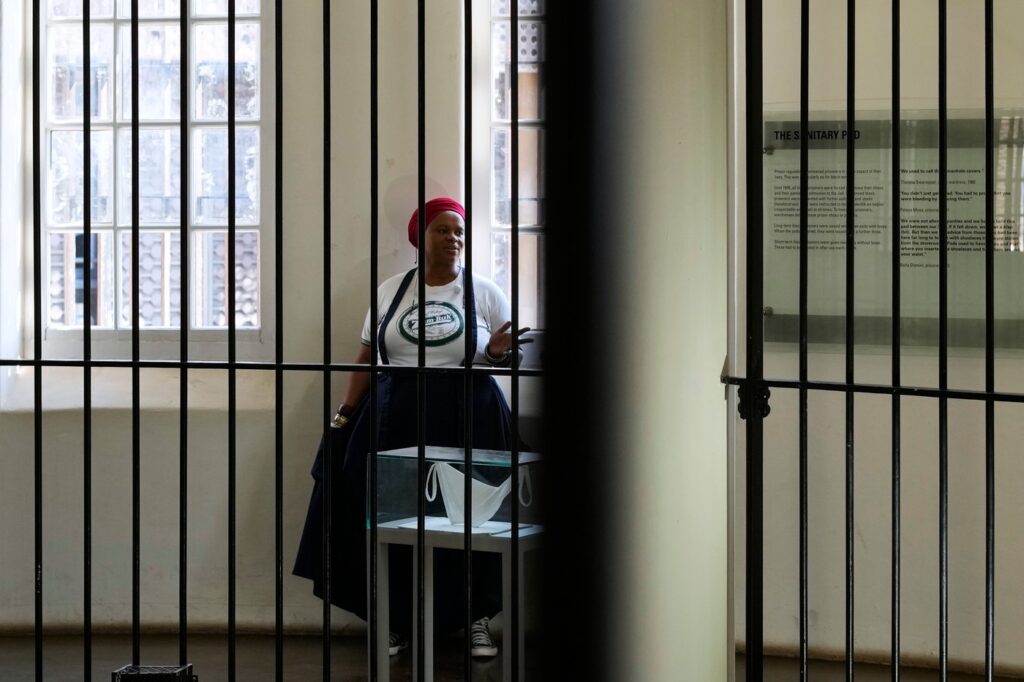
Among the notable locations connected to this historical context is the Women's Jail, which once served as a major prison in South Africa’s apartheid system and now functions as a museum. Located on a hill overlooking central Johannesburg, the museum serves as a poignant reminder of the country’s journey from oppression to democracy. Many leaders and attendees of the Women’s March were incarcerated in this facility, where prisoners were segregated based on race, reflecting the broader discriminatory policies of apartheid. Nolubabalo Memese, Visitors Services Manager at Constitution Hill, highlighted the prison's dehumanizing conditions, including the denial of basic sanitary needs for Black women inmates.
The museum commemorates not only prominent figures like Winnie Madikizela-Mandela and Albertina Sisulu but also honors the countless unnamed women whose sacrifices remain largely unrecognized. Memese articulated that contemporary freedom is built upon the struggles of these women. Kgothatso Montjane, a South African Paralympic wheelchair tennis champion, voiced similar sentiments, stating that the efforts of women from 70 years ago have paved the way for current generations. As the first Black South African woman to compete in all four major tennis tournaments, she acknowledges the impact of their fight for equality.
Despite the end of apartheid in 1994, gender-based violence continues to hinder women's freedom in South Africa. Memese pointed out that while women can now move and work freely, they are still plagued by a different kind of oppression. The U.N. has described high rates of violence against women as a crisis and a national wound, emphasizing that safety concerns still limit women's participation in society.
Economic disparities also persist, as government data indicates that women are more likely than men to experience unemployment and are underrepresented in leadership positions. Montjane highlighted that financial barriers still exist within sports, a realm often viewed as predominantly white, which limits access to elite competitions for women of color despite a few breaking through to success.
Ultimately, Montjane believes that the groundwork laid by the women of 1956 has created a pathway for her and future generations. She noted a symbolic architectural connection: when the Women’s Jail was dismantled, bricks from the prison were used to construct the museum, illustrating a transition from oppression to empowerment. This evolution resonates deeply with Memese, who stated that understanding and remembering the past is essential to prevent repeating similar mistakes in the future.
For Dinat, one of the remaining witnesses to the 1956 march, the lesson is clear: each generation faces its own struggles, and it is their responsibility to stand up for what is right.