PORT-AU-PRINCE, Haiti (AP) — In a significant development regarding violence in Haiti, a gang released six children and seven women who had been kidnapped during an attack on the community of Kenscoff. This incident occurred nearly a week past when over 50 individuals were taken captive. UNICEF confirmed the release, detailing that among those freed were three children under the age of 2, a 7-year-old, and two teenage girls.
Yannig Dussart, UNICEF’s deputy representative in Haiti, expressed cautious optimism regarding the release, stating, “This release offers a rare moment of hope amid the violence threatening children in Haiti.” He emphasized that the Kenscoff kidnapping demonstrates the ongoing scale and frequency of threats faced by children across the nation. UNICEF collaborated with local community leaders to secure the release, though it remains uncertain if the individuals requires medical treatment or if additional hostages still exist.
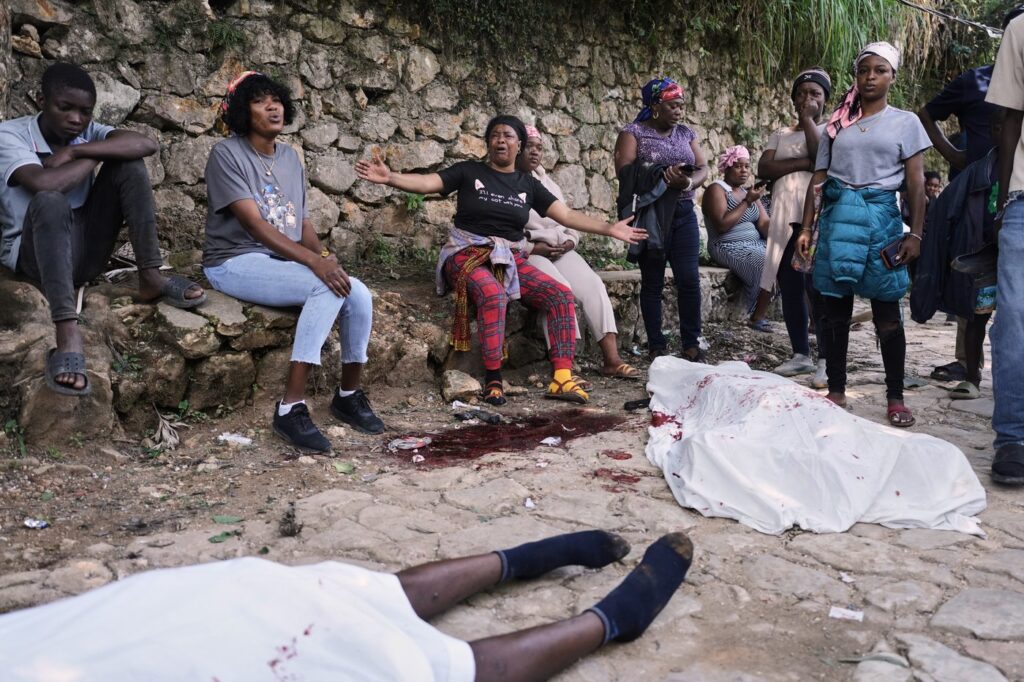
While individual kidnappings are an alarming norm in Haiti, mass abductions are relatively rare. The outcomes can vary dramatically—some hostages are released without ransom, while others may face dire consequences despite ransom payments. In the case of the Kenscoff attack, gangs were responsible for killing at least 47 people, emphasizing the dire situation in this community, which was previously regarded as peaceful.
Gang leader known as Izo 2, who leads an armed faction in the Kenscoff region, issued threats to execute hostages if police forces attempted to engage with gang members. This confrontation was part of a broader pattern of violence in Haiti, as Izo 2 coordinates with other prominent gang leaders, exacerbating the situation. The brutality of the Kenscoff attack led to an emergency meeting of the U.N. Security Council, where diplomats from the U.S., Panama, and Colombia called for urgent action to deploy a new U.N.-endorsed force aimed at combating gangs and restoring order.
Luis Ruiz Massieu, the U.N. special envoy to Haiti, noted the attack sparked “a new wave of public indignation” among Haitian society and its international partners. He welcomed Haitian authorities' decision to integrate national police and armed forces with the gang suppression force to address security issues. A plan emerged to enhance the gang suppression force's presence in Port-au-Prince and reinforce operations in Kenscoff.
During the Security Council meeting, U.S. Deputy Ambassador Jennifer Locetta reaffirmed America's commitment to support Haitian-led security measures against gang violence. She stressed the need for U.N. members to equip the gang suppression force for swift deployment and called for investments in job creation and infrastructure to prevent youths from joining gangs. Locetta also pointed out that gang coalitions are attempting to disrupt upcoming electoral processes in Haiti, warning against allowing gangs to undermine democracy.
Indrika Ratwatte, the acting assistant secretary-general for humanitarian affairs, reported that the Kenscoff attack resulted in over 2,600 individuals being displaced from their homes, with many fleeing multiple times. He described the trauma faced by individuals as they seek missing relatives and navigate an uncertain future. It is estimated that nearly 1.5 million people, accounting for 12% of Haiti's population, are currently internally displaced, half of whom are children.
Ratwatte also highlighted concerning trends in deportations to Haiti, noting that in the first eight months of 2026, approximately 200,000 people were forcibly returned, marking a 10% increase from the previous year. Many deportees arrive without resources. He condemned the high incidence of violence against women, girls, and children, reporting over 5,500 cases of gender-based violence—about 30 incidents daily—in the first half of the year alone.