An Ontario university student, Weiheng Zeng, has been arrested in the United States after allegedly taking photographs at two airports under the direction of someone he thought was a Chinese government official. Zeng, a Chinese citizen studying at the University of Waterloo, was initially flagged by authorities due to an incident at O'Hare International Airport in Chicago in April 2026.
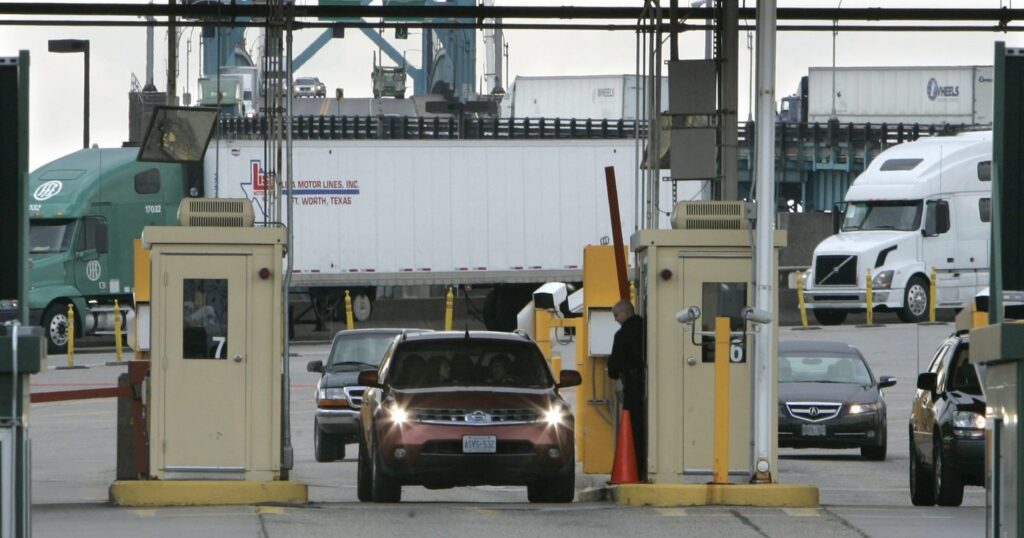
According to an affidavit filed in a Michigan court, the FBI's investigation revealed that Zeng was spotted taking photos, climbing on a forklift, and attempting to open locked trailers at a FedEx facility on April 21, about ten days after he drove into the U.S. via the Ambassador Bridge. The document connected Zeng to a dark blue minivan with Ontario license plates that was present during the incident.
When Zeng attempted to enter the U.S. again on August 23, 2026, border agents pulled him aside for a series of interviews as part of a counter-intelligence investigation. Throughout the interviews, Zeng provided conflicting accounts, leading to charges of making false statements.
Initially, Zeng offered minimal details regarding his trip to Chicago, claiming he was visiting his sister and only taking photos of planes. However, a review of his phone uncovered multiple images of aircraft and military planes, as well as pictures of himself and others in tactical clothing with rifle-style weapons. Zeng insisted that the firearms were airsoft guns and denied any form of military training.
In a subsequent interview, Zeng informed agents that he had taken photos of planes landing at O'Hare from a public parking lot. He later admitted to climbing the forklift at the FedEx facility to take pictures. He also disclosed a previous trespass at Toronto's Pearson International Airport's FedEx facility, where he had been caught.
During a third interview, Zeng revealed that a Chinese contact had approached him on a platform for aviation enthusiasts, assigning him specific planes to photograph and offering payment of $20 to $30 per image. Zeng stated that the Chinese contact sent him SIM cards for communication, which he would destroy after use, claiming he deleted messages and photos after sending them.
Ultimately, Zeng acknowledged that he was taking photographs of American planes for the Chinese contact, who he suspected was associated with the Chinese Communist Party. His narrative further transformed during FBI questioning, as he described the contact as an aviation enthusiast seeking images of rare planes for "research."
Initially denying any espionage intent, Zeng later confessed that his understanding of the assignments was a cover story from the Chinese contact, who was actually gathering intelligence on transportation logistics and specific airport locations. He recounted how this contact had sent him security-related materials, including a badge and inaccessible video footage.
The FBI agents discovered that the forum through which Zeng met the Chinese contact did not exist. The allegations presented in court have yet to be tested legally.
Chris Mathers, a former Royal Canadian Mounted Police officer, noted that it is common for Chinese state security to recruit individuals online. He suggested that the tasks assigned to Zeng could be a preliminary test to see if he could be further cultivated as an intelligence source. He emphasized the significance of the information being collected, despite its basic nature, especially given the existing tensions between China and the U.S., particularly concerning Taiwan.
Mathers highlighted the potential advantage this intelligence could provide, as the United States may lack the logistical ability to deploy additional resources to Taiwan due to its engagements in the Middle East. Thus, intelligence gathering on transportation facilities could assist in identifying unusual movements of equipment. He emphasized the Chinese approach of amassing extensive data, which may later be sifted for valuable insights.
The report outlines serious concerns regarding national security and highlights the complexities surrounding espionage operations, particularly those involving foreign nationals engaged in intelligence activities.