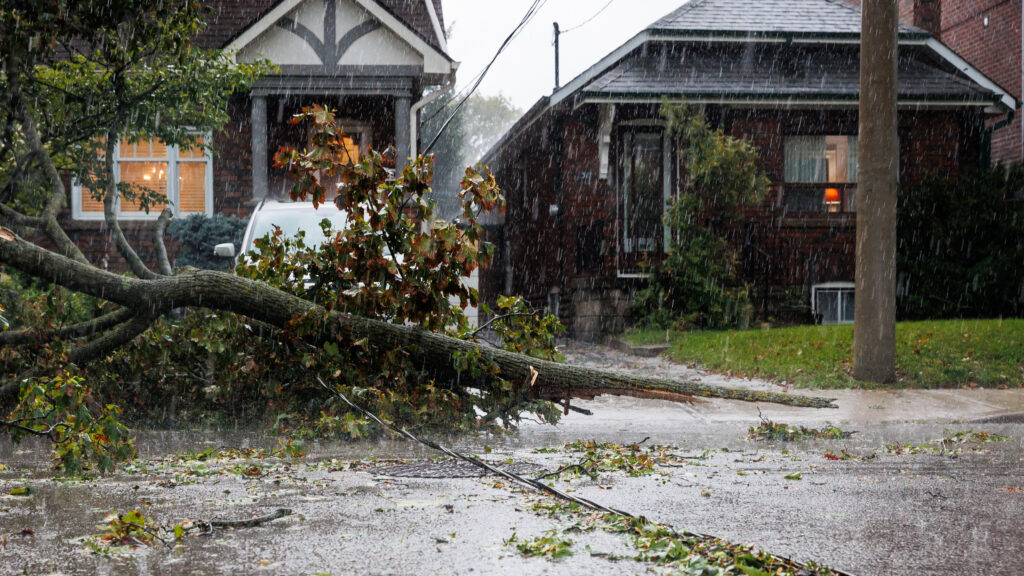
Following a series of destructive thunderstorms, thousands of homes and businesses in southern Ontario faced power outages on Friday. Experts, including flood risk specialist Jason Thistlethwaite from the University of Waterloo, highlighted that these extreme weather events expose significant gaps in the region's preparedness for climate change impacts.
The storms, which occurred on Wednesday and Thursday, brought high winds strong enough to uproot trees and down power lines. Some areas experienced torrential rain exceeding 100 millimeters, leading to widespread flooding in basements and significant street interruptions. A second storm on Thursday caused further destruction in southwestern Ontario, including Windsor, where researchers began investigating a probable tornado.
Thistlethwaite pointed out that the frequency of these storms suggests they are no longer "100-year storms," as they are now occurring much more often. He warned that the existing infrastructure is not equipped to handle such intensity, resulting in substantial damage across the region.
Toronto Hydro described Wednesday's storm as one of the most severe in years, with crews working diligently to restore power to over 2,000 customers ahead of the long weekend. Similarly, Hydro One reported around 10,000 customers in southwestern Ontario without power due to the storms.
The Northern Tornadoes Project dispatched teams to Windsor to assess the damage, while researchers noted that tornado-like damage in Toronto was likely due to downbursts caused by the severe winds. One of the most affected structures was the 50,000-seat Rogers Stadium in Toronto, where high winds caused significant damage, including uprooted bleachers and partially collapsed grandstands.
In a 24-hour period, Toronto fire officials received nearly 1,500 calls, marking their second-highest daily call volume, trailing only behind the 2013 ice storm. Toronto city manager Paul Johnson referred to the event as a "100-year storm," which resulted in considerable destruction across Toronto and its neighboring areas.
The flooding incidents throughout southern Ontario this summer have further emphasized the inadequacies in government preparations for extreme weather, according to Thistlethwaite. He noted that climate change, fueled by fossil fuel emissions, is contributing to more frequent and intense storms.
Thistlethwaite urged officials to enhance transparency regarding flood risk information for homeowners and prioritize investments in areas particularly vulnerable to flooding. He referenced the federal government’s initiative to develop public flood risk maps, which have not yet been released. Despite the announcement earlier in the year that these maps would only be made available where provincial governments opted in, no province has done so thus far, leaving the public search portal non-operational.
Some regions, especially low-lying infrastructures like Toronto's Don Valley Parkway, are expected to continue flooding during major storms. Thistlethwaite recommended more focused investments to minimize the risk of severe damage to homes and businesses. He suggested that government buyout programs could be a consideration for some high-risk properties, stating, “We simply just cannot sustain the services and infrastructure in this particular location because the climate risk is just that high.”
Thistlethwaite continued, emphasizing the need for targeted development in areas deemed safe while providing necessary infrastructure to those locations. He expressed understanding for the challenges municipalities face after severe flooding, recognizing that many have flood mitigation plans but lack the funding or political support to implement them.
He pointed out Toronto's proposed $3 billion stormwater sewer upgrades along the Don River and the waterfront as an example of vital investments required to adapt to a changing climate. “At the municipal level, there’s a tremendous and heightened sense of emergency,” he concluded.