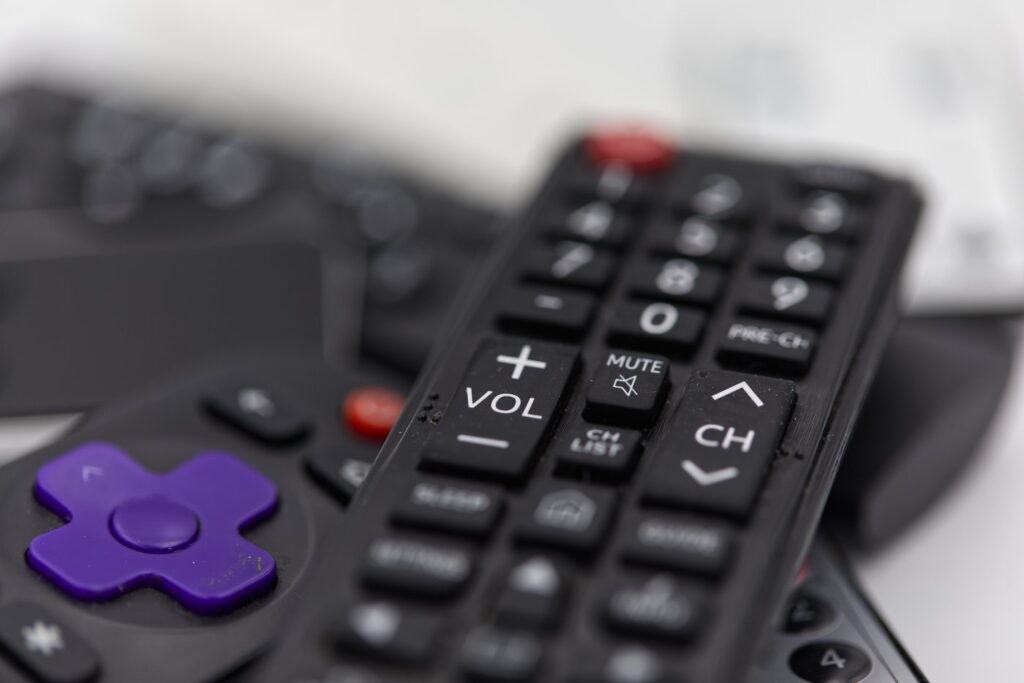
CROTON-ON-HUDSON, N.Y. (AP) — The invention of the television remote control has revolutionized the way audiences interact with their television sets. Before its introduction, viewers had to physically walk to their television sets to change channels, which would be incomprehensible for those under 40 today. The concept of channel surfing and the modern-day couch potato relies heavily on the convenience introduced by remote controls.
Zenith Electronics played a pivotal role in this transformation, recognizing the need for a solution to the inconvenience of manually changing channels. The first remote control, known as “Lazy Bone,” was launched in 1950, but it was not wireless, leading to users tripping over cords. A breakthrough came five years later with the introduction of the “Flash-Matic,” which used light signals to change channels. However, it had its drawbacks, as sunlight could interfere with its operation, causing unexpected channel changes. Zenith improved the design the following year with the “Space Command,” which operated through sound waves and was the origin of the term “clicker,” as pressing its buttons produced a clicking noise.
The evolution of remote technology continued into the 1980s with the arrival of infrared signals. This innovation coincided with the emergence of cable television and the multichannel universe, making remote controls indispensable for viewers. David Bianculli, a TV critic for NPR’s “Fresh Air” and a professor at Rowan University, highlighted how losing a remote today resembles the frantic search for a lost phone, illustrating its importance in modern life.
Remote controls have not only shaped consumer behavior but also influenced television programming. Networks had to consider how to keep viewers from changing channels during shows. CBS’s Saturday night lineup in the 1970s was meticulously crafted, transitioning seamlessly from “All in the Family” to “The Carol Burnett Show.” Likewise, NBC aimed to establish Thursday nights as “must-see TV.” The early days of cable fostered the emergence of the “channel surfer,” who would aimlessly switch through channels, prompting networks to create more visually captivating programming.
Despite their many advantages, remote controls come with their own set of challenges. They promote a degree of selfishness, with individuals sometimes reluctant to share control. Additionally, households often end up with several remotes, leading to confusion over which one to use. Furthermore, the inconvenience of batteries dying at inopportune times adds to the frustrations of remote control use.
As technology advances, the capability for appliances to listen and respond to voice commands raises the question of whether remote controls are on the verge of becoming obsolete. However, the experience of searching for misplaced remotes, perhaps left in the refrigerator while getting a snack or brought into the bathroom, is likely to persist for the foreseeable future.
Reflecting on the significance of this invention, the late Zenith scientist Eugene Polley remarked, “The flush toilet may have been the most civilized invention ever devised, but the remote control is the next most important. It’s almost as important as sex.” This statement underscores the profound impact that remote controls have had on both personal relationships and everyday living, as the individual who wields the clicker often holds the power in a given situation.