JAKARTA, Indonesia (AP) – Indonesia's Anak Krakatau volcano erupted early on Sunday, leading to the cancellation of all flights at Jakarta's Soekarno-Hatta International Airport as volcanic ash drifted across parts of western Indonesia. The eruption occurred at approximately 3:53 a.m. local time and lasted for about 30 seconds, according to Indonesia's Geological Agency. The agency noted that the volcanic island, situated in the Sunda Strait between the islands of Java and Sumatra, had shown signs of increased activity since Friday, including visible lava flares captured by closed-circuit cameras.
Fortunately, there were no reported casualties or evacuation orders issued. The nearest settlement to the volcano is located more than 16 kilometers (10 miles) away. However, local authorities urged residents and visitors to maintain a safe distance, recommended at least 3 kilometers (1.9 miles) from the volcano's active crater.
Volcanic ash spread across the Indonesian capital of Jakarta and the neighboring Lampung province situated on the southern tip of Sumatra island, as reported by Indonesia’s Center for Volcanology and Geological Hazard Mitigation. In response to the increased volcanic activity from Mount Anak Krakatau, flight operations at Soekarno-Hatta International Airport were suspended temporarily from 5:30 a.m. to 9:30 a.m. local time.
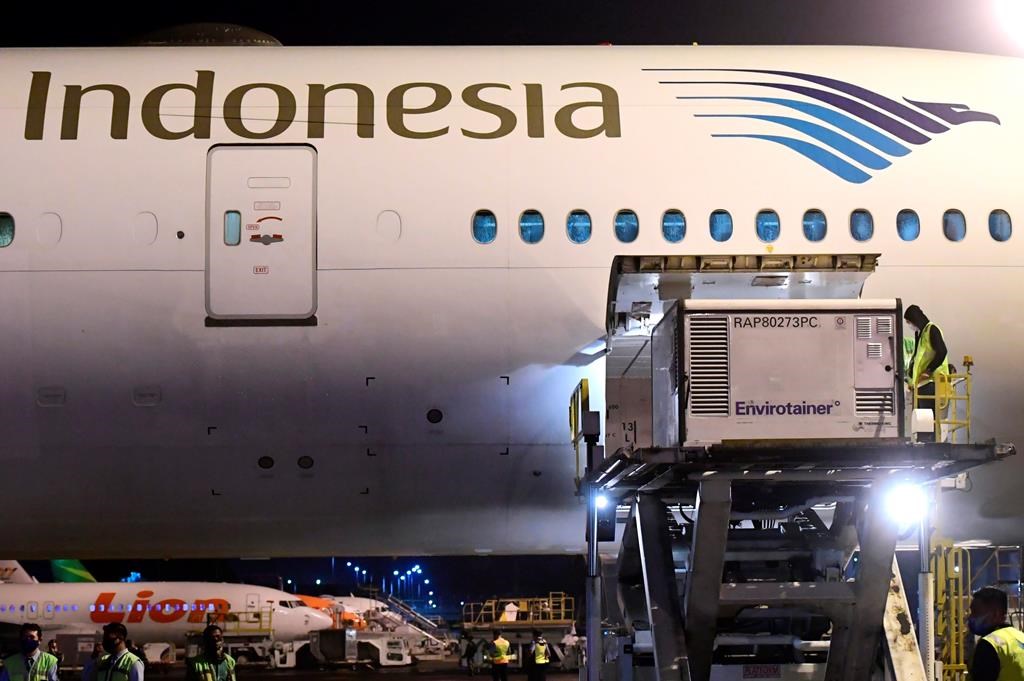
As a result of the flight cancellations, passengers at Indonesia’s busiest airport sought refunds and reclamation of checked baggage, as departure boards displayed a growing number of canceled flights. Indonesia’s Directorate General of Civil Aviation stated that it was closely monitoring the eruption’s impact on air travel and coordinating with airlines, airport operators, air navigation services, and the meteorology agency. Approximately 170 aircraft that had been parked overnight remained on the airport aprons.
The closure of the airport affected 209 flight movements and approximately 22,800 passengers on that Sunday. This included disruptions to the heavily trafficked domestic route to Makassar in South Sulawesi, while Singapore was noted as the international destination with the highest number of affected flights. Additional disruptions included cancellations, delays, and rescheduling of flights to popular international locations such as Hong Kong, Sydney, Amsterdam, Seoul, Doha, and Kuala Lumpur. Domestic flights to Lampung, Bali, and Surabaya were also either canceled or diverted.
Lukman F. Laisa, the director general of civil aviation for the Ministry of Transportation, emphasized that safety was the top priority in every operational decision. He cautioned that flight schedules could face cascading disruptions, affecting aircraft rotations, fleet availability, and terminal capacity as airlines worked to restore normal operations.
Travelers were encouraged to check with their airlines for the latest flight information and were advised to temporarily avoid the airport unless absolutely necessary. The Indonesian volcanology agency, in cooperation with the Darwin Volcanic Ash Advisory Centre in Australia, identified two significant ash clouds using satellite imagery. One ash plume reached an altitude of 20,000 feet (6,100 meters) and drifted northeast, impacting areas including Jakarta, Banten, West Java, and adjacent waters. Meanwhile, a second ash cloud rose to 50,000 feet (15,200 meters) and was moving westward and northwestward, affecting parts of Banten, Lampung, Bengkulu provinces, the southern Sunda Strait, and sections of the Indian Ocean west of Sumatra.
Anak Krakatau, which translates to "child of Krakatau," is a descendant of the notorious Krakatau volcano, whose cataclysmic eruption in 1883 resulted in a period of global cooling. It is also worth noting that the 2018 eruption of Anak Krakatau led to a tsunami that tragically claimed the lives of at least 430 individuals across Sumatra and Java. Researchers attribute this disaster to volcanic activity that triggered an underwater landslide, resulting in the collapse of a significant portion of Anak Krakatau’s southwest slope and the displacement of a large volume of water.
Since the 2018 incident, the volcano has maintained a second highest alert status on a scale of four. Scientists have observed that Anak Krakatau island currently occupies only about a quarter of its original size.