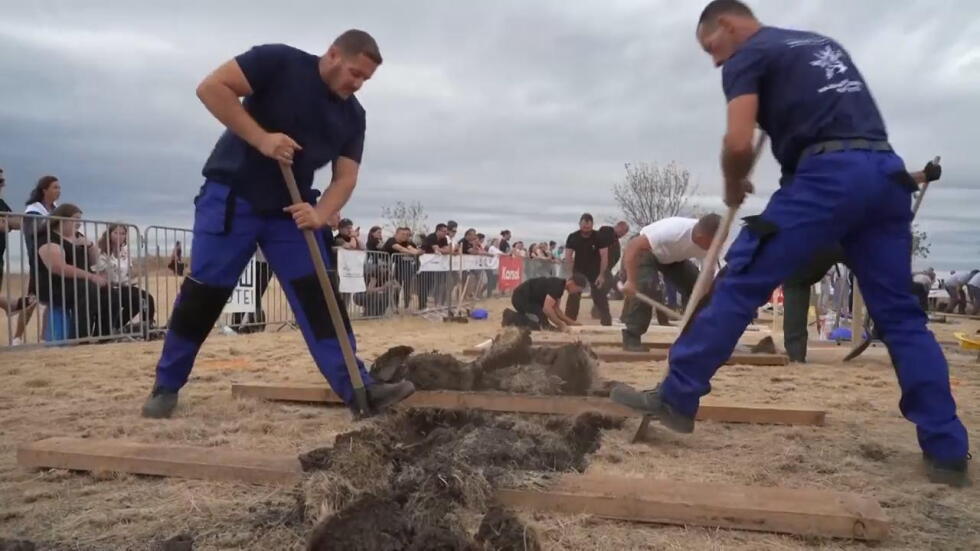
NYERGESUJFALU, Hungary (AP) — In a unique event that brought attention to an often-overlooked profession, a grave-digging contest took place in a cemetery in Nyergesújfalu, northern Hungary. On Saturday, 38 competitors equipped with picks and shovels participated in what might initially sound like a light-hearted activity, but the atmosphere was anything but comedic.
The contest was organized by the Hungarian Association of Cemetery Maintainers and Operators, with the primary aim of highlighting the skills involved in grave-digging while attempting to break the societal taboos surrounding death. This initiative demonstrates a more open approach to discussing the topic of mortality and the responsibilities that come with it.
The conditions were challenging as the contestants faced dry, hard soil in the public cemetery. This added an extra layer of difficulty to the competition, with 19 two-man teams pushing themselves to secure the title for the quickest and most stylish grave. The arduous task took a physical toll on the participants, who huffed, puffed, and sweated through the rigorous demands of the contest.
“Speed is the main thing here, not the beauty,” stated Róbert Nagy, who, along with his teammate László Kiss, emerged as the winners. Their primary focus was on efficiency, reflecting the reality that grave-digging for funerals requires precision in dimensions and careful craftsmanship to ensure that graves are properly and respectfully prepared.
The winning team accomplished the feat in a time of 1 hour and 21 minutes, adhering strictly to the specific contest dimensions for the graves. Each grave was required to be precisely 1.6 meters (5 1/2 feet) deep, 2 meters (6 1/2 feet) long, and 0.8 meters (2.6 feet) wide. Their success and skill in managing these requirements not only showcased their abilities but also earned them a cash prize of 200,000 Hungarian forints, which equates to approximately $640.
This competition served as a significant reminder of the importance of grave-digging as a skilled trade, elevating awareness and respect for those who manage this critical aspect of end-of-life services. The event bridged the gap between the often-taboo subject of death and the appreciation for the hard work that goes into grave preparation.