PARIS (AP) French President Emmanuel Macron expressed the public’s "anger" and "shame" following widespread rioting and looting amid nationwide protests against rising living costs and poor school conditions. As a result of the unrest, at least 2,400 individuals have been arrested across the country.
Macron, aligning with other government officials, attributed much of the violence to far-left activists, who he accused of instigating chaos by attacking police and public infrastructure. In a televised address, he stated, "Those who looted will have to pay for the damage, and those who sought to bring down the Republic will be held accountable." He further condemned "unrestrained violence" originating from "insurrectionist elements from radical far-left groups, joined by numerous criminals."
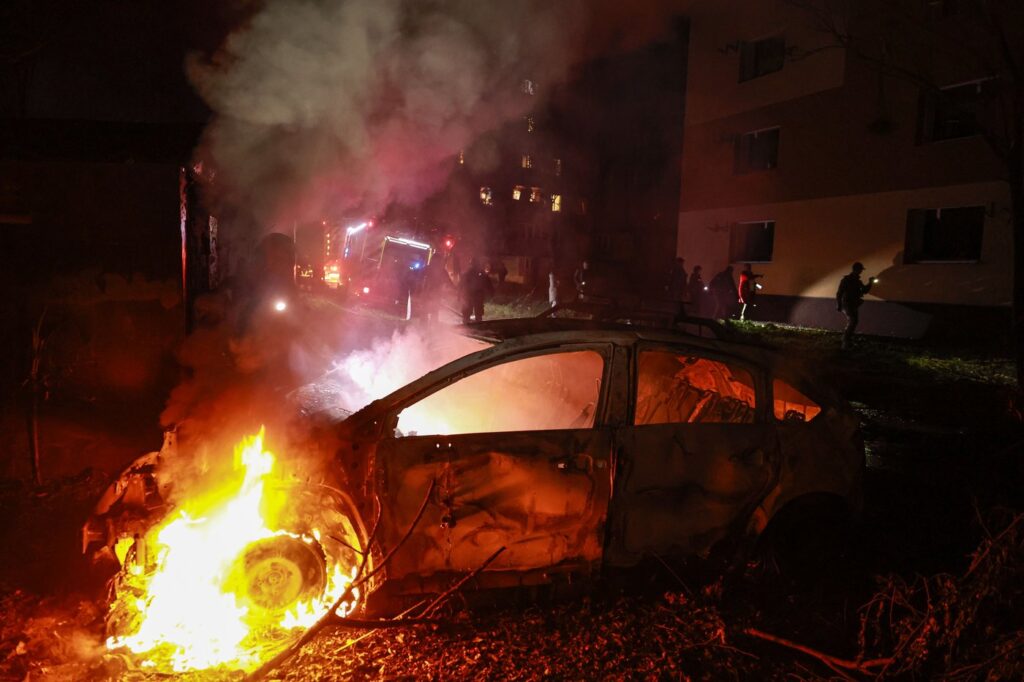
In response to the violence, Macron convened an emergency meeting with senior government officials following a day of unrest that saw masked groups setting fires and attacking municipal buildings. He directed prefects to collaborate with mayors to safeguard public buildings and businesses in the weeks to come, even suggesting the prohibition of protests when deemed necessary.
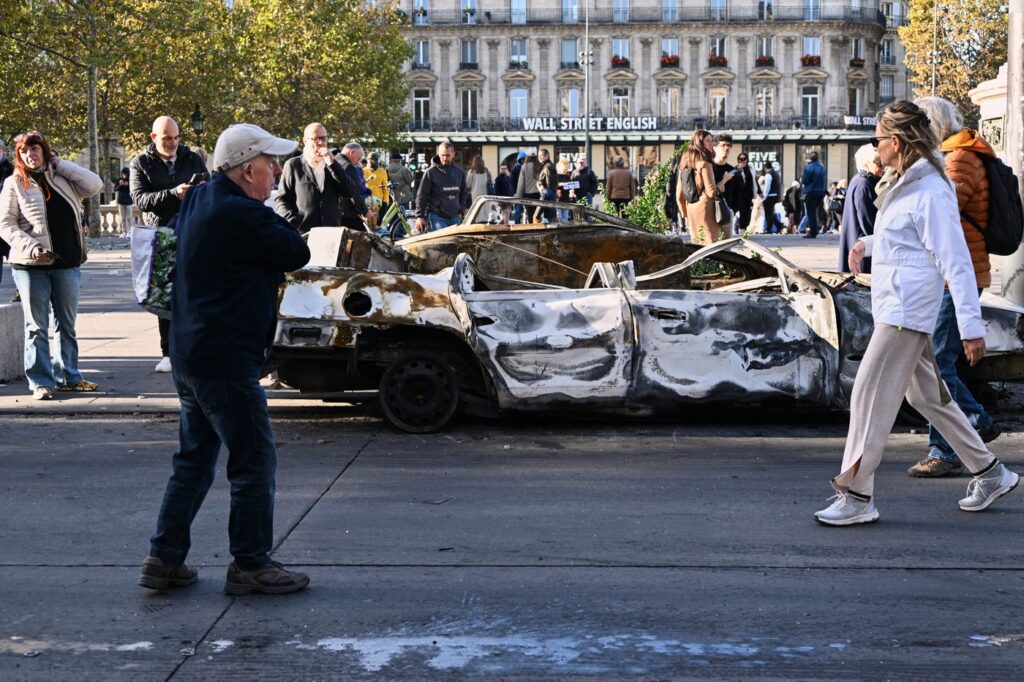
Significant destruction occurred in various cities as flames consumed the 19th-century City Hall in Limoges, leading to the building's near-total destruction. The unrest continued into Sunday in Paris, where hundreds gathered at the Place de la République. Under heavy police vigilance, incidents of rising tensions resulted in sporadic clashes, with officers deploying tear gas against small groups attempting to ignite bicycles and trash bins.
Interior Minister Laurent Nuñez commented on the situation via X, emphasizing that while "the right to protest is a fundamental right," the violent disruption of order is unacceptable. Authorities estimated that Saturday’s protests attracted about 550,000 participants, while organizers claimed the number exceeded 800,000. Demonstrators were motivated by calls from labor unions, student organizations, and activists aiming to revitalize the "yellow vest" movement, which emerged in 2018 to voice grievances against social injustices.
Mass protests in France frequently escalate into violence, particularly at the fringes of otherwise peaceful demonstrations, culminating in confrontations with law enforcement. The arrest figures on Sunday approached the nearly 2,000 arrests documented during a single day of yellow vest protests in December 2018. Tragically, one individual, identified only as having suffered a heart attack, was confirmed dead, prompting an investigation by the Paris prosecutor's office.
As Parisians surveyed the aftermath, they found dislodged cobblestones and wrecked storefronts around the Place de la République. Paris police reported the arrest of 855 individuals in the capital region, with 557 reportedly remaining in custody. Witnesses like Marie Peyreigne, a government employee, expressed shock at the "level of destruction and violence," questioning the motives behind the chaos.
Jean Foissy, another Parisian, recounted feeling frightened by the violence and destruction, stating, "I was very scared. I’ve been a Parisian since I was born... it hurts me." On the other hand, Margaux Eude, a young supporter of the protests, lamented the escalation, noting that "troublemakers" had overshadowed the movement's legitimacy.
The political fallout from the violence saw leaders exchanging blame as they approached the presidential election scheduled for next spring. Far-right leader Marine Le Pen criticized Macron's government for its perceived inability to maintain order, while far-left candidate Jean-Luc Mélenchon accused Prime Minister Sébastien Lecornu of recklessness and called for unity among youth and workers' unions by denouncing looting and destruction.
U.S. President Donald Trump chimed in with a comment on social media, claiming, “France is burning!” and suggesting the unrest could be linked to immigration issues. However, French authorities and police have not connected immigrants to the violence. Macron reflected on the chaos, questioning how "French people could do this to France.”
In light of the unprecedented scale of damage, as articulated by Paris Mayor Emmanuel Grégoire, the mayors of Paris, Marseille, and Lyon planned to request a meeting with the prime minister to discuss the serious ramifications of the events. Reports indicated instances of protesters breaching City Hall in Marseille and setting fire to a police station, while a fire erupted in a tourist office in Lyon. In Limoges, the City Hall suffered substantial destruction at the hands of what officials termed "radical troublemakers." Meanwhile, investigations were underway regarding severe injuries to at least two individuals, including a young girl who lost an eye and another youth who lost a hand amid the riots.
The scrutiny of police methods has intensified following the injuries reportedly sustained due to the use of riot-control weapons during protests. The continuing unrest and violence underscore significant societal tensions as France grapples with these intense protests.