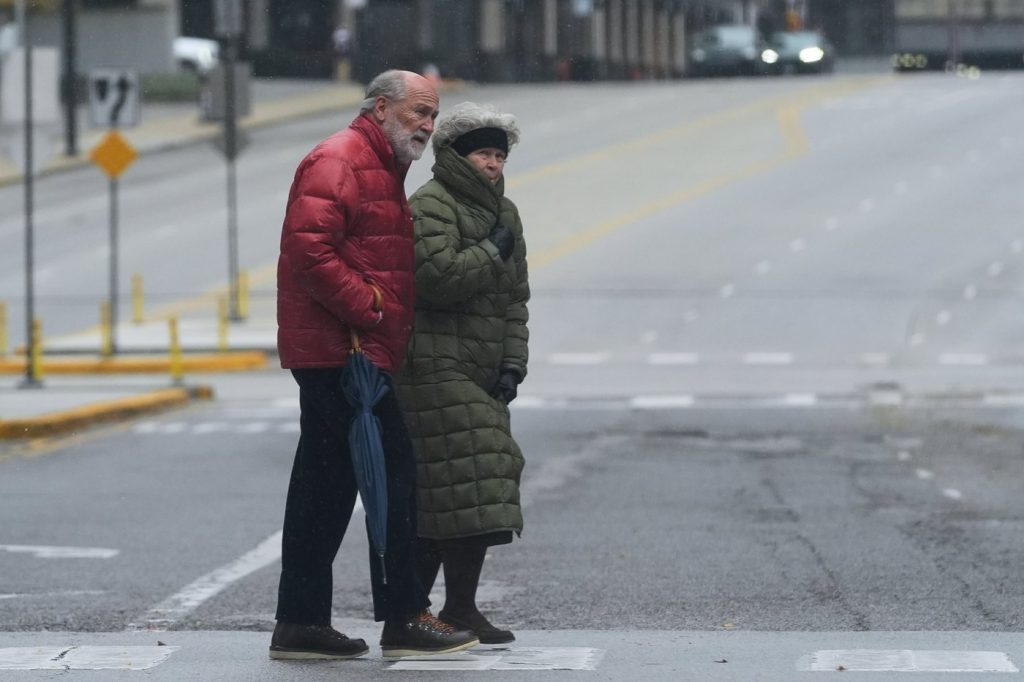
Record low temperatures are forecasted to impact the eastern two-thirds of the United States as a cold front pushes down Arctic air, affecting millions of residents. This significant weather change comes just a day after many areas in the Southeast, including parts of Florida, enjoyed temperatures close to 80 degrees Fahrenheit (27 degrees Celsius).
According to the National Weather Service, regions from Ohio, West Virginia, and Kentucky are under cold weather warnings, with freezing temperatures expected to stretch as far south as Texas, Oklahoma, Alabama, and Georgia. The cold snap is expected to bring gusty winds and hazardous conditions, particularly in the Great Plains and Great Lakes regions, where snowfall of 4 inches (10 centimeters) to 8 inches (20 centimeters) is anticipated.
Around Lake Erie, forecasters have issued warnings for potential lake-effect snow, which can lead to heavy snowfall in localized areas while leaving nearby regions with little to no accumulation. This has resulted in significant flight delays across the country, particularly at busy airports like Chicago O'Hare International Airport, where passengers have experienced wait times of up to four hours. The situation is exacerbated by the Federal Aviation Administration's (FAA) recent order, which has led to the cancellation of thousands of flights due to a federal budget shutdown affecting air traffic controllers who are currently working unpaid.
In Florida, the upcoming chill could lead to falling iguanas from the trees, as the wind chill is predicted to plunge into the 30s Fahrenheit (approximately -1 degrees Celsius). Iguanas, which are considered an invasive species, have a tendency to become immobilized in cold temperatures and may fall when it gets too chilly. Local residents and officials are on alert, although it remains uncertain if many reptiles will indeed drop as a result of the cold this time around.
Many local governments in the South are responding to the cold snap by opening heated shelters for vulnerable residents. In St. Louis, Missouri, where recovery efforts are still underway following an EF3 tornado that struck the area in May, emergency shelters have become even more critical for those displaced or still dealing with damage to their homes.
In Tennessee, temperatures plunged to around 30 degrees Fahrenheit (-1 degrees Celsius) over the weekend, with higher elevations reporting new snowfall and causing some school closures. The icy conditions contributed to multi-vehicle accidents on highways, including a crash that resulted in a temporary shutdown on Interstate 40 in Putnam County, east of Nashville. As temperatures continue to decrease across the Midwest, the National Weather Service has issued winter weather advisories in states like Michigan, Indiana, and Wisconsin due to expected snow and hazardous travel conditions.
Weather experts are warning Indiana residents to prepare for up to 11 inches (28 centimeters) of snow, while parts of Wisconsin may see around 6 inches (15 centimeters). Furthermore, regions in Minnesota, Nebraska, and South Dakota are experiencing blowing snow and freezing wind chills. The previous day, areas in southwest Minnesota recorded up to 4 inches (10 centimeters) of snow, with northern Iowa also seeing more than 5 inches (13 centimeters).
Gardeners in the Midwest and Northeast have received guidance that the frosty temperatures indicate the end of the growing season. Meteorologists in Arkansas have urged gardeners to take immediate steps to protect their plants from the cold. In north Florida, farmers growing peppers, eggplants, squash, and leafy greens are racing against time to harvest before temperatures drop. However, forecasts suggest that South Florida, known for a substantial portion of the state’s winter fruits and vegetables, is likely to avoid any significant freezes, with citrus crops expected to withstand lower temperatures.
The cold snap might, however, have a positive effect on some Florida crops. As long as temperatures remain above freezing, cool weather could enhance the flavor and quality of crops like strawberries and blueberries, according to Christina Morton, a spokeswoman for the Florida Fruit & Vegetable Association.