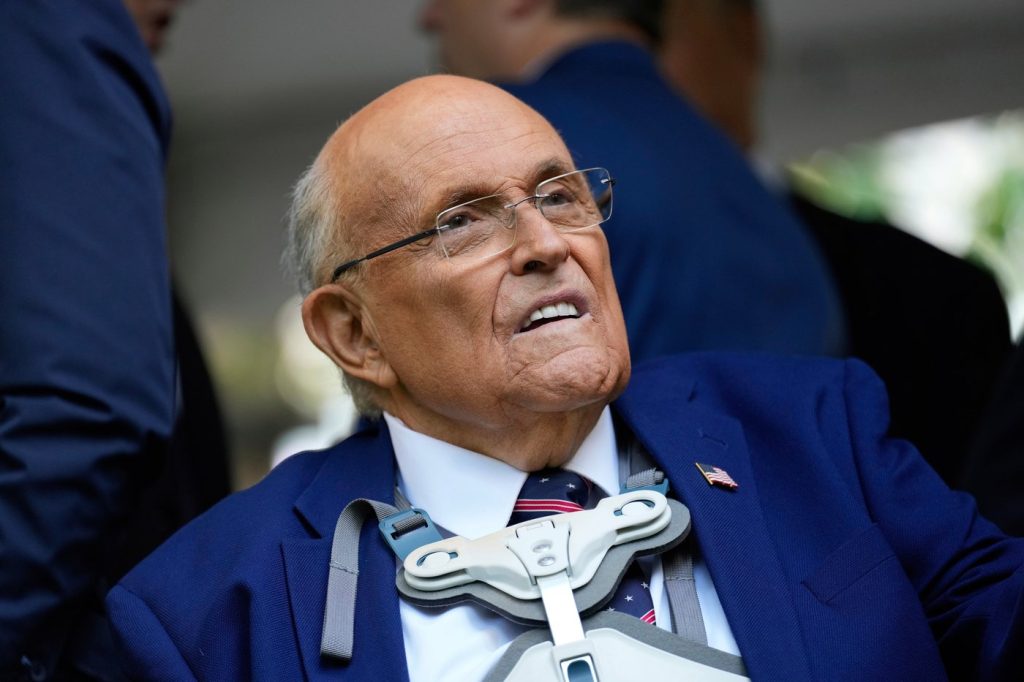
WASHINGTON (AP) - President Donald Trump granted pardons to his former personal lawyer Rudy Giuliani and his former chief of staff Mark Meadows, along with numerous others associated with efforts to overturn the results of the 2020 presidential election. This move indicates Trump's ongoing commitment to his narrative that the election was stolen from him by Democrat Joe Biden.
The pardons are described as “full, complete, and unconditional” and primarily symbolic, applying only to federal offenses. Notably, the individuals who received pardons had not been federally charged in relation to their attempts to contest the election's outcome. Therefore, state charges against some prominent figures remain unaddressed, particularly as state prosecutions regarding the election have encountered significant challenges.
This pardon also continues a pattern of Trump’s actions following the January 6, 2021, Capitol riot, during which many of his supporters were charged with various offenses. The decision to issue pardons aligns with a statement made by Ed Martin, a Justice Department representative on pardons, who related the action to a sentiment expressed on social media, “No MAGA left behind.”
Among the notable names receiving pardons are Sidney Powell, known for propagating unfounded conspiracy theories about electoral fraud; John Eastman; and Jeffrey Clark, both of whom played roles in Trump’s efforts to challenge the election results. Several others were also included who acted as “fake electors” for Trump, facing state-level charges for submitting false electoral certification.
Remarkably, the pardon explicitly states it does not extend to Trump himself. He has consistently maintained claims regarding the alleged illegitimacy of the 2020 election, using this narrative to advocate for changes to voting processes nationally. The proclamation characterizes the prosecution of Trump’s allies as a “grave national injustice” and suggests that the pardons are intended to initiate “the process of national reconciliation.”
Defending the actions and motivations, White House press secretary Karoline Leavitt claimed that these individuals had been “persecuted” by the Biden administration for merely voicing concerns about the election outcome, despite mentioning that the individuals were not charged by federal entities but by state prosecutors operating independently.
Despite the pardons, experts believe their actual impact may be limited. For instance, Giuliani faces ongoing legal and professional difficulties, including having been disbarred and embroiled in defamation cases. These pardons do not absolve individuals from state-level legal challenges or civil liabilities resulting from their actions related to the 2020 election.
Furthermore, critics argue that these actions by Trump risk setting dangerous precedents for future elections, suggesting that such pardons may signal complacency against potential future attempts to unduly influence electoral outcomes. Legal experts warn that this could reflect a troubling message that future collaborators could expect similar relief from federal consequences.
Within this context, Trump’s close associates, including those mentioned, were also indicated as co-conspirators in a federal case concerning election interference. However, due to policies regarding prosecuting sitting presidents, ongoing investigations had ultimately been discontinued.
Reflecting on the broader implications, Professor Rick Hasen of UCLA remarked on the potential consequences of allowing such a narrative to permeate electoral processes, emphasizing the danger of instilling a lack of accountability in future electoral events.