VATICAN CITY (AP) – Pope Leo XIV, during his inaugural Christmas Day message on Thursday, called upon the faithful to discard indifference towards those who have lost everything. He specifically highlighted the dire situations in Gaza, the impoverished circumstances in Yemen, and the plight of many migrants journeying across the Mediterranean Sea and throughout the American continent in search of a better future.
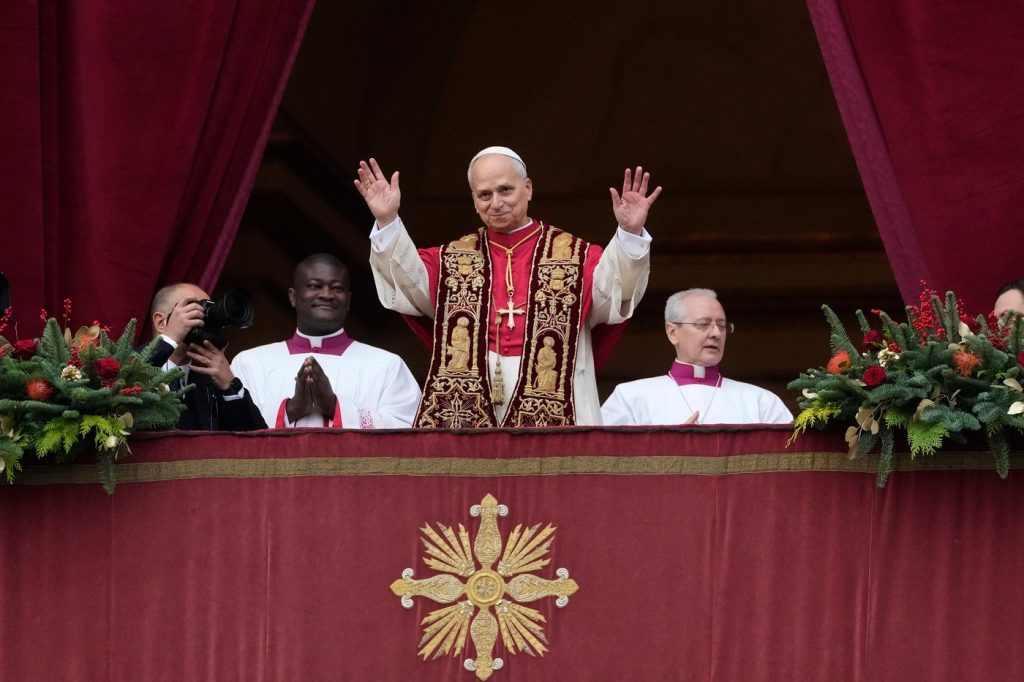
Addressing approximately 26,000 attendees from the loggia of St. Peter's Square during the traditional Urbi et Orbi address, which translates from Latin to "To the City and to the World," the pope served as a voice for the many global challenges facing humanity.
Despite the rain that fell during the papal Mass inside St. Peter's Basilica, it ceased in time for Pope Leo to make a brief tour of the square in the popemobile before addressing the crowd. The new pontiff revived the practice of delivering Christmas greetings in multiple languages, a tradition that had been discontinued by his predecessor, Pope Francis. He garnered particularly enthusiastic responses when greeting the audience in English and Spanish, reflecting his background as a missionary and former archbishop of Peru.
During his address, Pope Leo XIV emphasized that everyone has the potential to contribute to peace through humility and responsibility. "If we truly enter into the suffering of others and stand in solidarity with the weak and the oppressed, then the world would change," he asserted.
The pope called for "justice, peace, and stability" in regions such as Lebanon, the Palestinian territories, Israel, and Syria. He also offered prayers for the "tormented people of Ukraine" and extended his sentiments of "peace and consolation" to victims of war, injustice, political instability, religious persecution, and terrorism in nations like Sudan, South Sudan, Mali, Burkina Faso, and the Democratic Republic of Congo. Furthermore, he urged for dialogue to confront various challenges in Latin America and called for reconciliation in Myanmar, restoration of "the ancient friendship between Thailand and Cambodia," as well as aid for those affected by natural disasters in South Asia and Oceania.
In his message, Pope Leo highlighted the embodiment of Jesus Christ as a figure who embraced humanity's vulnerabilities, saying, "In becoming man, Jesus took upon himself our fragility, identifying with each one of us: with those who have nothing left and have lost everything, like the inhabitants of Gaza; with those who are prey to hunger and poverty, like the Yemeni people; with those who are fleeing their homeland to seek a future elsewhere, like the many refugees and migrants who cross the Mediterranean or traverse the American continent."
The pope also expressed his compassion for individuals without jobs or those seeking employment, especially young people, underpaid workers, and prisoners. Earlier, he led the Christmas Day Mass from the central altar beneath the balustrade of St. Peter's Basilica, which was lavishly adorned with floral garlands and clusters of red poinsettias. Snow-white flowers were placed at the feet of a statue of Mary, the mother of Jesus, as part of the Christmas celebrations.
In his homily, Pope Leo stressed that genuine peace can only be achieved through dialogue. "There will be peace when our monologues are interrupted, and enriched by listening, we fall to our knees before the humanity of the other," he remarked. He drew attention to the plight of the inhabitants of Gaza, who have faced weeks of adverse weather conditions, as well as to the vulnerabilities of defenseless populations who have been ravaged by numerous wars. He noted the complicated decisions facing young people forced to bear arms and the harsh realities encapsulated in the "pompous speeches of those who send them to their deaths."
Thousands gathered at the basilica for Pope Leo XIV's first Christmas Day Mass, many raising their smartphones to capture the special moments during the opening procession. This Christmas season also marks the conclusion of the Holy Year celebrations, which will officially close on January 6, during the Catholic Epiphany holiday that commemorates the visit of the three wise men to the newborn Jesus in Bethlehem.