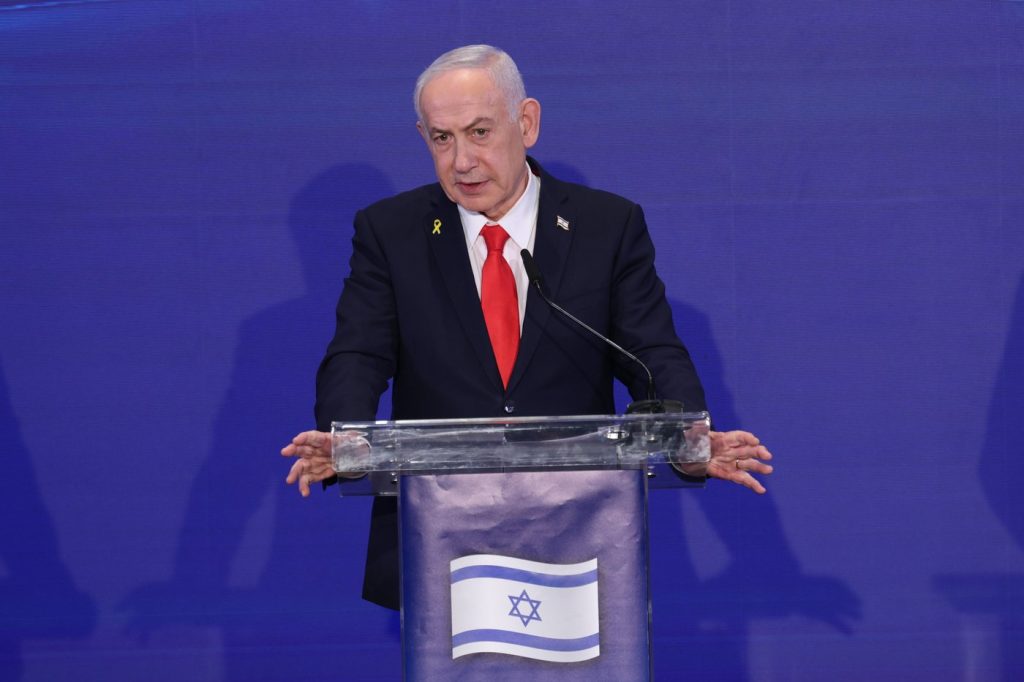
DEIR AL-BALAH, Gaza Strip – Israeli airstrikes in Gaza on Thursday resulted in the deaths of nine individuals, including three women. This incident occurred just one day after the United States announced the advancement of a fragile ceasefire to its second phase. Israeli Prime Minister Benjamin Netanyahu characterized this ceasefire announcement as largely symbolic, highlighting concerns regarding the implementation of its more challenging aspects.
During a meeting with the parents of the last Israeli hostage whose remains are still believed to be in Gaza, Netanyahu asserted that the governing committee of Palestinians suggested for the second phase was merely a “declarative move.” This remark raised skepticism about the progress that had been claimed by U.S. envoy Steve Witkoff.
Ran Gvili’s parents earlier urged Netanyahu to postpone any advancement of the ceasefire until their son’s remains were returned. Netanyahu reassured them that his return remained a top priority for the Israeli government. The announcement of the ceasefire's second phase, while seen as a significant step forward, also left numerous critical questions unanswered.
Details concerning the composition of the proposed apolitical “governing committee of Palestinian experts” and an international “Board of Peace” are unclear. An Israeli official, who spoke anonymously, indicated that the committee’s composition had been coordinated with Israel. Moreover, pressing questions remain about the timing of international force deployment, the reopening of Gaza’s southern Rafah border crossing, the disarmament of Hamas, and the broader reconstruction of Gaza.
Ali Shaath, an engineer and former Palestinian Authority official selected to lead the committee, suggested in a radio interview that reconstruction and recovery efforts could take around three years, beginning with addressing immediate needs such as shelters. He proposed a radical idea of disposing of rubble by creating new islands in the sea to benefit Gaza.
However, amid the announcement of progress, many Palestinians in Gaza expressed doubt about what practical changes would come with the transition into phase two. They pointed to the ongoing violence and the continuous struggle to secure basic needs. According to Gaza’s Health Ministry, over 450 people have been killed since the ceasefire began in October. Nine fatalities were reported in Thursday’s strikes across various locations.
Local hospitals reported that the first of the recent airstrikes killed two men, while subsequent strikes resulted in casualties among women and children. An Israeli military spokesperson indicated that someone who approached troops near the defined Yellow Line, which separates Israeli-controlled areas from the rest of Gaza, was killed due to posing an imminent threat.
Displaced individuals like Samed Abu Rawagh reflected on their plight, articulating a deep sense of ongoing suffering despite the supposed ceasefire. The casualties since the October ceasefire, according to UNICEF, include over 100 children, contributing to a total of 71,441 Palestinians killed since the onset of the offensive initiated on October 7, 2023, which followed a significant attack by militants that resulted in the deaths of around 1,200 people in Israel and the abduction of 251 others.
Amidst these challenges, Hamza Abu Shahab from eastern Khan Younis conveyed a desire for tangible improvements such as better access to food, fuel, and medical care, rather than hollow promises. Gazans are facing dire shortages of humanitarian aid and inadequate temporary housing as they brace for winter storms.
Moving forward, the second phase of the ceasefire is expected to tackle deeper issues around disarming Hamas and establishing a new governance structure, following nearly two decades of the group's rule in the territory. The United Nations estimates that about $50 billion will be required for reconstruction, a process likely to unfold over several years with limited funding secured thus far.
Hamas has stated its commitment to dissolving its existing government to enable the establishment of the new committee. However, uncertainties linger regarding what that means for its military wing and its civil service. Bassem Naim, a member of Hamas's political bureau, expressed support for the committee but did not provide further clarification on its workings, asserting that the initiative now depends on the cooperation of the United States and international mediators.
Israel remains firm that Hamas must disarm, while the group’s leadership maintains the position that Palestinians retain the right to resist the ongoing conflict. These layered complexities suggest that significant hurdles will persist as stakeholders navigate the path toward peace in the region.