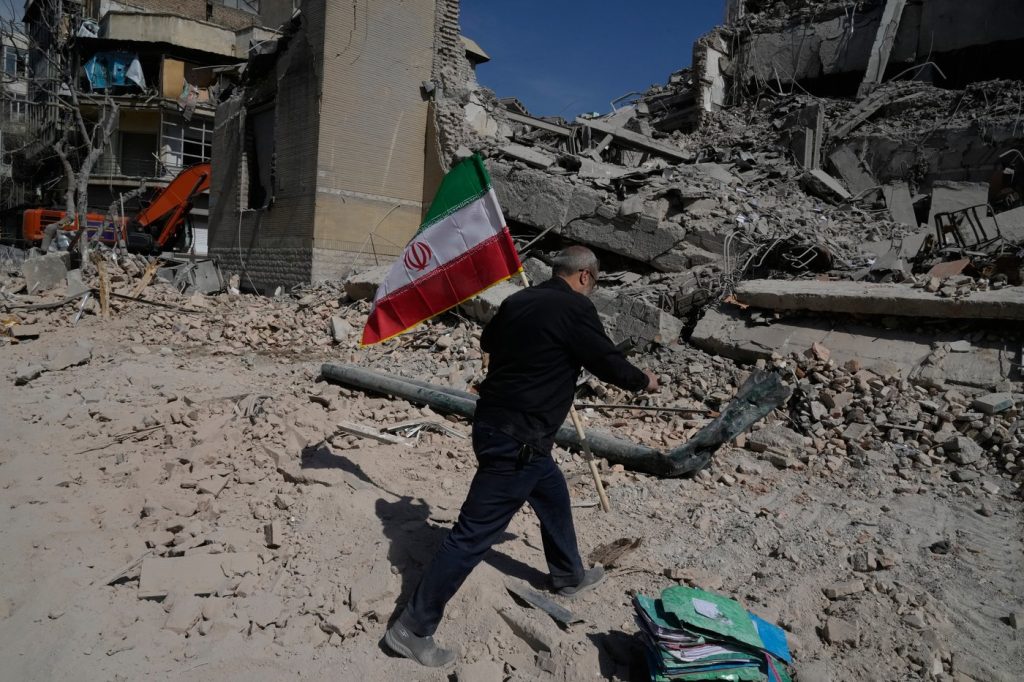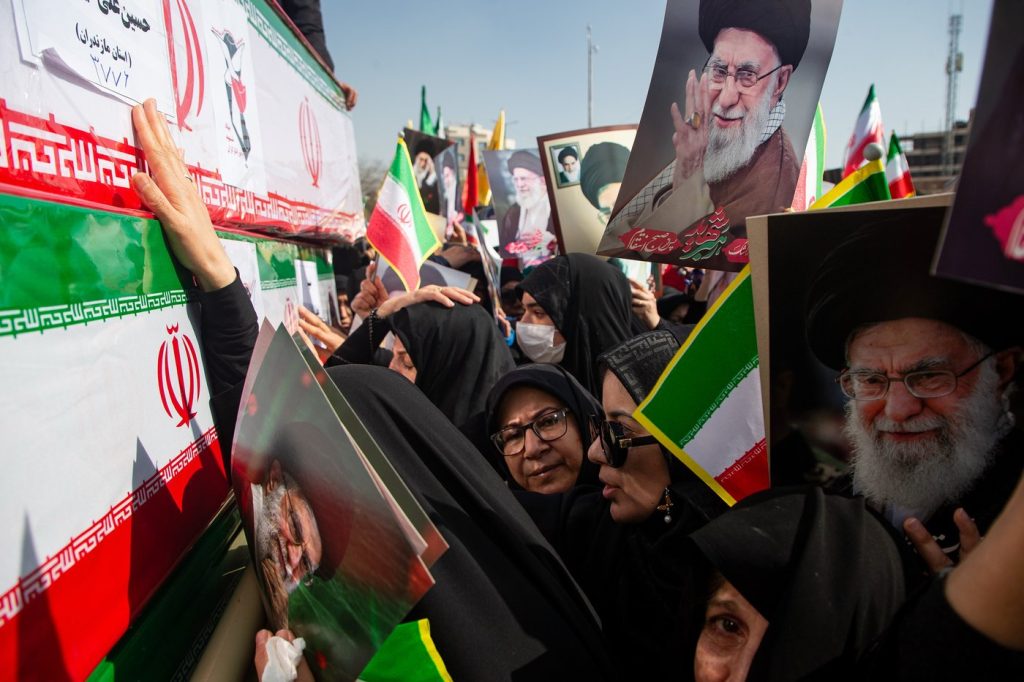
In a recent interview with Axios, U.S. President Donald Trump expressed his desire to have a role in the selection of Iran's next leader, emphasizing that he views the potential candidacy of Ayatollah Ali Khamenei's son, Mojtaba Khamenei, as "unacceptable." This statement comes against the backdrop of heightened tensions between the U.S. and Iran, particularly following the assassination of Khamenei's father, the Iranian supreme leader, at the outset of a conflict that has reverberated internationally.
Trump's remarks were pointed, as he described the 56-year-old Mojtaba Khamenei as "a lightweight," indicating a lack of respect for his capabilities as a potential leader. The U.S. President reiterated his belief that Iran requires a leader who can foster "harmony and peace" within the nation, a stark contrast to the current political climate under the existing regime.
In the interview, Trump likened the situation in Iran to that in Venezuela, where he claimed he had a directive role in the selection process of political leadership. He referred to Delcy Rodriguez, who assumed power as the acting president in Venezuela in January after Trump orchestrated a military operation aimed at capturing Nicolás Maduro, the former president, to face serious legal charges in the U.S. This juxtaposition highlights Trump's assertive foreign policy approach, which he believes extends to choosing leaders in countries considered adversarial to U.S. interests.
Trump's call for involvement in Iran's leadership decisions underscores the complex dynamics of international relations, particularly regarding countries like Iran that have a history of antagonism toward the United States. His comments also reflect a broader strategy to influence political outcomes abroad in favor of U.S. foreign policy objectives.
While the details of how U.S. involvement in such selections would unfold remain unclear, Trump's statements highlight a significant shift in diplomacy that may seek to empower various factions within Iran rather than working through traditional diplomatic channels. As speculation grows about the future direction of Iranian leadership, the implications of Trump's approach on U.S.-Iran relations could shape not just the region but global geopolitical stability.
As the world watches, the tension surrounding the potential leadership transition in Iran will likely affect international negotiations and the broader discourse surrounding Iran's role in regional stability. The significance of Trump's declarations serves as a reminder of the high stakes involved and the impact of leadership choices in one of the world’s most contentious political landscapes.