BUNIA, Congo (AP) – A significant outbreak of Ebola disease has been reported in the Democratic Republic of Congo, with at least 282 confirmed cases as of recent health reports. The outbreak is primarily concentrated in the eastern Ituri province, accounting for 264 of the cases. The health ministry has also documented over 1,000 suspected cases of the Bundibugyo virus, the variant involved in this outbreak, which was identified weeks after the emergence of the infection. Currently, there are no approved medications or vaccines available to combat this strain of Ebola.
The outbreak has resulted in the deaths of 42 individuals within Congo, and one fatality has been recorded in the neighboring country of Uganda. The disease has spread across 22 health zones in three eastern provinces, posing significant challenges to health authorities. Despite these difficulties, the World Health Organization (WHO) has spotlighted progress markers, including the distribution of essential medical supplies to under-resourced health facilities.
Among the key challenges in managing this outbreak are the early detection and isolation of cases, rigorous contact tracing, safe burials, and improvements in infection prevention and control practices within health centers. In response to the ongoing crisis, the Coalition for Epidemic Preparedness Innovations has pledged up to $62 million to hasten the development of three experimental vaccines targeting the Bundibugyo virus, which are being developed by the International AIDS Vaccine Initiative, Moderna, and the University of Oxford.
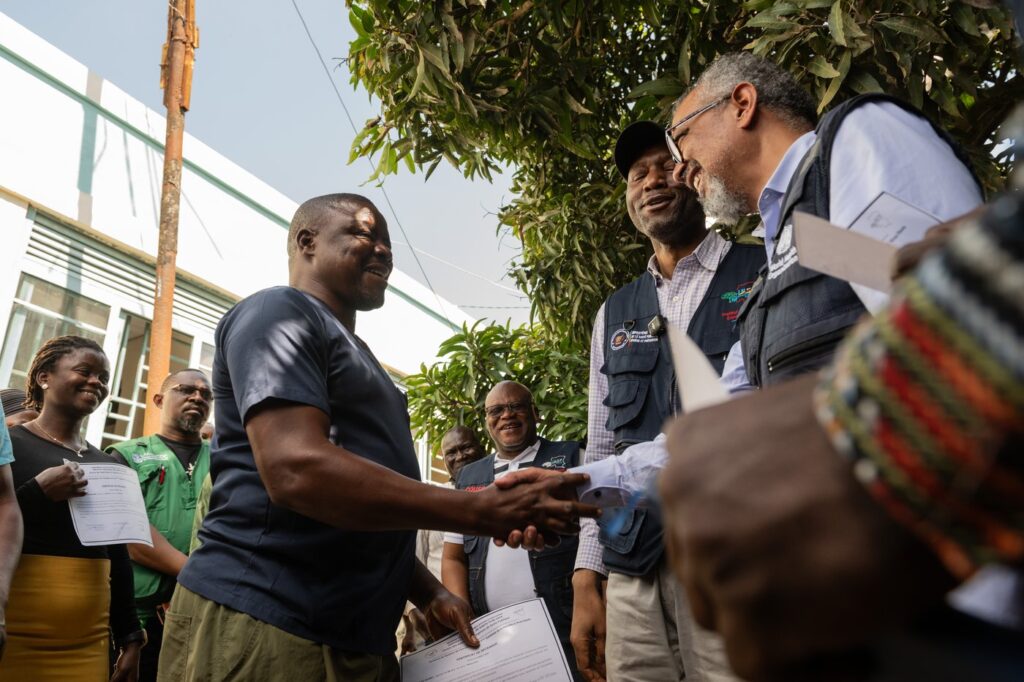
Health workers involved in the response to the outbreak have faced significant risks. Recently, WHO honored five of these survivors during a visit by Director-General Tedros Adhanom Ghebreyesus, who inaugurated a new Ebola treatment center in Bunia, the capital of Ituri province. Among those recognized was nurse Baraka Bulambulu, who expressed immense joy after receiving negative test results for Ebola, describing his survival as “indescribable joy.”
Another nurse, Ezo Étienne, recounted his experience of having felt dizzy and subsequently vomiting before reporting his symptoms to the team. The virus is transmitted through close contact with bodily fluids from infected or deceased individuals, and current treatment approaches focus primarily on alleviating the symptoms experienced by patients, as noted by WHO.
Despite the ongoing challenges—including threats posed by armed groups and mistrust among some local residents toward health workers—Dr. Dieudonne Mwamba Kazadi, director-general of Congo’s National Institute of Public Health, emphasized the importance of these recovery stories. He highlighted them as a “victory worth celebrating” and a powerful message that early treatment in dedicated facilities can lead to recovery from Ebola.
In Uganda, nine cases of Ebola have been reported during this outbreak, leading the country to close its border with Congo in an attempt to limit the spread of the virus. Although more than 20 Ebola outbreaks have occurred in both Congo and Uganda, the Bundibugyo variant has been relatively rare in comparison to other strains. The ongoing conflict in the region, attributed to groups such as the Allied Democratic Forces (ADF) and various ethnic militias, further complicates the response to the outbreak.
Recent violence attributed to the ADF resulted in the killings of 16 people in Beni, a locality in North Kivu province, which has also been affected by the Ebola outbreak. The illness has been reported in both North Kivu and South Kivu provinces, where the Rwanda-backed M23 rebel group maintains control over several key cities, including Goma and Bukavu.