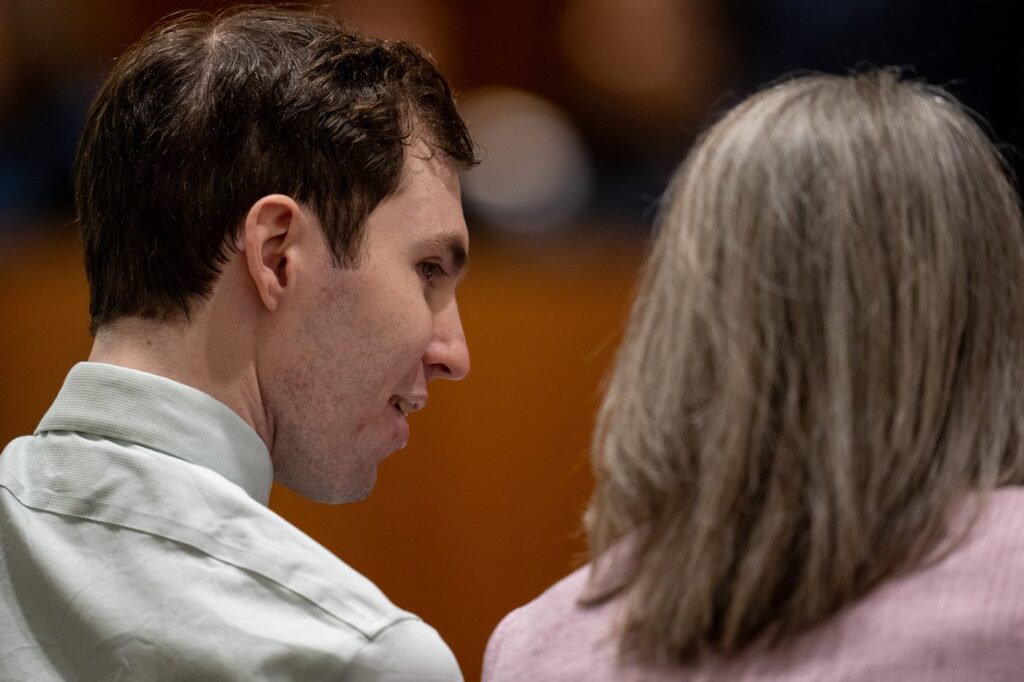
SALT LAKE CITY (AP) — A Utah judge, Tony Graf, has ruled that reporters and the public will be allowed to attend the preliminary hearing for Tyler Robinson, who is accused of the murder of Charlie Kirk. This decision came on Monday, rejecting the defense team's request to limit access to the court proceedings. The preliminary hearing is set to take place from July 6 to July 10, where prosecutors are expected to present their evidence to justify moving forward to a trial.
Judge Graf emphasized the public's right to access court proceedings, stating that the defense failed to demonstrate that public scrutiny would compromise Robinson's right to a fair trial. The case has garnered significant attention, prompting concerns from Robinson's defense lawyers about potential misrepresentations in the media. Robinson, a 23-year-old from southwestern Utah, is facing charges of aggravated murder stemming from the assassination of Kirk on September 10 at the Utah Valley University campus.
The prosecution plans to seek the death penalty if Robinson is found guilty, and as of now, he has not entered a plea. During the preliminary hearing, the prosecution intends to introduce several forms of evidence, including forensic analyses, surveillance video, witness testimony recordings, autopsy findings, and messages allegedly from Robinson confessing to the crime. Notably, authorities have stated that DNA matching Robinson’s was discovered on multiple pieces of evidence, including the trigger of the rifle used in Kirk's killing and a towel utilized to wrap that rifle.
In addition to the hearing scheduled for July, Judge Graf has also approved a separate hearing on June 12, where the defense will argue for sanctions against prosecutors for comments made in the media that allegedly went against Robinson's rights. Robinson's attorneys claim that prosecutor Christopher Ballard engaged in a "media tour," expressing opinions that implied Robinson's guilt. In response, prosecutors defended Ballard's comments, stating he was merely correcting inaccuracies reported in the media concerning preliminary ballistics findings that had sparked speculation over the possibility of Robinson’s exoneration.
The outcome of the upcoming preliminary hearing is critical, as it will be the first substantial presentation of evidence in a case that continues to draw considerable public and media scrutiny. As tensions mount over the significant implications of the case, both sides appear prepared for a battle over how evidence is presented and perceived in this highly publicized legal matter.