On Saturday, Iran launched ballistic missiles and drones targeting Bahrain and Kuwait, which were successfully intercepted, according to Bahrain's government. This action has raised concerns about a fragile ceasefire amidst the ongoing Middle East conflict. Iran claimed the strikes were aimed at U.S. military assets in both countries, in response to an earlier U.S. attack on surveillance facilities located on Qeshm Island and near Sirik. Iran described the U.S. assault as a violation of the ceasefire.
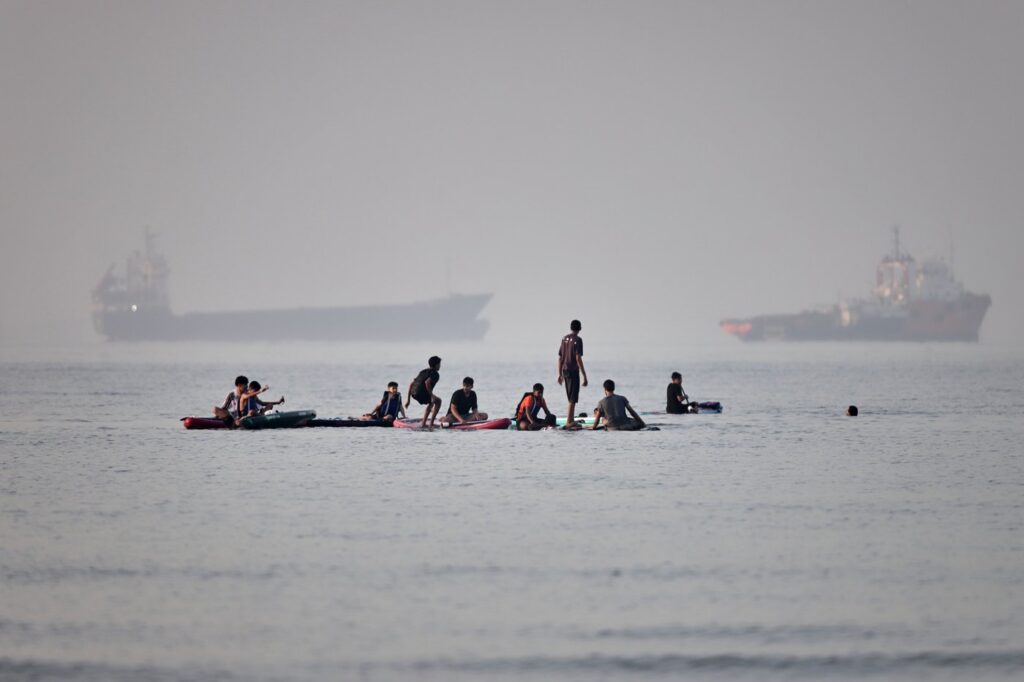
Later that day, U.S. Central Command reported that American forces shot down two Iranian attack drones over the Strait of Hormuz. This escalation occurs as the Trump administration intensifies pressure on Iran to negotiate a resolution to the conflict, which has adversely affected the global economy and fueled a potential hunger crisis in vulnerable regions.
Amid this rising tension, Pakistan's Interior Minister, Mohsin Naqvi, arrived in Iran to facilitate mediation efforts. Concurrently, the U.S. is contemplating measures to increase economic pressure on Iran, including the possibility of allowing Gulf allies to access frozen Iranian assets as compensation for war damages, according to a source familiar with ongoing discussions.
In the lead-up to the strikes, the U.S. military reported intercepting several Iranian missiles and drones aimed at regional maritime traffic, launching retaliatory strikes against Iran's coastal surveillance radar systems. Iran's Revolutionary Guard confirmed that it targeted the Ali Al Salem air base in Kuwait, which hosts U.S. forces, and the U.S. Navy's 5th Fleet in Bahrain, according to the state-run IRNA news agency. Fortunately, the U.S. military reported no injuries to American personnel following these exchanges.
This recent conflict follows a significant incident earlier in the week, where Iranian drones damaged a passenger terminal at Kuwait's main airport, resulting in one fatality and numerous injuries. The U.S. has continued its blockade on Iranian ports in retaliation for Tehran’s tightening control over the Strait of Hormuz—a critical route for global oil and gas shipments—leading to spikes in energy prices that may threaten U.S. President Donald Trump's midterm election prospects.
As diplomatic negotiations remain elusive, Trump appears to be in a challenging position. U.S. and Iranian negotiators had tentatively agreed to a 60-day extension of the ceasefire and further discussions regarding Iran's nuclear program. However, Trump has called for unspecified amendments to the deal, with Iranian officials showing little willingness to comply.
Compounding the complexities is the ongoing fighting in Lebanon, where Israeli forces have made significant territorial gains while targeting the Iranian-backed Hezbollah militant group. Iran demands that any enduring truce also address the situation in Lebanon. Recently, a ceasefire agreement between the Lebanese government and Israel, mediated by the U.S., has been met with rejection from Hezbollah.
Miad Maleki, a senior fellow at the Foundation for Defense of Democracies, emphasized the significance of the U.S. proposing access to approximately $24 billion in frozen Iranian assets for Gulf nations. This strategic move signals that rather than simply denying Iran these funds, the U.S. plans to enable Gulf states to seek compensation, thereby reinforcing American alliances amidst ongoing hostilities.
While allowing Gulf states to utilize these frozen assets may strengthen U.S. ties in the region, it also raises concerns of potential retaliation from Iran. The situation thus remains precarious, with both immediate military conflicts and longer-term diplomatic negotiations looming over the region's stability.