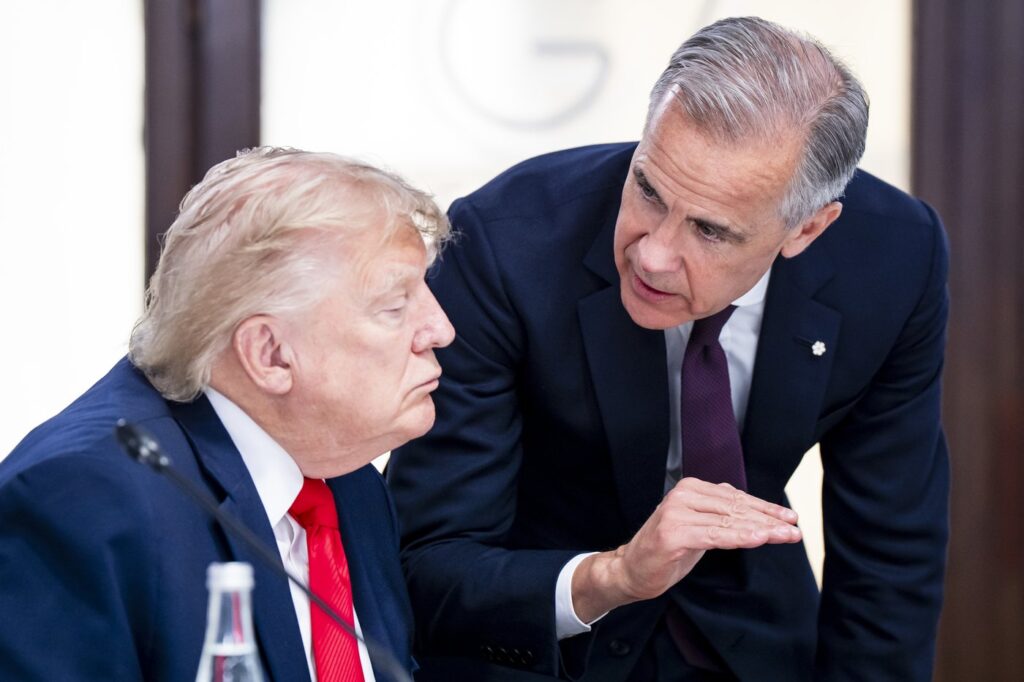
Canadian Prime Minister Mark Carney recently communicated with U.S. President Donald Trump, and they reached a consensus to intensify trade negotiations amidst escalating tariff tensions. This dialogue took place on a Tuesday morning, highlighting ongoing concerns about the trade relationship between the two countries.
On a preceding Monday, President Trump announced a series of executive orders intending to impose a significant 50 percent tariff on an array of Canadian goods, set to come into effect in 30 days. The tariffs, according to Trump's administration, will not be exempt under the Canada-United States-Mexico Agreement (CUSMA). A White House fact sheet cited the need for accountability regarding Canada’s discrimination against U.S. commerce, particularly noting provincial bans on U.S. liquor as a primary cause for the tariffs.
In addition to alcohol bans, U.S. officials pointed to Canada's supply-managed dairy system and restrictions on certain U.S. vehicle imports as contributory factors to the trade dispute. Currently, all Canadian provinces, except for Alberta and Saskatchewan, prohibit the sale of U.S. alcoholic beverages. When asked about whether Trump’s latest tariff threats could lead to a reversal of the liquor bans, Carney indicated that the decision rests with provincial authorities. He articulated that the provinces made their decisions in response to tariffs and threats to their sovereignty, and any changes would need to be part of a comprehensive agreement.
Carney kept the possibility open for Canada to respond with its own tariffs if Trump’s proposed quotas materialize. He asserted, “We will look at all options in terms of how we would respond if they do come into effect.” He emphasized the primary goal of reaching a comprehensive agreement that benefits both nations while adhering to CUSMA principles.
Ford Expresses Frustration Towards Trump's Approaches
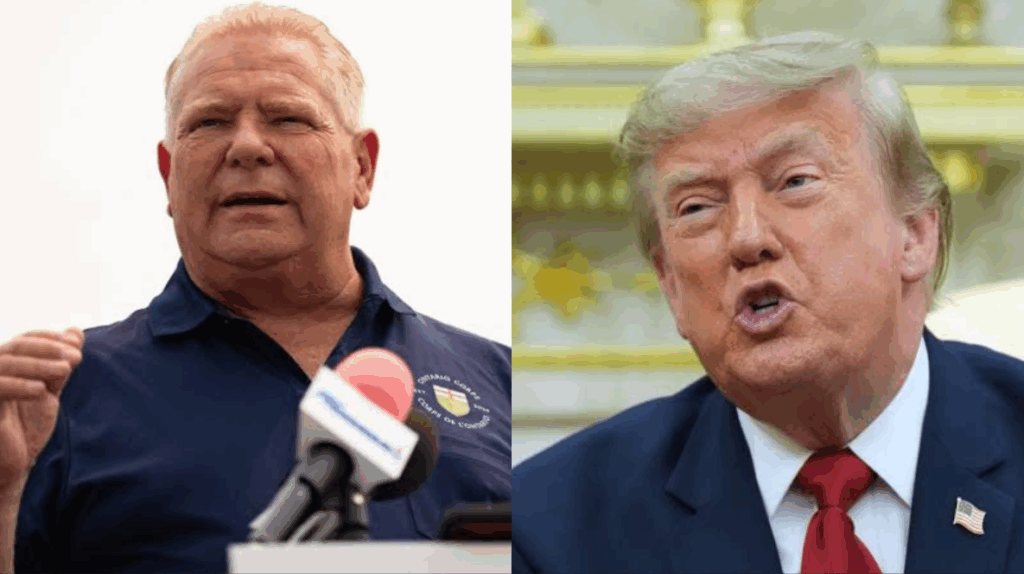
Ontario Premier Doug Ford publicly expressed his frustration with Trump on the same day, asserting that he has no intentions of restocking American-made alcohol on the shelves of the Liquor Control Board of Ontario (LCBO). At a press conference, Ford remarked, “We can’t keep rolling over for President Trump. We can’t back down. We need a full team Canada approach.”
Ford criticized Trump as a “bully,” stating, “I’m tired of a bully trying to take our lunch money all the time.” He urged for a vigorous response to the U.S. threats, advocating for a strategy where Canada retaliates with equal tariffs against American goods. “We need to stand up to the bully,” Ford emphasized, reflecting growing impatience toward the U.S. president's stance.
Trump's Claims About Canada's Dependency on the U.S.
During his remarks at the White House, Trump professed a fondness for the Canadian people, yet claimed that Canada cannot survive without the United States. He reflected on the historical trade relationships, mentioning that Canada has been “very, very tough” on the U.S. over the years, implying that no previous president had adequately addressed these issues.
Additionally, the tariffs mentioned by Trump were positioned as distinct from his earlier threats regarding potential levies related to Canadian wildfire smoke issues. The president reiterated his assertion that Canada fails to adequately manage its forests, which has led to broader environmental implications.
The recent tariff threat is grounded in Section 338 of the Tariff Act of 1930, which allows the president to impose tariffs when a country is believed to disadvantage U.S. exporters compared to exporters from other nations.