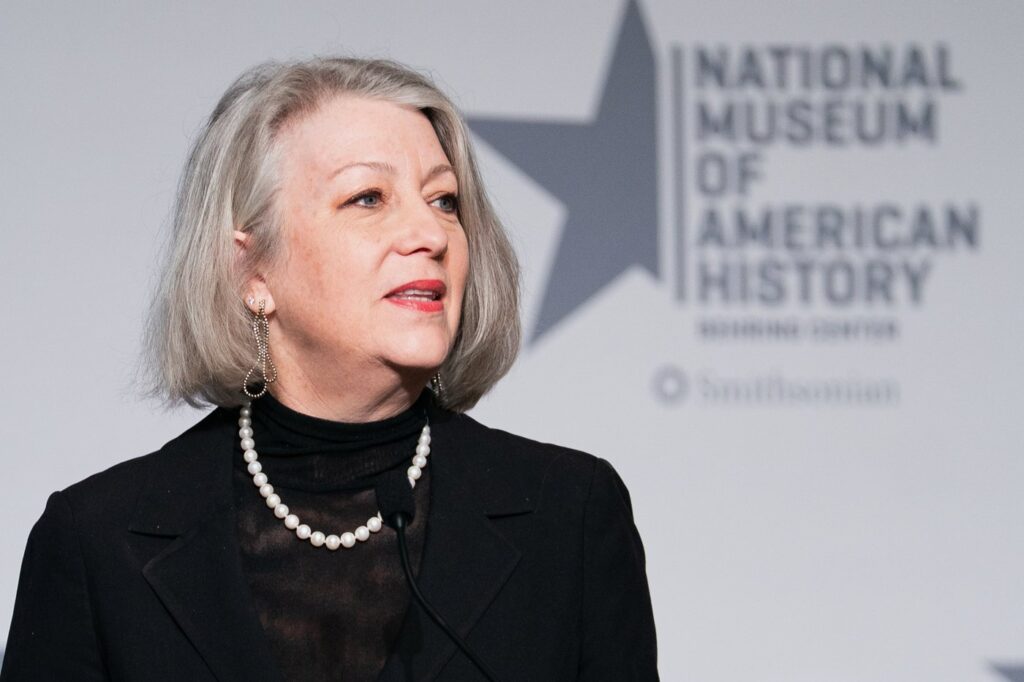
On July 4, a White House report criticized the Smithsonian’s National Museum of American History, labeling its leadership as radical activists lacking trustworthiness. In response, Anthea M. Hartig, the museum's director and the first woman to hold this position, defended the institution during her testimony before a House Oversight subcommittee. She asserted that the report fails to accurately portray the museum's work and emphasized the importance and expertise found within its collections and programming.
The report from the White House Domestic Policy Council, released as part of a national effort led by President Donald Trump, sought to reshape the country’s historical narratives as told by federal cultural institutions. It specifically aimed to eliminate elements of diversity, equity, and inclusion from these narratives, raising concerns among historians about potential revisionism in America's historical accounts.
Hartig highlighted that while the museum is open to improvements, it aims to present a complete narrative of American history. She stated, "When historians talk about reframing a traditional narrative, we don’t mean erasing it. We mean adding the evidence, the voices, the objects that earlier tellings left out, so that more Americans can see themselves reflected in the national story."
The White House report accused the museum of failing to celebrate the nation and its history, claiming it has not created any exhibit to narrate the stories of the Founding Fathers or significant events like the American Revolutionary War or the establishment of constitutional law. However, the museum recently opened an exhibit titled "In Pursuit of Life, Liberty and Happiness," showcasing 250 objects that commemorate America's 250th anniversary. Among the artifacts displayed are the desk used by Thomas Jefferson to draft the Declaration of Independence, a Revolutionary War-era gunboat, and the Star-Spangled Banner.
Despite the existence of this anniversary exhibit, some Republicans expressed concerns about the visibility of significant historical references during their visits. Representative Michael Cloud from Texas stated that he found it challenging to locate prominent mentions of the Declaration of Independence while touring the museum. Meanwhile, Hartig faced specific scrutiny regarding an exhibit called "Girlhood (It’s Complicated)," which featured a diary from a 13-year-old exploring issues related to gender identity. Hartig clarified that the exhibit was labeled to make it clear that it was not intended for children.
The hearing brought uncertainties regarding Hartig's position as museum director to the forefront, particularly given the precedent set by Trump’s previous actions against the leadership of other Smithsonian institutions. Rep. Tim Burchett questioned Hartig’s capability to retain her role, to which she simply replied that overseeing the museum is "the honor of my career."