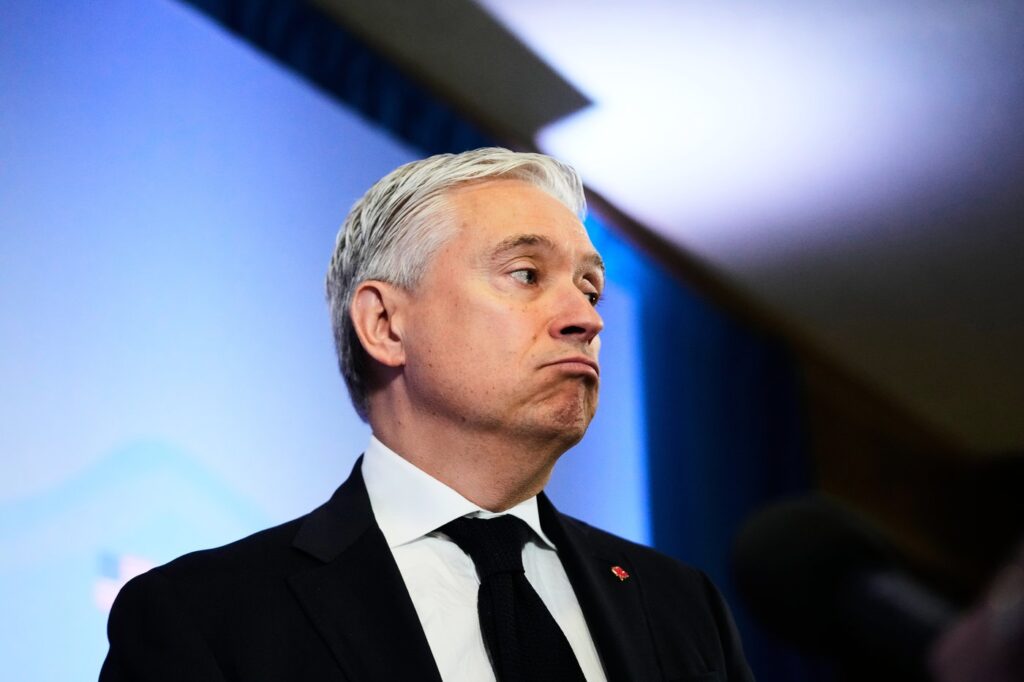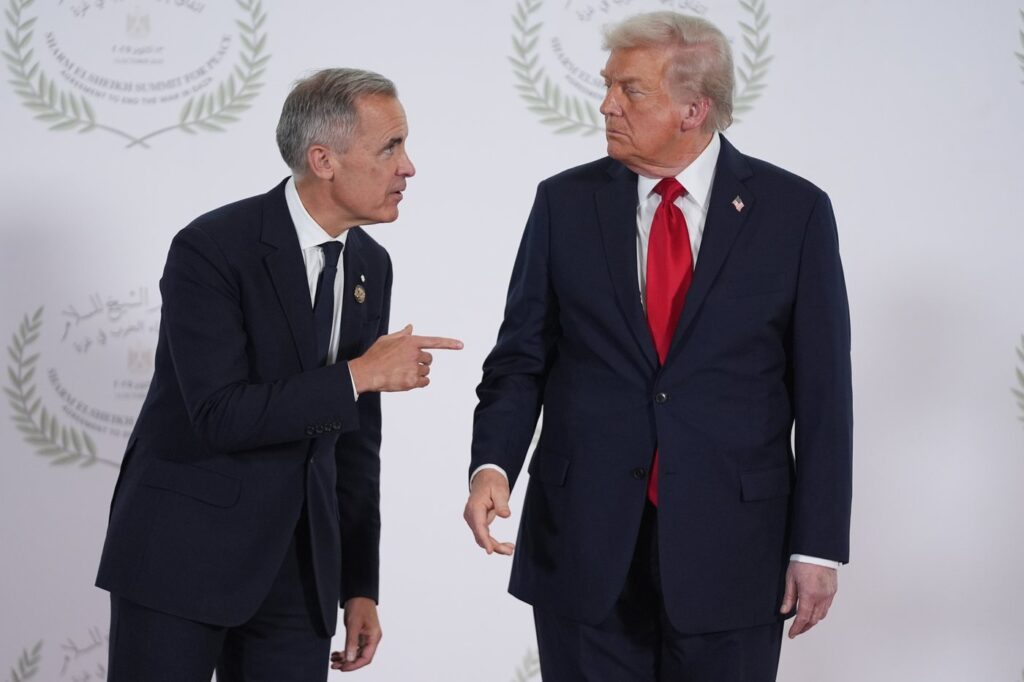
Prime Minister Mark Carney expressed optimism about the possibility of a "mutually beneficial" trade deal between the United States and Canada, emphasizing the need for President Donald Trump and his administration to approach negotiations with respect and seriousness. This statement was made during a press conference in Ottawa on Tuesday.
Trade talks between the two countries have recently deteriorated, prompting President Trump to impose additional tariffs and to lash out on social media. He has openly criticized Canada, alleging that the country has historically taken advantage of the United States regarding trade matters. His frustrations were further noted when he controversially suggested renaming Lake Ontario to "Lake America," declaring that Canada lacks any significant resources or products that the U.S. would desire.
Adding fuel to the fire, U.S. Department of Defense Secretary Pete Hegseth made a distasteful social media post that mocked female members of a Cadet Training Centre in Vernon, British Columbia. Pentagon deputy press secretary Jacob Bliss appeared to defend Hegseth's comments, stating that they "speak for themselves." In response, Carney condemned Hegseth's remarks as "beneath their office," indicating that such attitudes reflect a dismissal of Canada and the seriousness of the trade situation.
Carney criticized the cultural and political climate, stating, "When the Americans stop doing memes, stop throwing shade, stop trying to be tough, and start being serious about having those discussions, we can have those discussions." He characterized the online attacks as unconstructive but acknowledged that such actions are a part of the U.S. democratic landscape.
However, the tension between the two countries is not one-sided. Some Canadian politicians, including Ontario Premier Doug Ford, have engaged in exchanges of insults, with Ford labeling Trump a "loser" and bringing up his past bankruptcies in the private sector. Although Ford later toned down his rhetoric, Carney clarified that neither Ford nor other provincial leaders were responsible for the breakdown of trade talks.
Carney emphasized, "The premiers play a very important role in this process; labor plays an important role in this process; all stakeholders play a role in this process. We consult with the premiers, take into account their views, but the decisions on trade are the decisions of the government of Canada. I’m the Prime Minister; ultimately, I’m responsible, with the cabinet, for those decisions."
While he remains hopeful for a future agreement, Carney did not shy away from defending Canada's decision to walk away from negotiations that threatened its sovereignty. He stressed that the U.S. approach to discussions indicated that core Canadian industries would become subsidiaries of their American counterparts or face gradual decline and eventual elimination. He made it clear that Canada would not accept such terms.
In retaliation to the heightened tensions, Canada has implemented counter tariffs against the U.S. Nevertheless, Carney maintains a measured optimism, suggesting that a mutually beneficial deal is still within reach. He noted, "There is a mutually beneficial deal; there were elements of that mutually beneficial deal that we were moving towards, but we never viewed that we had that deal, and it diverged towards the end. At some point, maybe it will converge again." He continues to advocate for collaborative efforts to achieve a balanced trade agreement that respects both countries' interests.