PROVO, Utah (AP) — The murder case against Tyler Robinson, a Utah man accused of fatally shooting conservative activist Charlie Kirk last September, is set to proceed to trial. If convicted, Robinson could face the death penalty. Utah District Judge Tony Graf ruled in favor of prosecutors, who claimed they had “a mountain of evidence” demonstrating Robinson's involvement in the shooting, which occurred as Kirk addressed a crowd of thousands at Utah Valley University.
Robinson, 23, pleaded not guilty to charges including aggravated murder following the judge's decision. Having turned himself in the day after the incident, Robinson's legal team did not offer alternative explanations for Kirk's death. The defense attempted to prevent the trial from moving forward or to eliminate the death penalty as a possible outcome, arguing that prosecutors failed to prove that Kirk's shooting endangered others. Under state law, such endangerment qualifies the case for capital punishment.
Kirk's family issued a statement following the ruling, emphasizing its significance in their pursuit of justice. "Every step in this process carries the weight of all that Charlie’s murder has taken from his family, especially his children who will grow up without their father," they expressed. Prosecutors contended that Robinson shot Kirk from a rooftop over 400 feet away, fully aware that his actions could jeopardize the lives of others present at the open-air event.
Prosecutor Ryan McBride stated, "Tyler James Robinson shot and killed Charlie Kirk because he disagreed with him, and he did it by firing a high-powered rifle into a crowd of over 3,000 people, which created a great risk of death that anyone would know about." Judge Graf had the option to send the case to trial on a lesser charge that would carry a minimum sentence of 15 years and a maximum of life in prison but opted for aggravated murder based on the circumstances surrounding the shooting.
The recent hearing occurred after a five-day evidentiary presentation in July, in which prosecutors introduced DNA evidence and a handwritten note allegedly authored by Robinson for his romantic partner, declaring, "I had the opportunity to take out Charlie Kirk, and I took it." The courtroom was heavily secured as Kirk’s parents, Robert and Kathryn Kirk, along with his widow, Erika Kirk, attended. Their emotional support was visible as they embraced while the judge read his ruling.
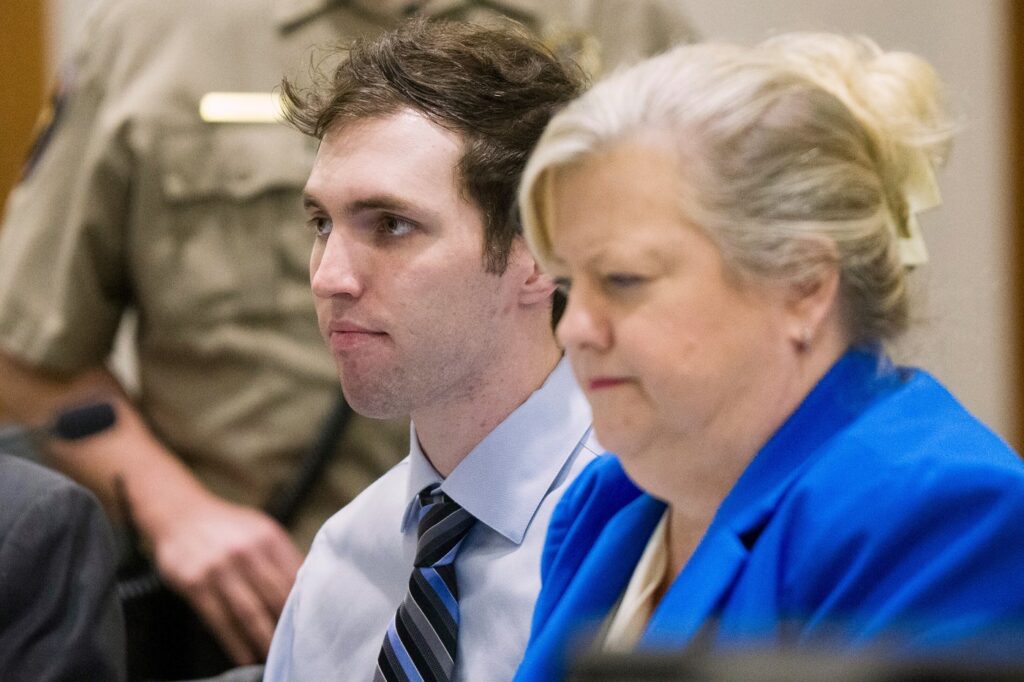
In court, defense attorney Staci Visser contended that prosecutors were attempting to misapply the state's aggravated murder statute. She asserted that previous legal precedents required a demonstration of high probability regarding the risk posed to bystanders, questioning the foundation of the prosecution's argument. Visser argued, "Kirk was seated on a stage in an elevated position, not immediately near anyone else, when he was shot once in the neck. There is one shot. There is one bullet. There is one victim.”
Prosecutor Chad Grunander countered, emphasizing that the alleged murder weapon, a bolt-action rifle, was discovered with additional unfired rounds, suggesting Robinson “came prepared to shoot again.” The prosecution also pointed to DNA analyses tying Robinson to both the rifle and a tool used to engrave the bullet cartridges, despite the defense expressing skepticism about the reliability of these DNA results.
In addition to the aggravated murder charge, Robinson could face enhanced sentencing if the prosecution successfully demonstrates that he targeted Kirk due to his political beliefs. Before his death, Kirk was known for galvanizing the conservative youth vote through his organization, Turning Point USA, significantly contributing to Donald Trump's campaign during the 2020 election.
Prosecutors pointed to a bullet found in the rifle, inscribed with the message, “Hey Facist! CATCH!” as evidence that Kirk was targeted due to perceived political animosity. They also cited a text message in which Robinson expressed his frustration about Kirk’s views, stating, "I had enough of his hatred. Some hate can’t be negotiated out.” In response, defense attorneys maintained that the evidence presented by prosecutors lacked sufficient strength to confirm a political motivation behind the shooting.