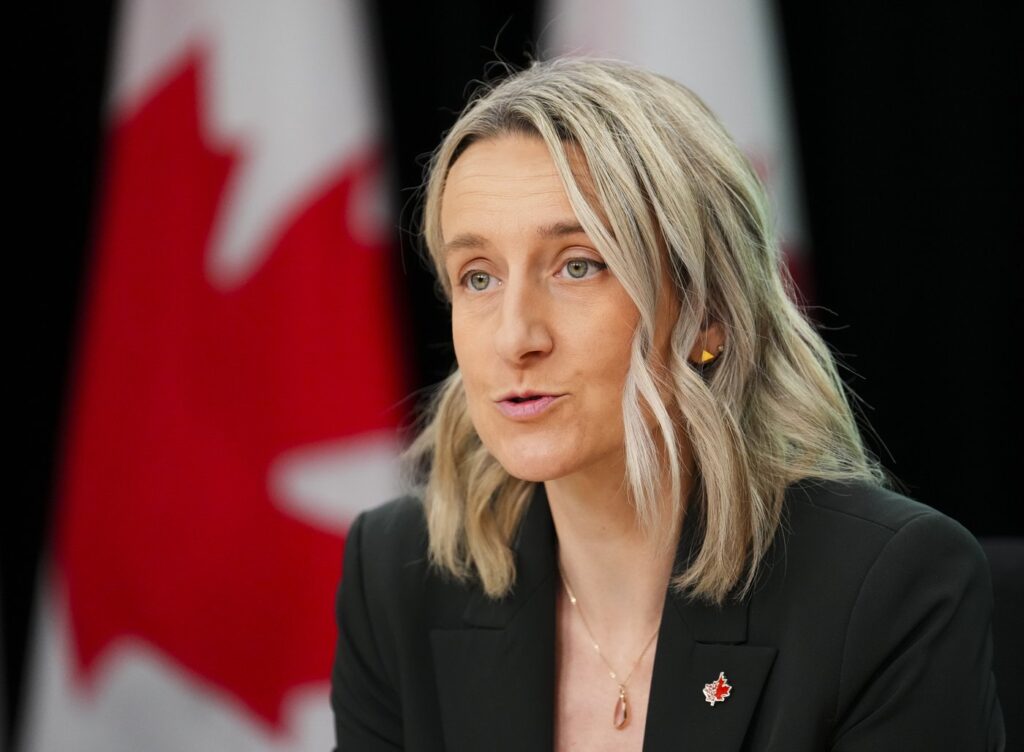
As students prepare to return to school, Dr. Joss Reimer, Canada’s chief public health officer, emphasizes the importance of ensuring that children are up-to-date with their routine vaccinations. In an interview on a recent Tuesday, Dr. Reimer highlighted that measles continues to spread, exacerbated by the prevalence of vaccine misinformation circulating online.
The national immunization rate for measles among two-year-olds stands at approximately 85%, which is significantly below the 95% threshold necessary to achieve herd immunity. Dr. Reimer pointed out that despite infection rates in a multi-province measles outbreak, which began in 2024 and led to Canada losing its measles elimination status late last year, showing signs of decline, unvaccinated children remain at high risk. The virus is “incredibly infectious” and can easily be introduced into the country by those traveling.
While most provinces have declared the outbreak over at different times over the past year, recent cases have been reported in Manitoba, as noted by the Public Health Agency of Canada. It is recommended that children receive two doses of the measles, mumps, and rubella (MMR) vaccine, with the first dose administered between 12 to 15 months, and the second at 18 months, or around the time they start school, depending on the province.
Dr. Reimer advises parents to check their child’s vaccination records and reach out to a primary care provider or local public health unit if these records cannot be located. With the back-to-school season upon us, she encourages parents to take this opportunity to verify their children's vaccination status to prevent the spread of viruses in environments conducive to transmission.
In light of the overwhelming vaccine misinformation online, Dr. Reimer acknowledges the difficulty parents face in finding science-based health advice. She stated that many individuals are bombarded by false information via online algorithms, even inadvertently. Parents naturally have questions about interventions regarding their children’s health, and it is crucial for them to access reliable answers.
Parents can find evidence-based information about childhood vaccinations through official public health and medical association websites, including that of the Canadian Paediatric Society. Dr. Reimer emphasized the significance of ensuring that trustworthy information is accessible at the community level, delivered by people that families trust. This approach aims to provide an accurate counterbalance to misinformation that may proliferate online.
Connecting community and religious leaders with public health workers is also vital, as these leaders can share accurate vaccination information within their communities. Dr. Reimer expresses concern that many parents who are behind on their children’s vaccinations are not necessarily anti-vaccine; instead, she attributes this gap to competing priorities. Life circumstances such as financial strain and busy schedules may hinder the prioritization of preventive health care measures.
The chief public health officer voices her concerns about the potential resurgence of other vaccine-preventable diseases, such as mumps and rubella, which are also covered by the MMR vaccine. Furthermore, Dr. Reimer points out that Canada has seen low vaccination rates for diphtheria, with less than 80% coverage for two-year-olds. She notes that Australia is currently facing outbreaks of diphtheria, drawing attention to the fact that similar situations could arise in Canada if vaccination rates do not improve.
For comprehensive protection, children are advised to receive multiple doses of the vaccines for tetanus, diphtheria, pertussis (whooping cough), and polio, starting at two months of age, as per the guidance outlined in the Canadian Immunization Guide. Ensuring high immunization rates is a critical element in maintaining public health and preventing outbreaks of vaccine-preventable diseases.