KATHMANDU, Nepal — Authorities have reported that some tourists previously listed as missing in Nepal have made contact, while families of local residents still unaccounted for after catastrophic floods held symbolic funerals for their loved ones. The Nepalese Foreign Ministry confirmed that 324 foreign nationals have been rescued, but 590 others from 39 countries remain missing following the floods that occurred on August 26. Over 1,204 people have tragically lost their lives, with more than 4,200 still missing according to the country’s disaster management agency.
Australian Prime Minister Anthony Albanese announced on Wednesday that the number of Australians missing has decreased from 43 to 38 after five individuals were verified safe overnight. He expressed hope for further positive news while attending a regional summit in Palau, emphasizing the Australian government’s commitment to assisting with rescue efforts. To aid in the search and rescue, Australia plans to send a team of drone operators to Nepal within days.
Sunil Sharma, a spokesperson for the Nepal Tourism Board, indicated that at least five tourists previously reported missing have contacted authorities via email or telephone in recent days. The floods are believed to have been triggered by a glacial collapse in the Himalayas, which unleashed rock, ice, and meltwater into valleys, causing devastating floods downstream. The surge overwhelmed rivers flowing through Tibet and Nepal, leading to widespread destruction as floodwaters swept away homes, buildings, roads, and bridges.
In Nuwakot, one of the districts most affected by the disaster, families have begun to hold symbolic funerals for their missing relatives in a bid to release their souls, as is customary in Hindu tradition. Mukunda Rijal described the anguish of his family, who have not been able to locate cousins and their daughters. During one highly symbolic ceremony, a priest created effigies representing the missing individuals, encasing them in wood and igniting a funeral pyre along the banks of the Trishuli River, surrounded by offerings to Hindu deities.
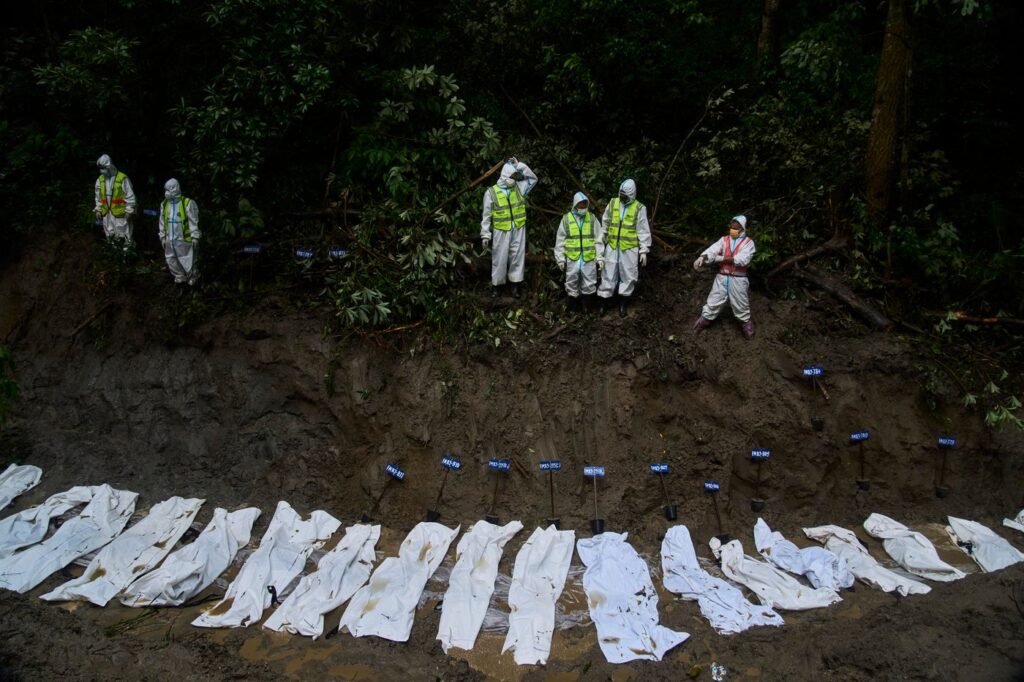
The Nepali government has also been interring recovered bodies in temporary graves while working to identify them. Efforts include preserving DNA samples and recording unique identifying features to assist in matching remains to missing persons, ensuring they can eventually be returned to their families.
On the Chinese side of the border, rescue crews have constructed a makeshift road to the disaster site at Gyirong Port, which is adjacent to Nepal. According to state broadcaster CCTV, crews are clearing access for heavy machinery needed for search operations at the border crossing, which had been devastated by the floods. Reports indicate at least 21 individuals have died and 541 remain missing in China.
As the impact of the floods continues, many survivors are fleeing the destruction to find shelter in Nepal's capital, Kathmandu. Approximately 400 survivors, mainly from the town of Timure located about 110 kilometers (65 miles) west of Kathmandu, have taken refuge in the Yellow Gumba monastery. Local residents and relatives have organized this shelter, supported with relief supplies from various charitable sources. Among those seeking refuge is Riya Tamang, 21, who escaped with her 10-month-old baby. She expressed the difficulty of the situation, stating that she was the last to leave her house and lost her grandparents in the disaster. Her husband, a cook in Gyirong town on the Chinese side, survived, and they have maintained communication through video calls.
Reporting contributed by journalists from various regions highlights the ongoing tragedy and the collective efforts to address the humanitarian crisis resulting from the devastating floods in Nepal.