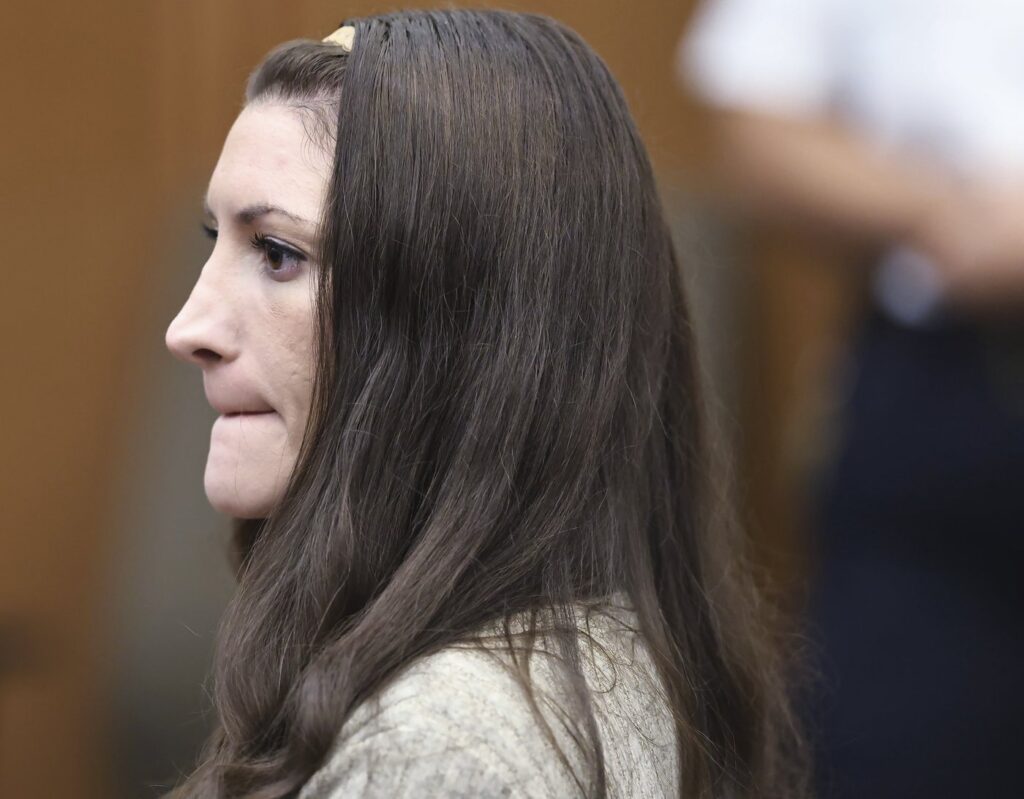
A Massachusetts jury has entered its fifth day of deliberation regarding the case of Lindsay Clancy, who has been charged with the murder of her three children in 2023. The jurors remain deadlocked, citing conflicting testimonies concerning Clancy's mental health postpartum.
Clancy, a 36-year-old former labor and delivery nurse, does not contest the act of strangling her children; however, she argues that she was suffering from postpartum psychosis at the time of the tragedy. Following the incident, Clancy attempted suicide by jumping from a second-story window, resulting in her paralysis from the waist down.
If the jury cannot reach a unanimous verdict, a mistrial will be declared. This outcome would effectively reset the case to its pre-trial status, with Clancy continuing to face murder charges while being held in a psychiatric facility. Prosecutors will then have several options to consider regarding the future of the case.
They may choose to retry Clancy with a new jury, initiating the jury selection process anew and scheduling another trial. Alternatively, they could offer her a plea deal, a strategy that is common when retrials are imminent, as noted by Brad Bailey, a Boston defense attorney and former prosecutor who is not directly involved in the case. In such scenarios, defense attorneys often explore resolution options with their clients.
Despite the likelihood that the prosecutors would prefer to retry the case after a mistrial, they may also opt against it. According to Bailey, this decision can stem from a belief that similar results are likely with repeated trials. Additionally, the cost implications of bringing expert witnesses and managing a retrial can weigh on the decision-making process for the prosecution.
If the prosecution does choose to retry Clancy, it will be interesting to see how her defense team approaches this new challenge. They are likely to argue for dropping the charges based on the circumstances surrounding Clancy’s mental health and the significant suffering she has already endured due to her actions and her physical condition.
The stakes are high for Clancy; a conviction could result in a life sentence, while an acquittal may lead to her being confined to a mental health facility. The case has gained considerable public attention, raising awareness about maternal mental health issues after childbirth. Observers of the trial were polarized in their opinions of Clancy, with supporters viewing her actions as those of a mother in distress who sought help, while detractors condemned her for what they consider a selfish and evil act.
The public's divided reaction to high-profile cases like Clancy's often mirrors that witnessed in the case of Karen Read, who was charged in the 2022 death of her Boston police officer boyfriend. Read's initial trial also ended in a mistrial when jurors deadlocked after five days of deliberation. Prosecutors decided to retry her case, which ultimately resulted in her acquittal by a different jury.
As the jury continues its deliberations in Clancy's murder trial, the implications of their decision extend far beyond the courtroom, touching on the critical subjects of mental health and the societal perceptions surrounding them.