Ceuta: A Political Battleground
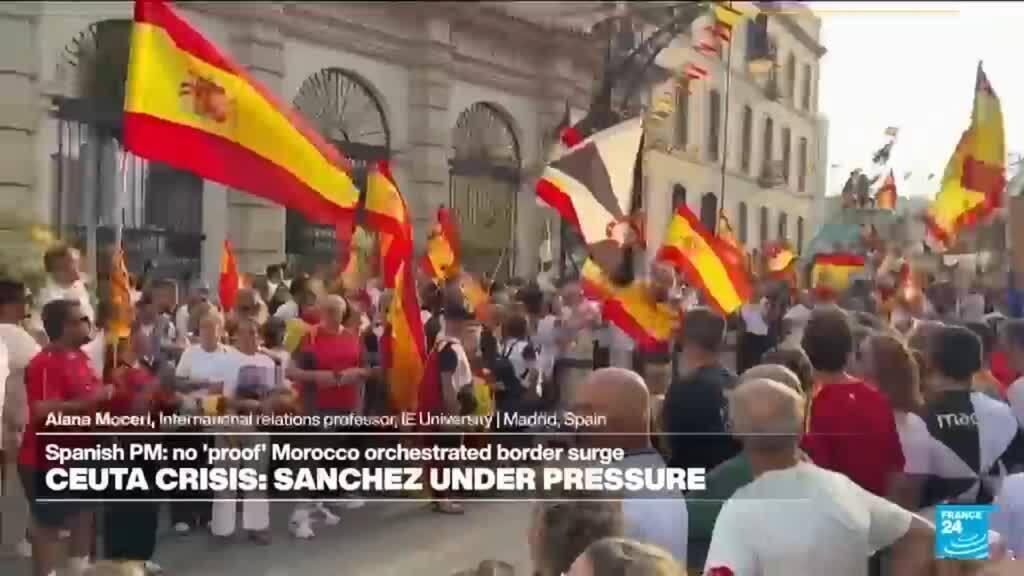
Delano D'Souza recently hosted Alana Moceri, an esteemed International Relations Professor at the IE School of Politics, Economics and Global Affairs. The discussion focused on the increasing migrant crossings at Ceuta, a Spanish enclave located on the northern coast of Africa, which has captured both domestic and international attention. The situation in Ceuta is more than just a humanitarian challenge; it has evolved into a significant political issue that reveals deeper currents in Spain's socio-political landscape.
In Spain, Prime Minister Pedro Sánchez faces mounting pressure from political opponents who are framing the migration crisis in alarmist terms. The far-right political parties in Spain have intensified their rhetoric, labeling the influx of migrants as an "invasion." This has stirred fears among segments of the Spanish population and has amplified nationalist sentiments. For Sánchez, this issue presents both a potential threat and an opportunity; he must navigate the tumultuous waters of public opinion while attempting to uphold the Spanish government’s position on humanitarian responsibility and international border control.
Internationally, the crisis at Ceuta underscores the geopolitical significance of border control. The Mediterranean has long been a focal point in discussions around migration and security in Europe. The ability to manage and control borders has become a critical tool for states, and Ceuta exemplifies this phenomenon. By wielding border control as a form of geopolitical leverage, Spain can engage in negotiations with other nations in the EU, showcasing its strategic position in controlling migrant flows from Africa to Europe.
The multifaceted nature of the Ceuta crisis illustrates how borders can shift from being mere lines on a map to powerful political instruments. Within this context, the migrant crossings serve as a battlefield for competing narratives. Disinformation campaigns are prevalent, with various political groups attempting to shape the public's perception of the crisis to serve their own agendas. These narratives can morph rapidly, complicating efforts to address the underlying humanitarian issues.
Furthermore, the situation also reveals tensions within the European Union regarding migration policy. As countries grapple with the implications of migration on their domestic politics, Ceuta has come to symbolize the challenges of a unified European approach to border management and humanitarian aid. The management of migrant flows not only impacts Spain but also reflects broader challenges faced by EU member states in maintaining solidarity while addressing individual national concerns.
The complexities surrounding the Ceuta border crisis illustrate how migration issues are intertwined with national identity, security, and international diplomacy. As the situation continues to evolve, it is critical to monitor how various stakeholders respond, and how their actions contribute to the broader geopolitical landscape in Europe and beyond. In conclusion, Ceuta serves as a poignant reminder of the interconnectedness of migration, politics, and geopolitical strategy in today's world.