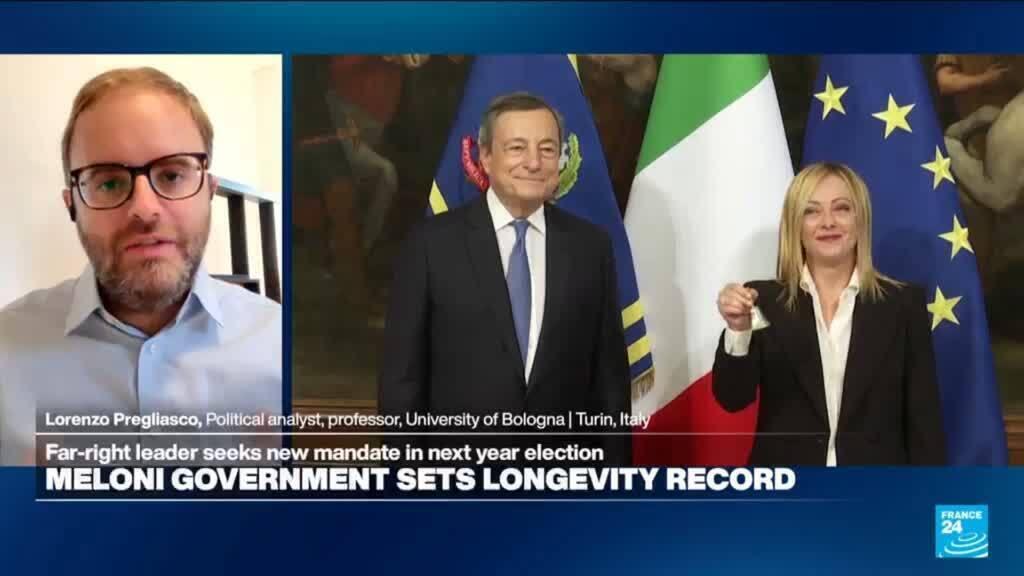
In a recent discussion, political analyst Lorenzo Pregliasco, who co-founded the polling agency YouTrend and serves as an adjunct professor at the University of Bologna, offered insights into the political landscape shaped by Giorgia Meloni's leadership in Italy. According to Pregliasco, Meloni's enduring tenure as Prime Minister is not solely a testament to her political prowess, but rather the result of a meticulously crafted governing strategy that has allowed her to maintain stability in a turbulent political environment.
One of the key elements of Meloni's strategy lies in her approach to policymaking. Pregliasco emphasizes that Meloni has strategically steered clear of implementing significant structural reforms that could arouse widespread opposition from various interest groups. By avoiding measures that might mobilize multiple constituencies against her government simultaneously, she has effectively minimized the risk of large-scale political backlash. This calculated avoidance of contentious reforms has been crucial in sustaining her position and preventing fragmentation within her support base.
Another factor contributing to Meloni's political longevity is her overwhelming control over the Fratelli d'Italia party. Pregliasco highlights that Meloni's dominance within her party has provided her with a solid foundation to exert authority and implement her policies without facing major internal challenges. This unitary control is vital in a political environment where rivalry can often threaten leadership stability. Meloni's ability to unify her party around her leadership has strengthened her position in the broader political arena.
Furthermore, the political landscape in Italy has been characterized by the absence of a credible alternative leader who can effectively contest Meloni's authority. This lack of viable opposition plays a significant role in bolstering her dominance. Pregliasco points out that without a strong challenger, Meloni can more easily consolidate her power and pursue her governing agenda with fewer checks and balances. The fragmentation within the opposition adds another layer of security for her administration, as competing parties struggle to present a united front against her government.
In conclusion, Lorenzo Pregliasco's analysis sheds light on the intricate dynamics of Giorgia Meloni's leadership in Italy. Her strategic avoidance of disruptive reforms, combined with strong internal party control and a fragmented opposition, has created a political environment where her continued tenure is not only likely but also strategically reinforced. This nuanced understanding of Meloni's governing strategy highlights the complexities of political power in a contemporary context, ultimately illustrating how stability can be achieved through calculated decision-making and careful management of political relationships.