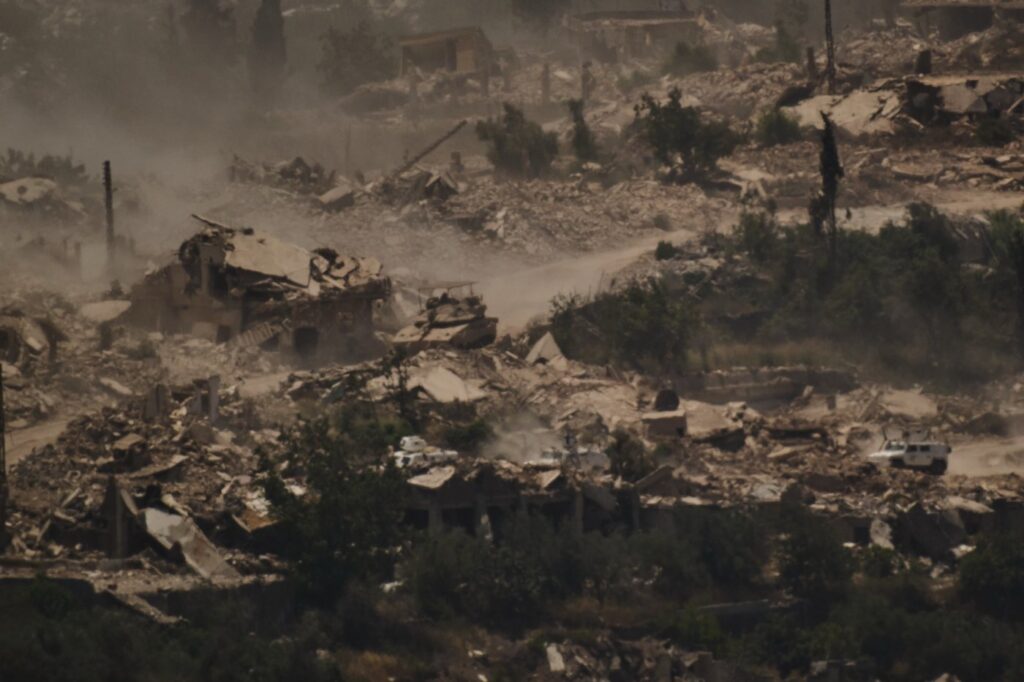
BEIRUT (AP) – A ceasefire between Israel and Hezbollah has been in place for over two months, resulting in decreased fighting across much of Lebanon. However, tensions remain high on the strategic Ali Taher hill, which overlooks the main southern city of Nabatiyeh. Despite the ceasefire, this particular area has been subject to ongoing military actions, including daily shelling and airstrikes by Israel, while Hezbollah has responded with drone attacks against Israeli forces.
The United States is mediating discussions between Lebanon and Israel, urging Hezbollah to cede control of the Ali Taher hill to the Lebanese army. This move forms part of a broader initiative aimed at disarming Hezbollah and dismantling its military infrastructure. However, Hezbollah has firmly rejected the proposal.
In June, Lebanon and Israel reached a framework agreement stipulating that Israel would withdraw from Lebanon, contingent upon the disarmament of Hezbollah. Notably, Hezbollah was not involved in these negotiations and has dismissed calls to disarm in territories north of the Litani River, where Ali Taher is situated.
The ongoing conflict over Ali Taher poses a risk of escalating violence throughout Lebanon, as current unrest complicates efforts to address the broader situation in the region, including the ongoing conflict in Iran. Recently, Israel's military announced that it has taken "operational control" of Ali Taher, along with a network of tunnels utilized by Hezbollah for storing weapons and concealing fighters. However, the extent of this control remains unclear, as attacks on the hill continued to be reported in conjunction with Israel's announcement.
Hezbollah has remained silent regarding Israel's claims of control over the hill. The militant group rejected a proposal from the Lebanese government that suggested handing Ali Taher over to the Lebanese army, fearing that such an action would eventually enable Israel to take control of the area through the Lebanese military.
Historically, Israel occupied Ali Taher for 18 years before its withdrawal in 2000. The hill remains crucial for Hezbollah due to its vantage point over several villages and main roads leading to Nabatiyeh, which is vital for the militant group’s operational presence and supply lines in the region. Israel contends that the area is significant for Hezbollah because of its tunnels funded by Iran, which reportedly include command centers, weapons storage, living quarters, and other essential facilities.
Amid recent conflicts, Israel has emphasized that it is focused on eliminating Hezbollah's military presence at Ali Taher. Reports indicate that Hezbollah officials downplayed the hill's significance, asserting that even if it were lost, it would not equate to the end of the militant group.
Lebanon’s Deputy Prime Minister, Tarek Mitri, has suggested that the Lebanese army is prepared to assume control of Ali Taher but accused Israel of impeding this transfer for its own political reasons ahead of Israeli national elections on October 27. Discussions between Lebanese and Israeli officials are expected to take place in Rome later this month to further address these tensions.
Indirect negotiations between the U.S. and Hezbollah may be under consideration, although the militant group typically refrains from direct dialogue with American officials. The U.S. ambassador to Lebanon, Michel Issa, noted that Washington would be open to discussions with Hezbollah if the group agreed to disarm. Nevertheless, Hezbollah is unlikely to pursue any negotiations without approval from Iran, its primary backer, which demands assurances regarding the cessation of Israeli attacks on its operation.
Acquiring Ali Taher would allow Israel to gain strategic access to other Hezbollah strongholds in the region, including Nabatiyeh and the nearby Apple Province. Israeli leaders have expressed their intention to maintain military pressure on Hezbollah until the group agrees to disarm. Analysts from the Armed Conflict Location & Event Data Project (ACLED) suggest that expanding Israeli control in the area presents a significant operational setback for Hezbollah, which could bolster Israel's stance in future negotiations regarding the withdrawal from Lebanese territory.